| |
|
Xiamen Oil Paintings, Wholesale Direct!
|
|
100% hand painted, 100% cotton canvas, 100% money back if not satisfaction. |
|
|
|
|
ART WORKS INDEX
A
B
C
D
E
F
G
H
I
J
K
L
M
N
O
P
Q
R
S
T
U
V
W
X
Y
Z
|
|
ARTISTS INDEX
A
B
C
D
E
F
G
H
I
J
K
L
M
N
O
P
Q
R
S
T
U
V
W
X
Y
Z
|
|
|
|
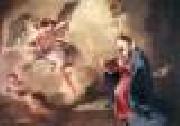 |
PITTONI, Giambattista
|
|
Italian Rococo Era Painter, 1687-1767
Italian painter and draughtsman. With Giambattista Tiepolo and Piazzetta, he was the most representative history painter of the Venetian Rococo. Besides altarpieces for Venetian and other churches as well as devotional images for private clients on both sides of the Alps, he painted subjects from mythology and Classical literature for collectors and connoisseurs in a Rococo idiom all his own; it is these secular pictures for which he is best known. Zava Boccazzi's catalogue raisonn of Pittoni's paintings (1979) includes 247 extant autograph works and 117 paintings now lost, destroyed or untraced. Binion's catalogue raisonn? of the artist's drawings (1983) lists 304 sheets. Pittoni's total output must have been far larger, as is evident from the drawings, many of which are studies for unknown works. For instance, Pittoni must occasionally have painted decorations for secular buildings and palazzi, probably in fresco, though none has yet come to light, with the notable exception of the few frescoes with scenes from the Life of Diana, painted in 1727 in the palazzetto Widman in Bagnoli di Sopra near Padua.
|
|
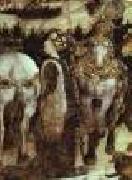 |
PISANELLO
|
|
Italian painter (b. 1395, Pisa, d. 1455, Roma).
known professionally as Antonio di Puccio Pisano or Antonio di Puccio da Cereto, also erroneously called Vittore Pisano by Giorgio Vasari, was one of the most distinguished painters of the early Italian Renaissance and Quattrocento. He was acclaimed by poets such as Guarino da Verona and praised by humanists of his time who compared him to such illustrious names as Cimabue, Phidias and Praxiteles. He is known for his resplendent frescoes in large murals, elegant portraits, small easel pictures, and many brilliant drawings. He is the most important commemorative portrait medallist in the first half of the 15th century. He was employed by the Doge of Venice, the Pope in the Vatican and the courts of Verona, Ferrara, Mantua, Milan, Rimini, and by the King of Naples. He stood in high esteem of the Gonzaga and Este families. He had many of his works wrongly ascribed to other artists such as Piero della Francesca, Albrecht Derer and Leonardo da Vinci, to name a few. While most of his paintings have perished, a good many of his drawings and medals have survived. His life is somewhat shrouded in mystery. He was born between 1380 and 1395 and died between 1450 and 1455 (probably between 14 July and 8 October 1455). He was a native of Pisa but spent his early years in San Vigilio sul Lago in the territory of Verona. He was probably given his early training by a Veronese painter (perhaps Altichiero or Stefano da Verona) as his early style is in the tradition of veronese painting. Between 1415 and 1420, he was the assistant of the renowned painter and illuminator Gentile da Fabriano from whom he acquired his refined, delicate, detailed style. Pisanello also acquired from him a taste for precious materials and beautiful fabrics that can be found in his later paintings. The frescoes in the Doge's Palace at Venice, on which they worked together, have perished as well as the frescoes in the Basilica of St. John Lateran and the palaces of Mantua and Pavia. In 1422, he was reported to be in Mantua in the service of young Ludovico Gonzaga, son of the Marchese of Mantua Gianfrancesco Gonzaga. He continued to work for the Gonzaga family till the 1440s. Giorgio Vasari, an artist and biographer of the Italian Renaissance, states that Pisanello also worked in the workshop of Andrea del Castagno, author of the painted equestrian monument of Niccole da Tolentino (1456) in the Cathedral in Florence. He must also have known Paolo Uccello, the painter of the Battle of San Romano with its many horses. Pisanello's love of drawing horses probably finds its origin in this relationship. But as there is so much unknown of his life, this attribution by Vasari is not reliable and may only be a legend. His Madonna and Quail, now in the Museo di Castelvecchio in Verona, is signed by "Antonius Pisanus". It is tentatively dated at c. 1420. The style is a blend of the styles of Gentile da Fabriano and Stefano da Verona. This might show that Pisanello was also a pupil of the latter in Verona. Pisanello stayed again in Verona in 1424. However, according to some scholars, he painted frescoes about hunting and fishing and jousts in Pavia the same year. These were commissioned by the Duke of Milan Filippo Maria Visconti. There is no trace of these frescoes left. Back in Mantua with the Gonzagas between 1424 and 1426, he painted one of his important surviving works: the fresco Annunciation in San Fermo, Verona. It was used to embellish the funeral monument of Nicole di Brenzoni by the Florentine sculptor Nanni di Bartolo. When Gentile da Fabriano died in Rome between August and October 1427, his work at the Basilica of St. John Lateran was unfinished. Pisanello completed the frescoes of his former master between 1431 and 1432. All these frescoes were destroyed when the basilica was rebuilt in the 17th century by Francesco Borromini. The Kupferstichkabinet in Berlin has a pale sketch of this fresco, drawn by Borromini. While in Rome, he became more and more influenced by the classical style of Renaissance art. His drawings are generally prized as jewels of the quattrocento, and are wonderful examples of the elegant garb of the time, including spectacular hats. In contrast with his contemporaries, his drawings are not drafts for future paintingings but are autonomous work of art. He compiled several books of drawings, detailed and accurate studies of fauna and flora drawn with a poetic naturalism, and elegant costumes. Pisanello traveled to several Italian cities and was introduced to a number of courts. He stayed for a while in Florence. In this period he painted two important portraits: Emperor Sigismund, now in the Kunsthistorisches Museum, Vienna (but the attribution is still contested) and Portrait of a Man (now in the Palazzo Rosso, Genoa). He returned to Verona between 1433 and 1438. His fresco masterpiece from this period is Saint George and the Princess of Trebizond (1436-38) at the Pellegrini Chapel, Sant'Anastasia, Verona. It had to be restored after water seepage badly damaged the fresco at the end of the 19th century. He prepared for this painting with a large number of drawings. Many of these famous drawings are on display in the Louvre, Paris. From 1435, Pisanello became more and more interested in portraiture and medalmaking. He was introduced to Leonello d'Este, Marquess of Ferrara. His famous Portrait of an Este Princess dates from this period. His Vision of Saint Eustace, now at the National Gallery in London, long ascribed to Albrecht Derer because of its perfection of this very fine panel, shows most animals in profile or defined poses with miniature-like delicacy. The story in this small painting (egg tempera on wood) is probably only a pretext for showing "noble" animals (horses, hunting dogs, stag, bear...) and the most noble creature of all: the hunting courtier. In 1438, the Council of Basel negotiated with the Byzantine Emperor John VIII Palaiologos. On this occasion Pisanello struck a commemorative medal of the emperor. He also made some drawings with portraits of the emperor and his retinue (on display at the Louvre, Paris), suggesting
|
|
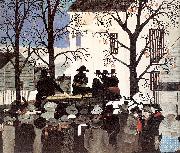 |
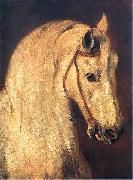
Pippin, Horace
|
|
American, 1888-1946
.U.S. folk painter. Pippin served in the infantry in World War I, but he was wounded in 1918 and discharged with a partially paralyzed right arm. His first large canvas was an eloquent protest against war, End of the War: Starting Home (1931 ?C 34). His primary theme became the African American experience, as seen in his series entitled Cabin in the Cotton (mid 1930s) and his paintings of episodes in the lives of the antislavery leader John Brown and Pres. Abraham Lincoln. After the art world discovered Pippin in 1937,
|
|
 |
Piotr Michalowski
|
|
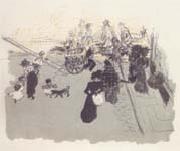
(July 2, 1800 - June 9, 1855) was a Polish painter of the Romantic period, especially known for his many portraits.
His talent was long underestimated, but he was re-discovered by Pablo Picasso in 1948. When the painter visited Poland, he saw Michałowski's work in the Warsaw National Museum and shouted, "Here, painter!"
The Sukiennice Museum, a division of the National Museum in Krakew, contains a room devoted to Michałowski's work.
|
|
 |
PIOLA, Domenico
|
|
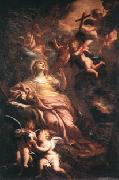
Italian Baroque Era Painter, 1627-1703
was a Genoese painter of the Baroque period. His family studio was highly prolific. He apprenticed with his family, including his elder brother, Pellegro Piola, as well as with Domenico Fiasella. Other members of the Piola family, who were artists included Domenico's brother, Giovanni Andrea and his three sons Paolo Gerolamo, Anton Maria, and Giovanni Battista; his two sons-in-law, Gregorio de Ferrari and Domenico Parodi; and his brother-in-law Stefano Camogli. The large family studio, called Casa Piola excelled in both quadratura fresco decoration and canvases. Generations of artists, down to the 20th century, descended from the line of Piola-De Ferrari, including Giovanni Maria De Simoni, who died in 1913 in the original residence of Domenico's family. Domenico was also a well-known printmaker and draughtsman.
|
|
 |
Pinturicchio
|
|
Italian Early Renaissance Painter,
1454-1513
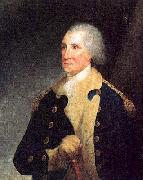
was an Italian painter of the Renaissance. He was born in Perugia, the son of Benedetto or Betto di Blagio. He may have trained under lesser known Perugian painters such as Bonfigli and Fiorenzo di Lorenzo. According to Vasari, Pinturrichio was a paid assistant of Perugino. The works of the Perugian Renaissance school are very similar; and paintings by Perugino, Pinturicchio, Lo Spagna and a young Raphael may often be mistaken one for the other.
|
|
 |
Pine, Robert Edge
|
|
American, 1720-88
English painter, active also in America. His father, John Pine (1691-1756), was a well-known engraver and printseller of whom William Hogarth painted a portrait (c. 1755; Fredericton, NB, Beaverbrook A.G.). Robert Edge Pine was initially considered to have the potential to rival Joshua Reynolds as a portrait painter, a promise derived from such works as the full-length portrait of George II (1759; Audley End, Essex), painted without a sitting being granted him by the King. In 1760 he won a premium at the Society of Arts, London, for a history painting, the Surrender of Calais to Edward III, also known as the Burghers of Calais (untraced), which was engraved in 1762 by Fran?ois Germain Aliamet (1734-88), and another in 1763 for Canute the Great Reproving his Courtiers for their Impious Flattery (untraced), also engraved by Aliamet. Pine was not invited to become a founder-member of the Royal Academy in 1768, probably because of his radical politics; that year he painted a portrait of the political agitator John Wilkes (London, Westminster Hall). In 1772 he left the Society of Arts following a quarrel over its choice of directors; he moved to Bath, where he joined his brother, Simon Pine (d Aug 1772), a painter of miniatures. Their sister was married to the landscape painter Alexander Cozens. While at Bath Pine painted his most ambitious family group,
|
|
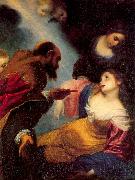 |
Pignoni, Simone
|
|
Italian, 1611-98
Italian painter and draughtsman. He is best known for his many pictures of voluptuous female nudes, which developed the morbidly sensual style of Francesco Furini. His Self-portrait (c. 1650; Florence, Uffizi), in which he depicts himself building up a rounded female form from a skeleton, conveys his fascination with the subject. He had an early education in Latin, followed by an apprenticeship in the workshop of the bookbinder Zanobi Pignoni, a close relative. Domenico Passignano, who frequented the workshop, suggested that Pignoni be apprenticed to Fabrizio Boschi (1570-1642), one of his own former pupils. Pignoni began to study under Boschi
|
|
|
|
|
|
|
|
 |
Pietro Perugino
|
|
Italian
1450-1523
Pietro Perugino Galleries
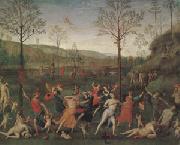
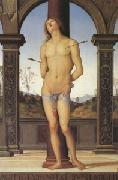
Italian painter and draughtsman. He was active in Perugia, Florence and Rome in the late 15th century and early 16th. Although he is now known mainly as the teacher of Raphael, he made a significant contribution to the development of painting from the style of the Early Renaissance to the High Renaissance. The compositional model he introduced, combining the Florentine figural style with an Umbrian use of structure and space, was taken up by Raphael and became widely influential throughout Europe.
|
|
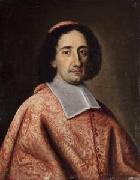 |
Pietro Paolo Vegli
|
|
Pietro Paolo Vegli - Ritratto Del Cardinale Francesco Maidalchini (1621 - 1700)
|
|
|
|
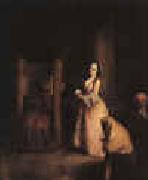 |
Pietro Longhi
|
|
1702-1785
Italian
Pietro Longhi Galleries
Pietro Longhi was born in Venice in the parish of Saint Maria, first child of the silversmith Alessandro Falca and his wife, Antonia. He adopted the Longhi last name when he began to paint. He was initially taught by the Veronese painter Antonio Balestra, who then recommended the young painter to apprentice with the Bolognese Giuseppe Maria Crespi, who was highly regarded in his day for both religious and genre painting. He was married in 1732 to Caterina Maria Rizzi.
Among his early paintings are some altarpieces and religious themes. In 1734, he completed frescoes in the walls and ceiling of the hall in Ca' Sagredo, representing the Death of the giants. Henceforward, his work would lead him to be viewed in the future as the Venetian William Hogarth, painting subjects and events of everyday life in Venice. The gallant interior scenes reflect the 18th century's turn towards the private and the bourgeois.
Many of his paintings show Venetians at play, such as the depiction of the crowd of genteel citizens awkwardly gawking at a freakish Indian rhinoceros (see image). This painting chronicles Clara the rhinoceros brought to Europe in 1741 by a Dutch sea captain and impresario from Leyden, Douvemont van der Meer. This rhinoceros was exhibited in Venice in 1751. There are two versions of this painting, nearly identical except for the unmasked portraits of two men in Ca' Rezzonico version. Ultimately, there may be a punning joke to the painting, since the young man on the left holds aloft the sawed off horn (metaphor for cuckoldry) of the animal. Perhaps this explains the difference between the unchaperoned women.
Other paintings chronicle the daily activities such as the gambling parlors (Riddoti) that proliferated in the 18th century. In some, the insecure or naive posture and circumstance, the puppet-like delicacy of the persons, seem to suggest a satirical perspective of the artists toward his subjects. Nearly half of the figures in his genre paintings are faceless, hidden behind Venetian Carnival masks. Like Crespi before him, Longhi was commissioned to paint seven canvases documenting the seven Catholic sacraments.
Longhi is well-known as a draughtsman, whose drawings were often done for their own sake, rather than as studies for paintings. Pietro's son, Alessandro, was also an accomplished painter.
A paraphrase of Bernard Berenson states that "Longhi painted for the Venetians passionate about painting, their daily lives, in all dailiness, domesticity, and quotidian mundane-ness. In the scenes regarding the hairdo and the apparel of the lady, we find the subject of gossip of the inopportune barber, chattering of the maid; in the school of dance, the amiable sound of violins. It is not tragic... but upholds a deep respect of customs, of great refinement, with an omnipresent good humor distinguishes the paintings of the Longhi from those of Hogarth, at times pitiless and loaded with omens of change".
|
|
|
|
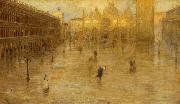 |
Pietro Fragiacomo
|
|
(Pirano deIstria (Trieste), 1856 - Venice, 1922) was an Italian painter.
Born at Pirano deIstria near Trieste, Fragiacomo moved with his family to Venice, where he enrolled at the Academy of Fine Arts in 1878 after a period as a worker in Treviso. He then abandoned his studies barely one year later to devote himself more freely to painting from life, often in the company of his friend the painter Giacomo Favretto. He won a bronze medal at the Universal Exhibition of 1889 in Paris and took part in the Munich International Exhibition of the same year, as well as later editions. Drawing inspiration from the Venetian lagoon and always characterised by a crepuscular sense of nature, his landscapes took on Symbolist overtones at the end of the century. He won the Prince Umberto Prize at the Milan Triennale of 1891 and was a regular participant from 1895 to 1922 at the Venice Biennale, which held a solo show of his work in 1910 and a posthumous retrospective in 1924.
|
|
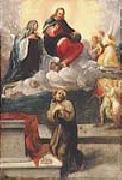 |
Pietro Faccini
|
|
(1562 - 1602 or 1614), was an Italian painter, active near his birthplace of Bologna in styles bridging Mannerism and the nascent Baroque.
According to Malvasia, the main biographer of the early Bolognese Baroque, he apprenticed in his twenties with the with Ludovico and Annibale Carracci. His style departs from the linear "Roman" quality assumed by his mentor, and has a more sparkling quality, influenced by Tintoretto, Correggio, and Bassano. His documented painterly output consists of about a dozen works. In 1590, he painted the Martyrdom of Saint Lawrence, now found in the church of San Giovanni in Monte (Bologna). He completed altarpieces for San Domenico and Santa Maria dei Servi in 1593-1594 and a Presepio in the Pinacoteca of Bologna.
|
|
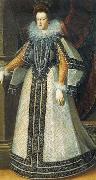 |
Pietro Facchetti
|
|
Pietro Facchetti (1539 ?C 27 February 1613) was an Italian painter of the late-Renaissance, mainly active in Rome.
Born to a poor family in Mantua. Facchetti initially trained with Lorenzo Costa the younger, but then moved to Rome and joined the studio of Scipione da Gaeta, where he gained fame as a portrait painter.
|
|
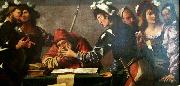 |
Pietro della Vecchia
|
|
(1603 - 8 September 1678) was an Italian painter also known as Pietro Muttoni. Born in Vicenza (Venice), he likely trained with Alessandro Varotari, called Padovanino, deriving a notable interest in Venetian masters such as Titian and Giorgione. Until 1984, he was mistakenly referred to as Pietro Muttoni. This misnomer is attributed to Italian art historian and archaeologist, Luigi Lanzi (June 14, 1732 - 30 March 1810), who in his Storia pittorica della Italia confused the name of the artist with the name of a collection, Muttoni, in which he had seen one of his paintings. In fact, Pietro was from the well known Venetian family, the della Vecchia. Renowned among his contemporaries for his ability to imitate the styles of 16th-century masters, he was also known for his grotesque paintings and portraiture. His earliest known works, two representations of St Francis, which have survived in many versions (e.g. Modena, Gal. Estense; Rovigo, Accad. Concordi), and a Crucifixion (1633; Venice, S Lio) are so heavily influenced by Carlo Saraceni and his student and collaborator Jean Leclerc as to suggest that della Vecchia trained with them. Certain Caravaggesque elements, which remained in his work for some time to come, suggest that he spent some time in Rome after Leclerc had left Venice, in 1621 or 1622. The influence of Alessandro Varotari or Padovanino, who is described by sources (e.g. Orlandini) as della Vecchia's teacher, is only noticeable in dated works from 1635 onwards. Della Vecchia probably worked in Padovanino's studio c. 1625-6, after his trip to Rome, and from the latter he derived his great interest in 16th-century painting in Venice and the Veneto. His monumental Crucifixion (1637; Venice, Fond. Cini), in which the composition harks back to the 16th century while the figures derive from Caravaggio, is characteristic of this phase. Around 1640 the influence of Bernardo Strozzi is apparent in his work, as in the Angel Offering a Skull to St Giustina, who stands between St Joseph and St John (1640; Venice, Accad.), painted for the church of S Giustina. In 1640 he began to design cartoons for the mosaics in S Marco, on which he worked until 1673. From 1640 to 1673 he was commissioned from the Venetian Republic for the design of the mosaic cartoons for the St. Mark's Basilica. He painted four idyllic landscapes that presage some of the Rococo content (now in Pinacoteca Querini-Stampalia). He married Clorinda Renieri, daughter of Nicolas Regnier, Flemish painter and art dealer. Della Vecchia died in Venice, September 1678.
|
|
|
|
 |
Pietro da Cortona
|
|
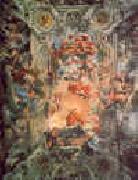
1596-1669 Italian Pietro da Cortona Galleries Italian painter, draughtsman and architect. He was, together with Gianlorenzo Bernini and Franceso Borromini, one of the three leading artists of the Roman Baroque. As a painter he developed the early Baroque style, initiated by Annibale Carracci, to a magnificent and imposing High Baroque. His fresco decorations set a standard for European Baroque painting until they were eclipsed by Giambattista Tiepolo's works and those of other Venetian masters of the 18th century. As an architect Cortona was far less influential. His imaginative designs for fa?ades and stucco decorations were, however, conclusive and independent solutions to problems central to Roman Baroque architecture.
|
|
|
|
 |
Pietro Bellotti
|
|
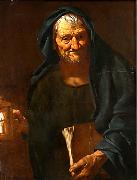
(1625-1700) was an Italian painter active in the Baroque period. He was born in Sale. He was a pupil of Michele Ferrabosco in Venice. He was patronized by Pope Alexander VIII and by the Duke of Uceda. He lived in Bolzano[1]. He painted mostly portraits. He died at Venice.
|
|
 |
Pietro Antonio Rotari
|
|
Italian painter , (b. 1707, Verona, d. 1762, St. Petersburg)
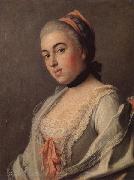
Italian painter. His artistic career began as a youthful distraction, but his talent quickly became apparent, and he entered the studio of Antonio Balestra in Verona, remaining there until he was 18. He spent the years 1725-7 in Venice and then moved c. 1728 to Rome, where he stayed for four years as a student of Francesco Trevisani. Between 1731 and 1734 he studied with Francesco Solimena in Naples before returning to Verona, where he set up his own studio and school. His most notable early independent works are multi-figured altarpieces (e.g. the Four Martyrs, 1745; Verona, church of the Ospedale di S Giacomo), which emulate 17th-century Roman and Neapolitan works. However, he also studied the smaller, more intimate paintings of Roman Baroque artists, and these influenced his later works. He fell victim to the wanderlust that appears to have been endemic to 18th-century Venetian painters, and c. 1751 he travelled to Vienna, where he was able to study works by Jean-Etienne Liotard, whose clean pictorial smoothness impressed him. He later moved to Dresden
|
|
 |
Pietro Antonio Lorenzoni
|
|
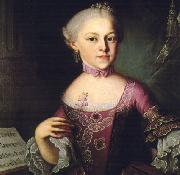
Pietro Antonio Lorenzoni (1721 - 1782) was an Italian painter who is believed to have painted several portraits of Wolfgang Amadeus Mozart and his family: "The Boy Mozart" (1763), his sister Maria Anna Mozart in "Nannerl as a Child" (1763) and a portrait of their father Leopold Mozart (c. 1765). He arrived in Salzburg, Austria in the 1740s and first wanted to paint Wolfgang and Nannerl. His protege, Johann Nepomuk della Croce, painted a Mozart family portrait in 1780.
|
|
|
|
|
|
|
|
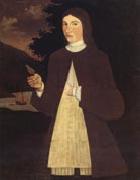 |
Pieter Vanderlyn
|
|
Dutch-born American Colonial Era Painter, ca.1687-1778
American colonial painter, b. Holland. He reached New York c.1718 and became a portrait painter and land speculator and practiced other trades, settling in Kingston, N.Y. The portrait most certainly ascribed to him is that of Mrs. Petrus Vas, his mother-in-law. John Vanderlyn was his grandson.
|
|
|
|
|
|
|
|
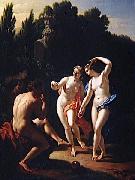 |
Pieter van der Werff
|
|
(1665 - September 26, 1722) was a Dutch Golden Age painter. He assisted his older brother, Adriaen van der Werff.
He learned to paint from his brother Adriaen and according to the RKD, he spent most of his life working in Rotterdam, where he painted the rich and famous
|
|
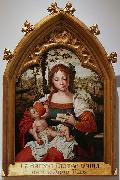 |
Pieter van Aelst
|
|
(August 14, 1502 - December 6, 1550) was a Flemish painter. He studied under Bernaert van Orley and later lived in Italy before entering the Antwerp Guild of painters in 1527. In 1533, he travelled to Constantinople for one year in a failed attempt to establish business connections for his tapestry works. Van Aelst established a studio in Brussels in 1544, where he created paintings and tapestries. His students include Gillis van Coninxloo, Willem Key, Hans Vredeman de Vries, Michiel Coxcie, and possibly Pieter Brueghel the Elder, who did eventually marry van Aelst's daughter, Mayken. His second wife, Mayken Verhulst, was an artist as well, and, according to Carel van Mander, the first teacher of her grandchildren, Pieter Brueghel the Younger and Jan Brueghel the Elder. He was also the uncle of Joachim Bueckelaer. Van Aelst's studio is also well known for its engraved works.
In particular, van Aelst is noted for his 1539 translation of Sebastiano Serlio's architectural treatise, Architettura, which is credited with having played a crucial role in spreading Renaissance ideas to the Low Countries and hastening the transition from the late Gothic style prevalent in the area at the time. He was in charge of the spectacular decorations for the 1549 Royal entry into Antwerp of Philip II of Spain, "the most famous entry of the century", according to Roy Strong.
|
|
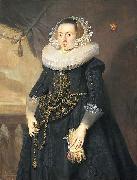 |
Pieter Soutman
|
|
(1593-1601 - 16 August 1657) was a Dutch Golden Age painter and printmaker from Haarlem.
|
|
 |
Pieter Saenredam
|
|
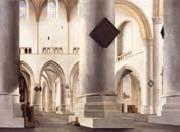
b. 1597, Assendelft, d. 1665, Haarlem,Painter and draughtsman, son of Jan Saenredam. His paintings of churches and the old town halls in Haarlem, Utrecht and Amsterdam must have been appreciated by contemporary viewers principally as faithful representations of familiar and meaningful monuments. Yet they also reveal his exceptional sensitivity to aesthetic values; his paintings embody the most discriminating considerations of composition, colouring and craftsmanship. His oeuvre is comparatively small, the paintings numbering no more than 60, and each is obviously the product of careful calculation and many weeks of work. Their most striking features, unusual in the genre, are their light, closely valued tonalities and their restrained, restful and delicately balanced compositions. These pictures, always executed on smooth panels, are remarkable for their sense of harmony and, in some instances, serenity. Here, perhaps, lies a trace of filial fidelity to the Mannerist tradition of refinement and elegance, of lines never lacking in precision and grace. But Mannerist figures and the more comparable components of strap- and scrollwork embellishment lack the tension and clarity of Saenredam's designs, which also have a completeness reminiscent of the fugues of Gerrit Sweelinck (1566-?1628).
|
|
 |
Pieter Pourbus
|
|
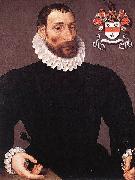
(1523 - 30 January 1584) was a Dutch-born Flemish Renaissance painter.
Remi Ommejaghere and his three sons
Onze-Lieve-Vrouwekerk, Bruges, BelgiumPourbus was born in Gouda. He was known primarily for his religious and portrait painting and worked mainly in Bruges, where he had moved from Gouda by 1543. He died in Bruges. His son was the painter Frans Pourbus the Elder and his grandson was Frans Pourbus the younger
|
|
 |
Pieter Neefs
|
|
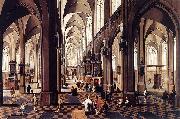
(also Neefs; 23 May 1620-after 1675) was a Flemish Baroque painter who specialized in architectural interiors of churches.Born and active in Antwerp, he was trained by his father, Pieter Neeffs I.Their works, in fact, are very similar and attributions of their individual hands can be difficult. His brother Ludovicus Neefs has also made similar paintings.
|
|
|
|
|
|
 |
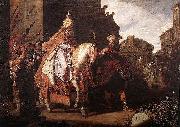
Pieter Leermans
|
|
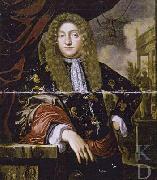
Pieter Leermans (ca.1635, Leiden - 1706), was a Dutch Golden Age painter.
he was a portrait painter of historical allegories. He is also known as Lieremans
Little is known of his life, but he is considered to be one of the Leiden fijnschilders
|
|
 |
Pieter Lastman
|
|
(1583 - 4 April 1633 (buried)) was a Dutch painter . Lastman is considered important because of his work as a painter of history pieces and because his pupils included Rembrandt and Jan Lievens. In his paintings Lastman paid a lot of attention to the faces, hands and feet.
Pieter Lastman was born in Amsterdam, the son of a town-beadle, who was dismissed in 1578 for being a Catholic. His mother was an appraiser of paintings and goods. His apprenticeship was with Gerrit Sweelinck, the brother of Jan Pieterszoon Sweelinck. Between approximately 1604 and 1607 Lastman was in Italy, where he was influenced by Caravaggio (as were the painters of the Utrecht School a few years later) and by Adam Elsheimer. Back in Amsterdam he moved in with his mother in the Sint Antoniesbreestraat, living next to mayor Geurt van Beuningen. Lastman never married although he promised to marry the sister of Gerbrand Adriaensz Bredero. Because of his health Lastman moved in with his brother in 1632. He died the next year and was buried in the Oude Kerk.
|
|
 |
Pieter Jansz. Saenredam
|
|
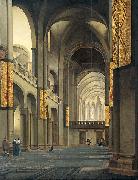
(June 9 1597 - buried May 31 1665) was a painter of the Dutch Golden Age, known for his distinctive paintings of whitewashed church interiors.
Saenredam was born in Assendelft, the son of the Northern Mannerist printmaker and draughtsman Jan Pietersz Saenredam (1565-1607), a follower of Goltzius whose sensuous naked goddesses are in great contrast with the work of his son. In 1612 he moved to Haarlem, where he became a pupil of Frans de Grebber and lived for the rest of his life. In 1614 he became a member of the Haarlem Guild of St. Luke. He died in Haarlem.
A contemporary of the painter-architects Jacob van Campen, Salomon de Bray, and Pieter Post, he is noted for his surprisingly modern paintings of church interiors, the great bulk of his production. Saenredam achieved this modern look by using very even light, subtlely modulated, and by removing detailed depiction of textures, in meticulously measured and drawn sketches. He would make these sketches in pencil, pen, and chalk, then and add in watercolor to help give the sketch texture and color. The sketches are detailed, conveying the interior atmosphere through the clever use of light and graduated shadows. Saenredam often deliberately omitted people and church furniture from work, thus focusing more attention on buildings and their architectural forms. Only after having made precise measurements, and precise sketches and drawings of the churches, he would take them to his studio where he started to create his paintings, often after a delay of many years. His emphasis on even light and geometry is brought out by comparing his works with those of the rather younger Emanuel de Witte, who included people, contrasts of light and such clutter of church furniture as remained in Calvinist churches, all usually ignored by Saenredam. Unlike de Witte's, Saenredam's views are usually roughly aligned with a main axis of the church.
|
|
 |
Pieter Jansz Saenredam
|
|
1597-1665
Dutch
Pieter Jansz Saenredam Gallery
Saenredam was the son of the print maker and draughtsman Jan Pietersz Saenredam (1565-1607), who was born in Zaandam or, in those days, Saenredam. In 1612 he moved to Haarlem, where he became a pupil of Frans de Grebber and lived the rest of his life.
A contemporary of Rembrandt, he is noted chiefly for his surprisingly modern paintings of churches. Saenredam achieved this modern look by meticulously measuring and making sketches of the churches he wanted to paint. He would make these sketches in pencil, pen, and chalk, then and add in water colors to help give the sketch texture and color. The sketches are very architectural in detail, they convey the interior atmosphere through the clever use of light and graduated shadows. Saenredam often deliberately left people out of his work, thus also focusing more attention on buildings and their architectural forms. Only after having made precise measurements, and precise sketches and drawings of the churches, he would take them to his studio where he started to create his paintings.
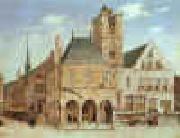
The Reformation led to a rise in Protestant art, of which Saenredam??s Interior of the St. Martin's Dom in Utrecht is an example. As a Catholic church the Dom had been built with adornments. Then, in the epoch of the Eighty Years War and with the church getting in Protestant hands, it was ??cleaned?? of Catholic influences. The altarpieces and statuary were removed, and the walls and ceiling were white washed. The painting shows the church not long after its make-over. The sparse interior with illuminated corridors reflect Protestant ideals, new for Saenredam's time.
Alternatively, the paintings of church interiors by Saenredam and other 17th century Dutch painters have been interpreted as having less to do with religion and more with the new-found interest in perspective and with the Dutch interpretation (known as Dutch Classicism) of Palladio??s theories of proportion, balance and symmetry.
In any case, Saenredam wanted to memorialize his country during this time of change by documenting many of the country??s buildings. Many artists before him had specialized in imaginary and fanciful architecture, but Saenredam was the first to focus on existing buildings. According to the J. Paul Getty Trust ??Saenredam??s church paintings??owe their poetry to his remarkable blend of fact and fiction. He began by making site drawings of buildings that record measurements and detail with archaeological thoroughness.?? This meticulous preparation helped him to create such accurate and enchanting paintings. The measurements aided him in using scientific linear perspective, just like Andrea Pozzo. He was able to use his measurements to create a realistic image with depth.
The Utrecht Archives houses a large number of Saenredam's drawings. In the season 2000-2001 the Centraal Museum at Utrecht held a major exhibition of his drawings and paintings. Perhaps his best known works are a pair of oil paintings both titled Interior of the Buurkerk, Utrecht. One hangs in London's National Gallery, the other in the Kimbell Art Museum in Fort Worth, Texas. In their simplicity and semi-abstract formalism, they foreshadow more modern works such as those of Mondrian and Feininger.
|
|
|
|
|
|
 |
Pieter Gysels
|
|
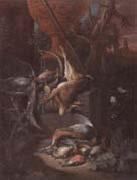
1621-1691
Flemish
Pieter Gysels Gallery
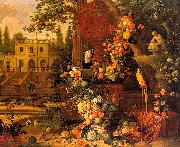
Flemish painter. He began his training in 1641, when he was already 20, with Antwerp painter Jan Boots. Houbraken assumed he was also apprenticed to Jan Breughel II, whose diary describes a painting completed in 1638 as a 'small wild boar somewhat touched up by Gys' ('een klein wilt verxken voor Gys wat geretosieert'). But it seems highly doubtful that, as van der Sanden claimed (Denuce, p. 155), 'Gys' refers to Pieter Gysels. In 1649 or 1650 he became a master in Antwerp's Guild of St Luke. It is not known whether he took on any pupils. On 13 November 1650 he married Joanna Huybrecht, who bore him six children.
|
|
 |
Pieter Gijsels
|
|
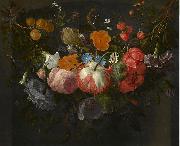
Flemish painter (b. 1621, Antwerpen, d. 1690, Antwerpen
|
|
 |
Pieter Gallis
|
|
(1633, Enkhuizen - 1697, Hoorn), was a Dutch Golden Age painter.
According to Houbraken, he painted as a hobby, since he earned his living as the director of the local pawn shop (Bank van Lening).He specialized in landscapes, flowers, fruit and other forms of still life. He was a very friendly man, especially to artists and art collectors.
He was active in Enkhuizen (and perhaps Amsterdam), in Purmerend from 1679-1683, and in Hoorn from 1683 until his death.
|
|
|
|
|
|
|
|
|
| Wholesale China Oil Painting Wholesale Oil Painting China Xiamen Portrait Reproduction on canvas Chinese Oil Painting Wholesale USA Oil Painting |
|
|
|
|
|