| |
|
Xiamen Oil Paintings, Wholesale Direct!
|
|
100% hand painted, 100% cotton canvas, 100% money back if not satisfaction. |
|
|
|
|
ART WORKS INDEX
A
B
C
D
E
F
G
H
I
J
K
L
M
N
O
P
Q
R
S
T
U
V
W
X
Y
Z
|
|
ARTISTS INDEX
A
B
C
D
E
F
G
H
I
J
K
L
M
N
O
P
Q
R
S
T
U
V
W
X
Y
Z
|
|
|
|
 |
Pekka Halonen
|
|
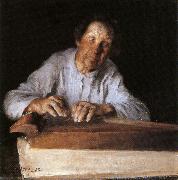
Pekka Halonen (23 September 1865 - 1 December 1933) was a painter of Finnish landscapes and people. He was born in Lapinlahti. He lived with his family in a home and studio on Lake Tuusula in Järvenpää, Finland that he, himself, designed and named Halosenniemi. The beautiful and serene building is now a museum that includes original furnishings and Halonenes own art on the walls. There, on the shores of Lake Tuusula where Pekka Halonen resided, an artistse community developed and flourished, helping to develop a sense of Finnish national identity. Halosenniemi was designed with the two story studios of Paris in mind with high ceilings and tall windows in the studio and second floor living quarters accessible by a set of stairs and a balcony that overlooked the studio. Adjacent to the house, Halonen built a sauna and, in typical Finnish tradition, the sauna also served as a laundry. Halonen stated that he never painted for anyone but himself. He felt that eArt should not jar the nerves like sandpaper - it should produce a feeling of peace.e
His father was a peasant from Lapinlahti. Halonen studied at the Art Society's drawing school in Helsinki. In 1890 he moved to Paris where he studied at the Academie Julian and later under Paul Gauguin. He died in Tuusula.
There is a painting by Pekka Halonen in the post-impressionist section of the Museum of Fine Arts in Budapest, Hungary. Until May 2013 in the Groninger Museum, the Netherlands: Pekka Halonen, Eero Järnefeldt, Helene Schjerfbeck and Akseli Gallen Kallela in the exhibition 'Nordic Art: The Modern Breakthrough'.
|
|
 |
Pehr Horberg
|
|
was born January 31, 1746 in Virestad parish in Småland, Sweden and died January 24, 1816 in Risinge in Östergötland, Sweden, was a Swedish artist, painter and musician. In 1769 he married the maid Maria Eriksdotter and they had three sons.
Pehr Hörberg birthplace Virestad is a small town and a village in Älmhult Municipality in Kronoberg County, in Småland, Sweden. It was formerly the central area of the old Virestad parish. The church in Virestad was built of stone 1799-1800 on the site of a former medieval church. Some of its treasures include a pulpit from the 1600s and an altarpiece by Pehr Hörberg. He died in Falla in Hällestad Bergslag, where he owned 1/4 of the homestead, and part of the village Olstorp, in Risinge parish, where he also owned 1/4 of the homestead. Both the fourth in Falla in Hällestad and the fourth in Olstorp in Risinge were mining districts estates, located in Finspång Municipality in Östergötland County. Hörberg got his "huts in an aiding position", so to his own satisfaction that he 25 years later wrote about Olstorp and the farm in Falla, that he had later acquired, that the estates were very importat for him.
|
|
 |
Pehr Hillestrom
|
|
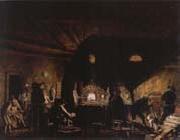
Swedish, 1732-1816,was a Swedish artist and since 1794 a professor at the Swedish Royal Academy of Art. He became the director in 1810. He produced numerous paintings of mostly women and children performing various daily tasks inside upper- and middle-class homes in Stockholm. Dresses and furniture were painted exactly the way they looked and provide a valuable source of information about what life was like in those days. In addition to this he painted craftsmen in action at mills and other early industrial workplaces. Between 1757 and 1772 he worked as a master tapestry weaver, after learning the trade in France.
|
|
 |
pehr hillestrom
|
|
Pehr Hilleström (1732-1816) var en svensk målare och vävare, professor vid Konstakademiens läroverk från 1794 och dess direktör från 1810. I unga år var han en av Sveriges främsta gobelängvävare men övergick sedan till måleri. Han är mest känd för sina vardagsskildringar av sin tids levnadssätt. Han målade pigor och tjänstefolk som arbetar, överklassen i de fina salarna, enkelt folk i stugorna och bilder från olika bruksmiljöer. Genom det räknas han som den största skildraren av den gustavianska samtiden.
Pehr Hilleström är far till konstnären Carl Petter Hilleström och farfars farfars far till Gustaf Hilleström.
Pehr Hilleström föddes i 1732 Väddö, Roslagen, troligtvis den 18 november. Han växte upp under fattiga omständigheter på Väddö prästgård vid sin farbror som var kyrkoherde där. Han var son till en militär och äldst i en syskonskara på 12 barn. Hans far råkade redan 1719 i rysk fångenskap men hade 1723 lyckats återvända till Sverige och då tagit sin tillflykt till brodern på Väddö.
1743 flyttade familjen Hilleström från Roslagen till Stockholm, där Pehr, 10 år gammal, sattes i lära hos tapet- och landskapsmålaren Johan Philip Korn (1727-1796) samt mellan åren 1744-1747 även hos den invandrade tyske solfjädermålaren Christian Fehmer. Utöver detta fick han även undervisning vid kungliga ritareakademin där Guillaume Thomas Taraval (1701-1750) och Jean Eric Rehn (1717-1793) var läromästare.
Efter inrådan från Carl Hårleman sattes Hilleström 1745 i lära hos Jean Louis Duru (-1753). Duru var hautelissevävare och hade kallats till Sverige för att göra textila utsmyckningen av Stockholms slott. Tanken var att Hilleström skulle utbildas till Durus medhjälpare. 1749 visade Hilleström upp ett första läroprov som visades upp för deputationen som gillade det så mycket så att han fick en belöning på 180 daler kopparmynt. När Duru dog i slutet av 1753 så fick Hilleström fullborda den påbörjade kappan för tronhimmelen i det kungliga audiensrummet. Han var då så skicklig att det knappt kunde märkas någon skillnad mellan hans och hans lärares arbete. Lönen var blygsam men vid 1756 års riksdag fick han samma årslön som Duru hade haft, och han fick en beställning på ett vävt porträtt av Hårleman utfört i hautelisse.
Åren 1757-58 var Hilleström på en längre och för tidens konstnärer sedvanlig studieresa till utlandet. Färden gick till Paris, Belgien och Holland, bland annat med en vidareutbildning i gobelängteknikerna som mål. I Paris blir Hilleström erbjuden att studera måleri i François Bouchers atelj??, men störst intryck tog han där av genre- och stillebenmålaren Jean-Baptiste-Sim??on Chardin, som undervisade honom vid franska målarakademien. Väl hemma i Stockholm fortsatte han visserligen att göra tapeter, mattor, stolsöverdrag och dylikt för hovet. Men så småningom fylldes slottet behov av vävnader samtidigt som Hilleström fortsatte studera måleri.
|
|
|
|
|
|
|
|
|
|
 |
Peeter Danckers de Rij
|
|
Pieter, Peeter, or Peter Danckerts de Rij, Dankers de Ry, or Peteris Dankersas (1605, Amsterdam - 9 August 1661, Rudnik) was a Dutch Golden Age painter.
He was the son of Cornelis Danckerts de Ry, member of a large family of printers, painters and engravers.
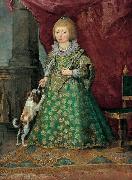
Adam Kazanowski - by Peeter Danckers de Rij.
Example of Dankerts-Sandrart collaboration in print of PC Hooft. This 1642 engraving was painted by Sandrart, etched by Reinier van Persijn, and printed by Danckerts. The poem in Latin at the bottom was written by Caspar Barlaeus.Cornelis is mentioned in Houbraken's Schouburg as being one of the many teachers of Joachim von Sandrart in 1640-41, though considering Sandrart's age and experience (he had just returned to the North from his Grand Tour to Italy), this was more of a collaboration. Since Filippo Baldinucci later wrote a biograhical sketch on Pietro Danckerse de Ry in his list of artists called the Notizie, it is possible that Danckerts visited Italy at some time. In any case Sandrart engraved some of Peter's paintings after this period. Peter was active until 1640 in Amsterdam, and then he moved to Warsaw, Danzig, and Vilnius in the Polish-Lithuanian Commonwealth. He was active in Poland as the court painter and architect of the Polish King Władysław IV Vasa. According to Houbraken a poem was written in his honor that applauds his work in Poland. He died as the result of a highway robbery in the Redininkai Forest near Vilnius, Lithuania.
|
|
 |
Pedro Weingatner
|
|
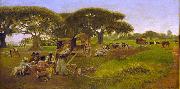
Pedro Weingärtner (Porto Alegre, 1853 e 1929) was an important Academic painter of Brazil, and the first artist born in Rio Grande do Sul to win international praise for his work.
Born to a family of German immigrants, he began his artistic career as an amateur, helped by his brother Ineio, who was a lithographer, and possibly also by painter Delfim da Câmara. Anyway, in 1878 he moved to Germany in order to study in the Grossherrzoglisch Badische Kunstschule, in Karlsruhe. There he became a pupil of Ferdinand Keller, Theodor Poeckh and Ernst Hildebrand. In 1880 Keller moved to Berlin, being followed by Weingärtner, who then enrolled in the local Academy.
In 1882 he left Germany for France, studying in the Academie Julian under Tony Robert-Fleury and William Adolphe Bouguereau. Wrecked by financial issues, he thought of abandoning his studies, but such situation was reverted by supportive friends, including Baron of Itajube, who got for him a special scholarship from emperor Peter II upon Bouguereau's advice. Then he could further his education in Rome.
Thereafter for many years he divided his time between Rio de Janeiro, Porto Alegre and Rome, traveling very often and being celebrated as one of the most important Brazilian painters of his generation. In Rio Grande do Sul he was a star. In 1920 he was back in Porto Alegre, where the remained until death. His fame declined from 1925 on, facing competition from new painters and changing tastes in local art.
He devoted all his efforts to a half-Realist half-Romantic approach to Academicism even while such styles were already being severely challenged by Modern tendencies. Major themes in his work were mythological scenes, landscapes and genre paintings focusing mainly immigrants and the gaucho, the folk type of Rio Grande do Sul people.
|
|
 |
Pedro Weingartner
|
|
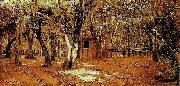
(Porto Alegre, 1853 - 1929) was an important Academic painter of Brazil, and the first artist born in Rio Grande do Sul to win international praise for his work.
Born to a family of German immigrants, he began his artistic career as an amateur, helped by his brother Inecio, who was a lithographer, and possibly also by painter Delfim da Câmara. Anyway, in 1878 he moved to Germany in order to study in the Grossherrzoglisch Badische Kunstschule, in Karlsruhe. There he became a pupil of Ferdinand Keller, Theodor Poeckh and Ernst Hildebrand. In 1880 Keller moved to Berlin, being followed by Weingärtner, who then enrolled in the local Academy.
In 1882 he left Germany for France, studying in the Academie Julian under Tony Robert-Fleury and William Adolphe Bouguereau. Wrecked by financial issues, he thought of abandoning his studies, but such situation was reverted by supportive friends, including Baron of Itajube, who got for him a special scholarship from emperor Peter II upon Bouguereau's advice. Then he could further his education in Rome.
Thereafter for many years he divided his time between Rio de Janeiro, Porto Alegre and Rome, traveling very often and being celebrated as one of the most important Brazilian painters of his generation. In Rio Grande do Sul he was a star. In 1920 he was back in Porto Alegre, where the remained until death. His fame declined from 1925 on, facing competition from new painters and changing tastes in local art.
|
|
 |
Pedro Sanchez
|
|
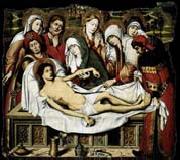
Spanish Early Renaissance Painter, active ca.1454-1468
|
|
|
|
 |
Pedro Figari
|
|
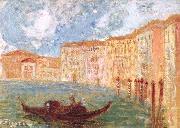
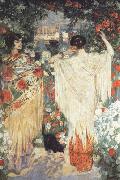
(June 29, 1861-July 24, 1938) was a Uruguayan painter, lawyer, writer, and politician. Although he did not begin the practice until his later years, he is best known as an early modernist painter who emphasized capturing the every-day aspects of life in his work. In most of his pieces, he attempts to capture the essence of his home by painting local customs that he had observed in his childhood.
Figari painted primarily from memory, a technique that gives his work a far more personal feeling. With his unique style, which involved painting without the intention to create an illusion, he, along with other prominent Latin-American artists such as Diego Rivera and Tarsila do Amaral, sparked a revolution of identity in the art world of Latin America.
|
|
 |
Pedro Blanes
|
|
1878-1926
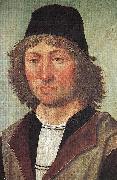
Uruguayan painter. He first studied painting and drawing as a child with the Catalan painter Miguel Jaume i Bosch. As an adolescent he moved with his family to Spain, where he studied at the Real Academia de Bellas Artes de San Fernando in Madrid and frequented the workshop of Santiago Rusieol. After studying in Paris with Benjamin Constant, he visited Italy and Mallorca, where he first developed his talents as a landscape painter before returning briefly to Uruguay in 1899. During another prolonged visit to Europe from 1902 to 1907 he enthusiastically studied the work of Pierre Puvis de Chavannes, Lucien Simon, Henri Martin, Claude Monet and James Abbott McNeill Whistler. After his return to Montevideo in 1907 he painted shimmering Impressionist-influenced landscapes such as Palma de Mallorca and treated local rural and urban scenes in which he established himself as a remarkable colourist. He also commemorated subjects from Latin American history in works such as Artigas Dictating to his Secretary Don Jose G. Monterroso , the equestrian portrait of General Galarza and Artigas in el Hervidero.
|
|
 |
Pedro Berruguete
|
|
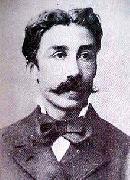
(c. 1450 - 1504) was a Spanish painter; his art is regarded as a transitional style between gothic and Renaissance. Born in Paredes de Nava, Spain, he went to Italy in 1480 and worked in Federigo da Montefeltro's court in Urbino, where he could see some works by Melozzo da Forle. He came back to Spain in 1482 and painted in several cities, such as Sevilla, Toledo and Ávila. He was the father of an important sculptor, Alonso Berruguete, considered the most important sculptor in Renaissance Spain.
|
|
 |
Pedro Americo
|
|
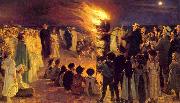
de Figueiredo e Melo (Areia, Brazil, 29 April 1843 - Florence, Italy, 7 October 1905) was one of the most important academic painters of Brazil. He was also a writer and a teacher.
He moved to Rio de Janeiro in 1854, where he was granted a scholarship to study in the Academia Imperial de Belas Artes (Imperial Academy of Fine Arts). Later he furthered his studies in Europe, at the École des Beaux-Arts in Paris, being a pupil of Jean-Auguste-Dominique Ingres, Hippolyte Flandrin and Carle-Horace Vernet, winning much praise for his paintings, and achieving the Doctorate in Sciences at the University of Brussels, in 1868.
Returning to Brazil, he produced a great series of masterpieces, including one of the most well known works of art in Brazil: Independence or Death!, depicting the moment when Prince Peter declared the country independent from Portugal, a work that has illustrated History books for elementary schools in Brazil for decades. Living mostly in Florence, Italy but traveling extensively back and forth from Rio de Janeiro, Pedro Am??rico managed to work also as a lecturer and an art historian.
He married Carlota de Ara??jo Porto-alegre (1844?C1918), daughter of painter and diplomat Manuel de Ara??jo Porto-alegre, and they had children. Knighted by the German Crown he was also Great Knight of the Order of the Holy Sepulchre. With the proclamation of the Republic in Brazil in 1889, he was elected a deputy of the National Assembly.
|
|
 |
Peder Severin Kroyer
|
|
Norwegian-born Danish Painter, 1851-1909
Norwegian-Danish painter, was born in Stavanger, Norway to Ellen Cecilie Gjesdal. He is one of the best known and beloved, and undeniably the most colorful of the Skagen Painters, a community of Danish and Nordic artists who lived, gathered or worked in Skagen, Denmark, especially during the final decades of the 1800s. Krøyer was the unofficial leader of the group. The mother having been judged unfit, he was given to be cared for by Gjesdal's sister and the sister's husband. Along with the foster parents, he moved to Copenhagen soon afterwards. He began his art education at nine years of age under private tutelage, and was enrolled in Copenhagen's Technical Institute the following year. In 1870 at the age of 19 he completed his studies at the Royal Danish Academy of Art (Det Kongelige Danske Kunstakademi), where he studied with Frederik Vermehren. In 1873 he was awarded the gold medal and a scholarship. His official debut as a painter was in 1871 at Charlottenborg with a portrait of a friend, painter Frans Schwartz. He exhibited regularly at Charlottenborg throughout his lifetime. In 1874 Heinrich Hirschsprung bought his first painting from Krøyer,
|
|
|
|
Peder Severin Kroyer
|
|
(23 July 1851 - 21 November 1909), known as P.S. Krøyer, was a Norwegian-Danish painter. He is one of the best known and beloved, and undeniably the most colorful of the Skagen Painters, a community of Danish and Nordic artists who lived, gathered or worked in Skagen, Denmark, especially during the final decades of the 19th century. Krøyer was the unofficial leader of the group.
|
|
|
|
 |
Peder Balke
|
|
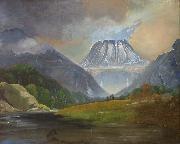
Peter Andersen was born on the island of Helgøya, in Hedmark county, Norway. He grew up Ringsaker, but stayed in the 1820s on the Balke farm in Toten in Oppland county. Farmers in Toten paid his education, and as thanks he decorated several of the farms in Toten on his return. They actively encouraged his painting activities and later supported him in higher education.
In the autumn of 1827, Balke served as an apprentice to Heinrich August Grosch. he was also a student at the Tegneskole under Grosch and Jacob Munch. Balke signed a two year contract as an apprentice at the Danish decoration and artist Jens Funch. From autumn 1829 to spring 1833, he was a pupil of Carl Johan Fahlcrantz at the art academy in Stockholm. Balke was also a pupil of Johan Christian Dahl from 1843 to 1844.
During the summer of 1830 he walked through Telemark, Rjukan, Vestfjorddalen over Røldal and Kinsarvik to Bergen, and then back over Vossevangen to Gudvangen, further over Fillefjell to Valdres and thence across the mountains to Hallingdal. All the way he painted and drew small sketches that were later developed into paintings. He also traveled to Germany, and Russia. He visited Paris and London.
In Stockholm, he completed several of the paintings he had outlined of his Finnmark tour. Some of these were sold to the royal family. In 1846 he sold thirty of his paintings to Louis-Philippe of France for Versailles. Besides the 17 paintings in the National Gallery in Oslo, Peder Balke also is represented at several major art collections in Norway and Sweden.
|
|
 |
Peder Als
|
|
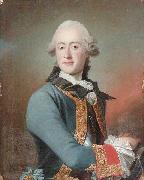
Peder Als, a Danish historical and portrait painter, born at Copenhagen in 1725, studied for some time under C. G. Pile. After gaining the first great prize given by the academy at Copenhagen in 1755, he went to Rome and entered the school of Mengs. He occupied himself chiefly in copying the pictures of Raphael and Andrea del Sarto, which it is said that he did with great accuracy. He also copied Correggio and Titian. On his return to his own country he painted some good portraits; but his colouring was too sombre to give a pleasing effect to his pictures of females, and his work was frequently so laboured as to be deprived of all animation. Copies of the works of the old masters by Als are to be seen in Denmark. He died in 1775.
|
|
 |
Peck Sheldon
|
|
American portrait painter and artist
b.1797 d.1868
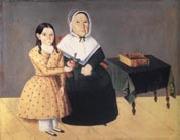
American painter. A self-taught painter, he used his family as subjects in his early works, employing dark colours against flat backgrounds. After moving to Jordan, NY, in 1828 he used brighter colours and included more detail. He continued to paint on panel, almost always making half-length portraits characterized by such features as a broad brow, a wide, intense stare from detailed eyes and the use of a decorative brushstroke
|
|
|
|
 |
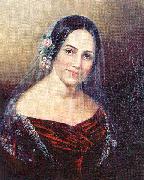
Pearce, Charles Sprague
|
|
American, 1851-1914
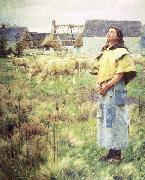
American artist, was born at Boston, Massachusetts. In 1873 Pearce became a pupil of L??on Bonnat in Paris, and after 1885 he lived in Paris and at Auvers-sur-Oise. He painted Egyptian and Algerian scenes, French peasants, and portraits, and also decorative work, notably for the Thomas Jefferson Building at the Library of Congress at Washington. He received medals at the Paris Salon and elsewhere, and was made Chevalier of the French Legion of Honor, decorated with the Order of Leopold, Belgium, the Order of the Red Eagle, Prussia, and the Order of the Dannebrog, Denmark. Among his best known paintings are The Decapitation of St John the Baptist (1881), in the Art Institute of Chicago; Prayer (1884),
|
|
 |
Peale, Sarah Miriam
|
|
American Painter, 1800-1885
Painter, daughter of James Peale. The most notable of James Peale's painting daughters, she also studied with her uncle Charles Willson Peale and her cousin Rembrandt Peale, from whom she developed her talent for colour and precision in details. As studio assistant to her father, she occasionally introduced into his work bright and intricate fabrics. Her career began in 1817 with the exhibition of Flowers at the Pennsylvania Academy of the Fine Arts. In the 1820s she painted in Baltimore and Philadelphia; in 1824 she was elected to the Pennsylvania Academy. From 1831 to 1846 she maintained her studio in Baltimore where she was a popular portrait painter, producing unpretentious but intelligent and occasionally romantic portraits characterized by a fine concern for materials, as in Mrs Perry Eccleston Noel (c. 1822; Baltimore, Mus. & Lib. MD Hist.). Her sitters included such prominent politicians as Daniel Webster (1842; St Louis, MO Hist. Soc. Mus.) and Abel Park Upshur (1842; Baltimore, Mus. & Lib. MD Hist.). In 1847 Sarah moved to St Louis, MO, where for 32 years she was in great demand. From 1859 her still-lifes won prizes at the St Louis fairs; they were loosely painted works different from the tightly controlled table-top pieces of her father and sister. Sarah's portraiture also changed, from the elegant, precise Neo-classicism learnt from her cousin Rembrandt to a looser,
|
|
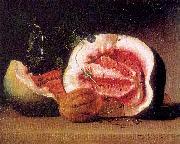 |
Peale, Raphaelle
|
|
American Painter, 1774-1825
Painter, son of Charles Willson Peale. His mother was Rachel Brewer Peale. He studied painting with his father and assisted him in the museum. Raphaelle began to paint portraits professionally in 1794, but poor patronage in Philadelphia forced him to travel in the South and New England, taking silhouettes with the physiognotrace and painting portraits in oil and miniature. From about 1815 onwards, bouts of alcoholism and gout inhibited his progress. He turned to painting still-lifes, but these sold for small amounts.
|
|
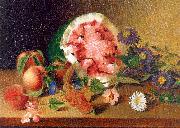 |
Peale, James
|
|
American, 1749-1831
Painter, brother of Charles Willson Peale. Charles encouraged him to become a painter; James also worked as a frame-maker for his brother until the Revolution, in which he served as a lieutenant. From 1779 James shared Charles's practice, specializing in miniatures. His early work, occasionally confused with Charles's, shows his brother's influence. After 1794, his style became clearly his own: more delicate with subtle colour harmonies, softened outlines and free handling; it may be distinguished by a faint violet tone in the shadows and the inconspicuous signature 'IP'. His miniatures of male subjects are frequently superior to his portraits of women, for example Benjamin Harwood (1799; Baltimore, Mus. & Lib. MD Hist.), but his meticulous attention to costume and his success in imparting colour and sparkle to skin and eyes,
|
|
|
|
|
|
|
|
|
|
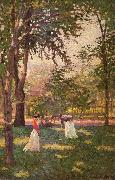 |
Paxton, William McGregor
|
|
American Painter, 1869-1941
was an American Impressionist painter. Born in Baltimore, the Paxton family came to Newton Corner in the mid-1870s, where William's father James established himself as a caterer. At 18, William won a scholarship to attend the Cowles Art School, where he began his art studies with Dennis Miller Bunker. Later he studied with Jean-L??on G??rôme in Paris and, on his return to Boston, with Joseph DeCamp at Cowles. There he met his future wife Elizabeth Okie, who also was studying with DeCamp. After their marriage, William and Elizabeth lived with his parents at 43 Elmwood Street, and later bought a house at 19 Montvale Road in Newton Centre. Paxton, who is best known as a portrait painter, taught at the Museum School from 1906 to 1913. Along with other well known artists of the era, including Edmund Charles Tarbell and Frank Benson, he is identified with the Boston School. Like many of his Boston colleagues, Paxton found inspiration in the work of the seventeenth-century Dutch painter Johannes Vermeer. Paxton was fascinated not only with Vermeer's imagery, but also with the system of optics he employed. He studied Vermeer's works closely, and discovered that only one area in his compositions was entirely in focus, while the rest were somewhat blurred. Paxton ascribed this peculiarity to "binocular vision," crediting Vermeer with recording the slightly different point of view of each individual eye that combine in human sight. He began to employ this system in his own work, including The New Necklace, where only the gold beads are sharply defined while the rest of the objects in the composition have softer, blurrier edges.
|
|
|
|
|
|
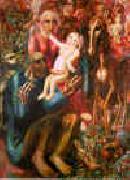 |
Pavel Filonov
|
|
1883-1941
Pavel Filonov Locations
Russian painter, graphic artist and poet. He came from a working-class background; orphaned in childhood, he moved to St Petersburg, where he earned money through embroidery, house painting, restoring buildings and icons, and other tasks such as retouching photographs and making posters and wrappers for goods (a practical apprenticeship he never forgot). His interest in drawing and painting developed through copying, making portraits and the close study of human and animal anatomy. He entered the Academy of Arts, St Petersburg (1908) with difficulty but he left without graduating; his only important teacher was L. E. Dmitriyev-Kavkazsky (1849-1916), with whom he studied privately. Largely self-taught, he was a man of considerable intellectual powers.
|
|
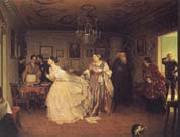 |
Pavel Fedotov
|
|
1815-1852 Realism Russian Russian painter and draughtsman. He was noted for his satirical critique of Russian life of the mid-19th century. He attended the First Moscow Military School (1826-33), then served in St Petersburg in the Finnish Regiment Life-Guards. While earning a reputation as an honest and hard-working officer, he drew a great deal, played the flute and took part in amateur theatrical performances. Having become established as the regimental artist, in 1834 he began to attend evening classes at the St Petersburg Academy of Arts. In November 1843, after a long period of doubt, he resigned his commission in the army in order to become a professional artist. He began to attend the Academy regularly and joined the battle-painting class of Aleksander Zauerveid (1783-1844),
|
|
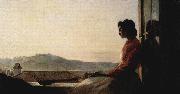 |
Pavel Chistyakov
|
|
(July 5 [O.S. June 23] 1832 - November 11, 1919) was a Russian painter and teacher of art.
He studied at the St.Petersburg Academy of arts (1849-1861) under Petr Basin. He was a pensioner of the Academy of Arts in Paris and in Rome (1862?C1870). He taught in the Drawing School of the Society for the Encouragement of the Arts (1860-1864), and in St.Petersburg (from 1872) he was the professor-head of workshop (1908-1910) and managing mosaic branch (1890-1912). The art-pedagogical system of Chistiakov, whose students included Viktor Vasnetsov, Mikhail Vrubel, Vasily Polenov, Ilya Repin, Valentin Serov, and Vasily Surikov, developed in constant struggle against the inert system of academism and played a huge role in the development of realism in Russian art of the second half of the 19th century.
The main goal of Chistiakov was the preparation of the artist-citizen possessing high professional skill. His pedagogical method assumed the merger of the direct perception of nature by the artist with its scientific study. In creative practice he aspired to dramatization of a historical plot and psychological saturation in historical and genre portraits (Head of a Ciucciara, 1864, in the Russian Museum,
|
|
 |
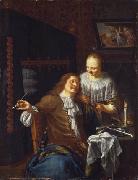
Pauwels van Hillegaert
|
|
(1596-1640) was a Dutch Golden Age painter of landscapes and military scenes.
He married Anneken Homis from Antwerp in 1620, with whom he had several children, including the painter with the same name, Pauwels van Hillegaert II (1621-1658). This Pauwels Jr. married Cornelia de Vlieger (daughter of Simon de Vlieger) and had two daughters. When Pauwels Jr. like his father died at a relatively young age, Cornelis de Bie wrote a commemorative poem about him.
Pauwels Sr. won royal commissions to paint battle scenes, most notably for the Siege of 's-Hertogenbosch in 1629. He also won a commission for the Battle of Nieuwpoort. He also painted Italianate landscapes, but was mostly admired for his horses and armor.
|
|
 |
Paulus Moreelse
|
|
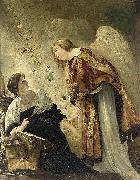
(1571, Utrecht - 6 March 1638, Utrecht) was a Dutch painter, mainly of portraits.
Moreelse was a pupil of the Delft portrait painter Michiel Jansz. van Mierevelt, who had himself been a pupil of Anthonie van Blocklandt. He took a study-trip to Italy, where he received many portrait commissions. Back in Utrecht, in 1596 he became a member of the zadelaarsgilde, which was the traditional name in Utrecht for the Guild of Saint Luke. In 1611, along with Abraham Bloemaert, he was one of the founders of a new painters' guild, called "St. Lucas-gilde", and became its first deken.
Moreelse was a well known portrait painter who received commissions from right across the Dutch Republic. His earliest work dates to 1606. Other than portraits, he also painted a few history paintings in the Mannerist style and in the 1620s produced pastoral scenes of herders and shepherds. He belonged to the same generation as Abraham Bloemaert and Joachim Wtewael, and like Wtewael he played an important role in the public life of their city. His version of Diana and Callisto was engraved by Jan Saenredam. In 1618, when the anti-remonstrants came to power in Utrecht, he was raadslid.
|
|
 |
Paulus Bor
|
|
(Amersfoort, c. 1601 - Amersfoort, 10 August 1669) was a Dutch painter.
Bor was descended from a notable Catholic family. He made a study trip to Rome, where he was one of the founders of the Bentvueghels, taking the nickname Orlando. He returned in 1626 to Amersfoort and joined Jacob van Campen in the decoration of the palace Honselaarsdijk belonging to Frederik Hendrik. In 1656, he became regent of the godshuis "De Armen de Poth" in Amersfoort.
Bor's style of painting was rather at odds with that of contemporary painters from Utrecht. He initially painted rather Caravaggisti-like history paintings, but his works fast became marked by a classicism related to that of his townsman van Campen. Through unusual compositions and primitive technique, his paintings depict strange and mysterious subjects.
|
|
 |
Paula Modersohn-Becker
|
|
German
1876-1907
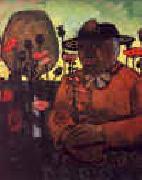
Paula Becker was born and grew up in Dresden-Friedrichstadt. She was the third child of seven children in her family. Her father who was the son of a Russian university professor, was employed with the German railway. He and Modersohn-Becker's mother, who was from an aristocratic family, provided the children a cultured and intellectual environment in the house hold.
Modersohn-Becker's parental home 1888-1899In 1888 her parents moved from Dresden to Bremen. While visiting an aunt in London, England, she received her first instruction in drawing. Apart from her teacher's training in Bremen in 1893-1895, Paula took private instruction in painting. In 1896 she participated in a course for painting and drawing sponsored by the "Verein der Berliner K??nstlerinnen" (Union of Berlin Female Artists) which offered art studies to women.
Paula Modersohn-Becker. Clara Rilke WesthoffAt the age of 22, she encountered the artistic community of Worpswede. In this "village", artists such as Fritz Mackensen (1866-1953) and Heinrich Vogeler (1872-1942) had retreated to protest against the domination of the art academy and life in the big city. At Worpswede, Paula Modersohn-Becker took painting lessons from Mackensen. The main subjects were the life of the farmers and the northern German landscape. At this time she began close friendships with the sculptor Clara Westhoff (1875-1954) and the poet Rainer Maria Rilke (1875-1926). She also fell in love during this period, and in 1901 she married a fellow Worpswede painter, Otto Modersohn. In marrying Otto, she also became a stepmother to Otto's daughter, Elsbeth Modersohn, the child from his first marriage to Helene Modersohn, then deceased.
Paula Modersohn-Becker. Rainer Maria Rilke, 1906Between 1900 and 1907, Paula made several extended trips to Paris for artistic purposes, sometimes living separately from her husband, Otto. During one of her residencies in Paris, she took courses at the Ecole des Beaux-Arts. She visited contemporary exhibitions often, and was particularly intrigued with the work of Paul C??zanne. Other post impressionists were especially influential, including Vincent Van Gogh and Paul Gauguin. Fauve influences may also appear in such works as Poorhouse Woman with a Glass Bottle. The influence by the work of French painter, Jean-Francois Millet, who was widely admired among the artists in the Worpswede group, may be seen in such pieces as her 1900 Peat Cutters.
Reclining Mother and ChildIn her last trip to Paris in 1906, she produced a body of paintings from which she felt very great excitement and satisfaction. During this period of painting, she produced her initial nude self-portraits (something surely unprecedented by a female painter) and portraits of friends such as Rainer Maria Rilke and Werner Sombart. Some critics consider this period of her art production to be the strongest and most compelling.
Paula with Mathilde, November 1907 (days before Paula's death)In 1907, Paula Modersohn-Becker returned to her husband in Worpswede. Their relationship, which had been particularly strained in 1906, had taken a turn towards improvement. Paula's long-lived wish to conceive and bear a child was fulfilled. Her daughter Mathilde (Tillie) Modersohn was born on November 2, 1907. Paula and Otto were joyous. Sadly, the joy became soon overshadowed by tragedy, as Paula Modersohn-Becker died suddenly in Worpswede on November 20th from an embolism.
In 1908, Rainer Maria Rilke wrote the renowned poem, "Requiem for a Friend", in Paula's memory. The poem was born of the imprint that Paula's life, death and friendship left upon Rilke.
|
|
|
|
|
|
 |
Paul-Camille Guigou
|
|
1834-1871
French
Paul Camille Guigou Gallery
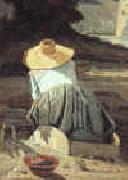
French painter. Born into a family of landowners, he became a notary's clerk at Apt in 1851 and then in 1854 at Marseille. He learnt to paint with Camp, a teacher at the school in Apt, and then at Marseille with Emile Loubon (1809-63), director of the local Ecole des Beaux-Arts, who urged him (according to Guigou's biographers) to paint directly from nature. Guigou settled in Marseille in 1854, where he participated regularly in the annual Salon of the Societe Artistique des Bouches-du-Rhene. Guigou painted almost exclusively Proven?al landscapes, which were influenced by the works of the Barbizon painters, who exhibited in Marseille, and by the brownish tones and picturesque figures of Loubon's paintings. The Road to Gineste (1859) and The Washerwoman (1860; both Paris, Mus. d'Orsay) reflect the independent tradition of Proveneal painting during the Second Empire, which was characterized by warm colouring and precise lighting used to separate and distinguish forms. His knowledge of the works of Gustave Courbet, acquired during a visit to Paris in 1859, doubtless increased his liking for broad technique and sincere vision, articulated in a strong and ordered construction of space: for example, The Gorges of the Luberon (c. 1861; Amiens, Mus. Picardie).
|
|
 |
Paul-Albert Besnard
|
|
(2 June 1849 --4 December 1934) was a French painter and printmaker.
He was born in Paris and studied at the École des Beaux-Arts, studied with Jean Bremond and was influenced by Alexandre Cabanel. He won the Prix de Rome in 1874 with the painting Death of Timophanes
Until about 1880 he followed the academic tradition, but then broke away completely, and devoted himself to the study of colour and light as conceived by the Impressionists. The realism of this group never appealed to his bold imagination, but he applied their technical method to ideological and decorative works on a large scale, such as his frescoes at the Sorbonne, the Ecole de Pharmacie, the ceiling of the Comedie-Française (main theatre in Paris), the Salle des Sciences at the Hôtel de Ville, the mairie of the Ier arrondissement, and the chapel of Berck hospital, for which he painted twelve Stations of the Cross in an entirely modern spirit.
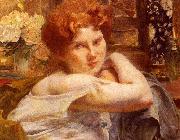
A great virtuoso, he achieved brilliant successes alike in watercolour, pastel, oil and etching, both in portraiture, in landscape and in decoration. His close analysis of light can be studied in his picture La femme qui se chauffe at the Luxembourg in Paris, one of a large group of nude studies of which a later example is Une Nymphe au bord de la mer; and in the work produced during and after a visit to India in 1911. A large panel, Peace by Arbitration, was completed seven days before the outbreak of war in 1914.
|
|
|
|
 |
Paul von Franken
|
|
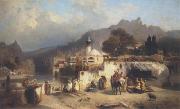
(1818- 1884 ) - Painter
painted Paul von Franken. View of Tiflis in 1866
|
|
 |
Paul Troger
|
|
Austrian Painter, 1698-1762
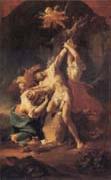
was an Austrian painter, draughtsman and printmaker of the late Baroque period. Troger's illusionistic ceiling paintings in fresco are notable for their dramatic vitality of movement and their palette of light colors. Paul Troger??s style, particularly in his frescoes, dominated Austrian painting until the end of the 18th century and profoundly influenced significant artists of the next generation, notably Franz Anton Maulbertsch, Josef Ignaz Mildorfer, Johann Wenzel Bergl. Paul Troger was born on October 30, 1698, in Welsberg, in the Puster Valley of Tyrol (now Bolzano-Bozen, Italy). At the age of 16, under the patronage of the aristocratic Tyrolean von Firmian family, he visited Fiume and became a pupil of Giuseppe Alberti.[2] He painted his first fresco ??Three Angels with the Cross and Putti??, in the Chiesa del Calvario, Kaltern am See/Caldaro al Lago, Bolzano, Italy (1722). In 1722, the prince-bishop of Gurk sent Paul Troger to Venice, where he discovered the works of Giovanni Battista Piazzetta, and Giovanni Battista Pittoni. Troger also studied in Rome with Sebastiano Ricci, in Naples with Francesco Solimena and in Bologna, the leading artistic centers of Italy at the time. On his return to Austria, Troger first worked in Salzburg from 1726 to 1728, where he painted the "Glory of Saint Cajetan" on the ceiling of St. Cajetan??s Church, Salzburg (1728). He afterwards established himself in Vienna, where the art of ceiling frescoes was, however, dominated by Johann Michael Rottmayr and Daniel Gran. Paul Troger became the favourite fresco painter in Lower Austrian monasteries in collaboration with the architect Josef Munggenast. In 1753, he joined the Imperial Academy of Fine Arts.
|
|
 |
Paul Signac
|
|
1863-1935
French
Paul Signac Galleries
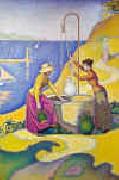
Paul Victor Jules Signac was born in Paris on November 11, 1863. He followed a course of training in architecture before deciding at the age of 18 to pursue a career as a painter. He sailed around the coasts of Europe, painting the landscapes he encountered. He also painted scenes of cities in France in his later years.
In 1884 he met Claude Monet and Georges Seurat. He was struck by the systematic working methods of Seurat and by his theory of colours and became Seurat's faithful supporter. Under his influence he abandoned the short brushstrokes of impressionism to experiment with scientifically juxtaposed small dots of pure colour, intended to combine and blend not on the canvas but in the viewer's eye, the defining feature of pointillism.
Many of Signac's paintings are of the French coast. He left the capital each summer, to stay in the south of France in the village of Collioure or at St. Tropez, where he bought a house and invited his friends. In March 1889, he visited Vincent van Gogh at Arles. The next year he made a short trip to Italy, seeing Genoa, Florence, and Naples.
The Port of Saint-Tropez, oil on canvas, 1901Signac loved sailing and began to travel in 1892, sailing a small boat to almost all the ports of France, to Holland, and around the Mediterranean as far as Constantinople, basing his boat at St. Tropez, which he "discovered". From his various ports of call, Signac brought back vibrant, colourful watercolors, sketched rapidly from nature. From these sketches, he painted large studio canvases that are carefully worked out in small, mosaic-like squares of color, quite different from the tiny, variegated dots previously used by Seurat.
Signac himself experimented with various media. As well as oil paintings and watercolours he made etchings, lithographs, and many pen-and-ink sketches composed of small, laborious dots. The neo-impressionists influenced the next generation: Signac inspired Henri Matisse and Andr?? Derain in particular, thus playing a decisive role in the evolution of Fauvism.
As president of the Societe des Artistes Ind??pendants from 1908 until his death, Signac encouraged younger artists (he was the first to buy a painting by Matisse) by exhibiting the controversial works of the Fauves and the Cubists.
|
|
|
|
|
|
|
|
|
| Wholesale China Oil Painting Wholesale Oil Painting China Xiamen Portrait Reproduction on canvas Chinese Oil Painting Wholesale USA Oil Painting |
|
|
|
|
|