Xiamen Oil Paintings, Wholesale Direct!

100% hand painted, 100% cotton canvas, 100% money back if not satisfaction.


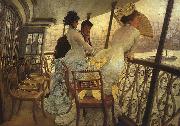
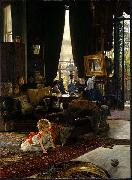
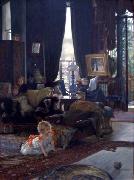
James Tissot Hide and Seek oil painting reproduction


James Tissot

Hide and Seek

1877 National Gallery of Art, Chester Dale Fund, Washington DC
Painting ID::  1646
 

Stretched Service!

Stretched Services

Picture Frames Inventory!

Picture Frames


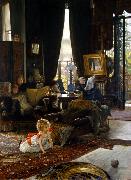
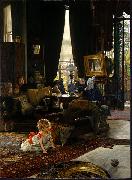
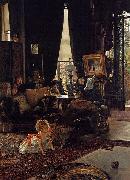
James Tissot Hide and Seek oil painting reproduction


James Tissot

Hide and Seek

1877 National Gallery of Art, Chester Dale Fund, Washington DC
Painting ID::  1649
 

Stretched Service!

Stretched Services

Picture Frames Inventory!

Picture Frames


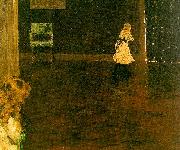
Chase, William Merritt Hide and Seek oil painting reproduction


Chase, William Merritt

Hide and Seek

1888, oil on canvas, Phillips Collection, Washington D.C.
Painting ID::  18938
 

Stretched Service!

Stretched Services

Picture Frames Inventory!

Picture Frames


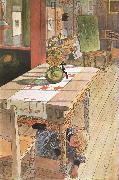
Carl Larsson Hide and Seek oil painting reproduction


Carl Larsson

Hide and Seek

mk163 Watercolor 1898
Painting ID::  41737
 

Stretched Service!

Stretched Services

Picture Frames Inventory!

Picture Frames


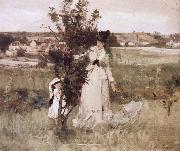
Berthe Morisot Hide and seek oil painting reproduction


Berthe Morisot

Hide and seek

mk236 1873 Oil on cavnas 45x55cm
Painting ID::  54613
 

Stretched Service!

Stretched Services

Picture Frames Inventory!

Picture Frames


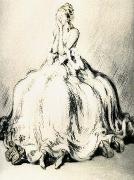
Louis Lcart Hide and Seek oil painting reproduction


Louis Lcart

Hide and Seek

mk286 15 x 19.7 cm
Painting ID::  63429
 

Stretched Service!

Stretched Services

Picture Frames Inventory!

Picture Frames


Louis Lcart
mk286 15 x 19.7 cm
Hide and Seek
French (1880-1950) Louis Icart was born in Toulouse, France. He began drawing at an early age. He was particularly interested in fashion, and became famous for his sketches almost immediately. He worked for major design studios at a time when fashion was undergoing a radical change-from the fussiness of the late nineteenth century to the simple, clingy lines of the early twentieth century. He was first son of Jean and Elisabeth Icart and was officially named Louis Justin Laurent Icart. The use of his initials L.I. would be sufficient in this household. Therefore, from the moment of his birth he was dubbed 'Helli'. The Icart family lived modestly in a small brick home on rue Traversi??re-de-la-balance, in the culturally rich Southern French city of Toulouse, which was the home of many prominent writers and artists, the most famous being Henri de Toulouse-Lautrec. Icart fought in World War I. He relied on his art to stem his anguish, sketching on every available surface. It was not until his move to Paris in 1907 that Icart would concentrate on painting, drawing and the production of countless beautiful etchings, which have served (more than the other mediums) to indelibly preserve his name in twentieth century art history. When he returned from the front he made prints from those drawings. The prints, most of which were aquatints and drypoints, showed great skill. Because they were much in demand, Icart frequently made two editions (one European, the other American) to satisfy his public. These prints are considered rare today, and when they are in mint condition they fetch high prices at auction. Art Deco, a term coined at the 1925 Paris Exposition des Arts Decoratifs, had taken its grip on the Paris of the 1920s. By the late 1920s Icart, working for both publications and major fashion and design studios, had become very successful, both artistically and financially. His etchings reached their height of brilliance in this era of Art Deco, and Icart had become the symbol of the epoch. Yet, although Icart has created for us a picture of Paris and New York life in the 1920s and 1930s, he worked in his own style, derived principally from the study of eighteenth-century French masters such as Jean Antoine Watteau, François Boucher and Jean Honor?? Fragonard. In Icart's drawings, one sees the Impressionists Degas and Monet and, in his rare watercolors, the Symbolists Odilon Redon and Gustave Moreau. In fact, Icart lived outside the fashionable artistic movements of the time and was not completely sympathetic to contemporary art. Nonetheless, his Parisian scenes are a documentation of the life he saw around him and they are nearly as popular today as when they were first produced. In 1914 Icart had met a magical, effervescent eighteen-year-old blonde named Fanny Volmers, at the time an employee of the fashion house Paquin. She would eventually become his wife and a source of artistic inspiration for the rest of his life.

        Prev Painting     Next Painting

ARTIST:ABCDEFGHIJKLMNOPQRSTUVWXYZ
WORKS:ABCDEFGHIJKLMNOPQRSTUVWXYZ


http://www.xiamenoilpainting.com

Xiamen China Oil Paintings Studio Team
Fine Arts, Started From 2004.