| |
|
Xiamen Oil Paintings, Wholesale Direct!
|
|
100% hand painted, 100% cotton canvas, 100% money back if not satisfaction. |
|
|
|
|
ART WORKS INDEX
A
B
C
D
E
F
G
H
I
J
K
L
M
N
O
P
Q
R
S
T
U
V
W
X
Y
Z
|
|
ARTISTS INDEX
A
B
C
D
E
F
G
H
I
J
K
L
M
N
O
P
Q
R
S
T
U
V
W
X
Y
Z
|
|
|
|
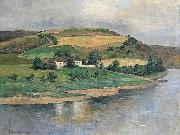 |
Zdenka Braunerova
|
|
(April 9, 1858 - May 23, 1934 in Prague) was a Czech painter and graphic designer. A prominent Czech artist, she takes her place on history alongside the likes of Chittussi, Mršt??k, Zeyer, Marten, Joža Uprka and sculptors František B??lek and Jan Zrzavý.
Zrzavý described her as "... an extraordinary woman, funny, educated, genuine." He continued, "She had a wonderful, incisive intellect and a special charm. When I met her, she was sixty. Mirth and optimism are had by a only a few people. She supplied me with faith and zest for life",
|
|
 |
Wyke Bayliss
|
|
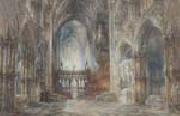
(October 21, 1835, Madeley, Shropshire - April 5, 1906, London) was a British painter, author and poet. He almost exclusively painted interiors of British and European churches and cathedrals, and was known in the late Victorian era as an academic authority on art. From the start of his career Bayliss' main interest was in depicting architecture, finding "infinite charm" in the "infinite variety of the aspect of a Cathedral interior".
His unusual first name was his mother Anne's maiden surname. His brother William Wyke Bayliss became a vicar and sister Elizabeth Anne Bayliss married a vicar, whilst a second sister Mary died as a teenager. Bayliss' wider family consisted of a number of luminaries. His great uncle was Thomas Turner, founder of the Caughley porcelain factory, a major leader in the development of the Willow pattern. Bayliss owned a portrait of Turner by Sir Joshua Reynolds as well as a number of further family portraits by Lemuel Francis Abbott . His second cousin was Sir William Maddock Bayliss.
Cologne Cathedral, pen and watercolourHis father, Rev. John Cox Bayliss was a railway engineer who taught military and mathematical drawing, and was also an artist known for his work "Views of Shropshire" published in 1839 . He gave his younger son training after he showed drawing aptitude at an early age. The family moved from Madeley to London following a job offer too good to refuse, giving Bayliss the opportunity to immerse himself in the emerging art scene of the early Victorian period. As a young student at the Royal Academy and the School of Design he became affiliated with the Pre-Raphaelites, and he counted amongst his friends John Millais, Frederic Leighton, William Holman Hunt and Edward Burne-Jones While distant from the Pre-Raphaelites in subject and technique, his paintings often reflect the juxtaposition of detail and colour that characterise much of Millais' and Leighton's work. Frederick Wedmore states in the foreword to Bayliss' autobiography "On reflection it will be seen that Wyke Bayliss had his speciality pretty well to himself. He was the inventor of his own genre - as well as his own method" . Bayliss paintings are held in many smaller UK and European collections, including the Atkinson Art Gallery in Southport (Evening: Amiens Cathedral) and the Welsh national collection.
|
|
|
|
|
|
|
|
 |
William-Adolphe Bouguereau
|
|
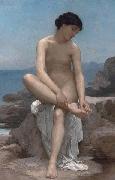
(November 30, 1825 - August 19, 1905) was a French academic painter. William Bouguereau was a traditionalist whose realistic genre paintings and mythological themes were modern interpretations of Classical subjects with a heavy emphasis on the female human body.
William-Adolphe Bouguereau was born in La Rochelle, France on November 30, 1825, into a family of wine and olive oil merchants. He seemed destined to join the family business but for the intervention of his uncle Eugene, a Roman Catholic priest, who taught him classical and Biblical subjects, and arranged for Bouguereau to go to high school. Bouguereau showed artistic talent early on and his father was convinced by a client to send him to the École des Beaux-Arts in Bordeaux, where he won first prize in figure painting for a depiction of Saint Roch. To earn extra money, he designed labels for jams and preserves
|
|
|
|
|
|
|
|
|
|
 |
William Bruce Ellis Ranken
|
|
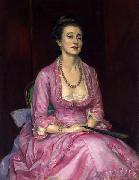
United Kingdom (1881- 1941 ) - Watercolours
painted Souvenir of the seventies. Signed with monogram and dated 1923
|
|
|
|
|
|
 |
William Bliss Baker
|
|
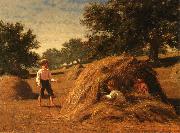
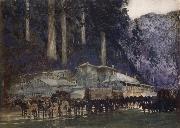
(1859 - 1886-11-20) was an American artist born in New York City who was just beginning to hit his stride as a landscape painter in the Realism movement when he died at his father's house at Hoosick Falls, New York at the age of 27 due to a back injury received while ice skating several months earlier
Baker studied at the National Academy of Design for four years beginning in 1876,where he won first prize during his first exhibit in 1879. By 1881, Baker had set up a studio north of Albany, New York.
|
|
 |
William Blamire Young
|
|
English Australian artist .
1862-1935
known as Blamire Young, was an English Australian artist. Young was born at Londesborough, Yorkshire, the second son of a family of 12. His father, Colonel Young, came of prosperous yeoman stock. Blamire Young was educated at the Forest School, Walthamstow, where he received a classical training, and going on to Cambridge University specialized in mathematics. That he completed his course with no better than third-class honours was no doubt partly caused by his discovery of the print collection in the Fitzwilliam Museum, and his association with the Cambridge Fine Art Society. It had been intended that he should become a clergyman, but Young felt that he had no vocation for that work and obtained the position of mathematical master at Katoomba College, Katoomba, New South Wales, which had been founded by John Walter Fletcher in 1884. Young remained at the school for eight years. In his spare time he practised painting, and meeting Phil May received some instruction from him in painting in oil. In 1893, he returned to England and after working for a few months under Hubert von Herkomer, became associated with James Pryde and William Nicholson in poster work. In 1895 Young returned to Australia and with the Lindsay brothers and Harry Weston did some excellent posters. But the field was limited and many years of poverty followed, during which a certain amount of writing was done for the press. He began exhibiting at the Victorian Artists' Society, but sales were few and the one-man show was then unknown. During his visit to England he had married Mabel Sawyer, an expert wood-carver, and while the lean period lasted Mrs Young helped to keep the house going by executing commissions for Melbourne architects. It was not until 1911 that the appreciation of Young's art really began to be shown. In that year he held an exhibition at Melbourne of small pictures, some of which had similar qualities to the Japanese coloured wood-cuts of the eighteenth century. Sales were good, partly because the prices were low, and the artist was sufficiently encouraged to hold an exhibition at Adelaide. This was both an artistic and a financial success, other shows followed in Melbourne and Sydney, and at last, in his fiftieth year, Young's reputation as an artist was established. In 1912 he sailed for Europe and after a stay in Spain settled in England. Eighteen months later in August 1914 his first show, opened at the Bailey Galleries. All the arrangements had been made and the pictures hung when war broke out. Young had been a good marksman in his youth, and for three years worked as an instructor in musketry and machine-gunnery. Immediately after the war he took up his painting again and exhibited at the Academy and the Royal Society of British Artists. Back in Australia in 1923 Young established himself at Montrose in the hills about 20 miles east of Melbourne. He acted as art critic for the The Herald and held occasional one-man shows.
|
|
 |
William Blake
|
|
1757-1827
British
William Blake Galleries
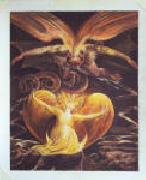
William Blake started writing poems as a boy, many of them inspired by religious visions. Apprenticed to an engraver as a young man, Blake learned skills that allowed him to put his poems and drawings together on etchings, and he began to publish his own work. Throughout his life he survived on small commissions, never gaining much attention from the London art world. His paintings were rejected by the public (he was called a lunatic for his imaginative work), but he had a profound influence on Romanticism as a literary movement.
|
|
|
|
 |
William Berczy
|
|
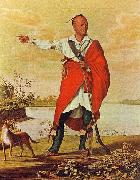
(December 10, 1744, Wallerstein near Noerdlingen, Germany - February 5, 1813, New York City, USA) was a German pioneer and painter.
Born in Swabia, Germany as a son of the Wirklicher Hofrat Albrecht Theodor Moll and Johanna Josepha Walpurga Moll nee Hefele, he was originally named Johann Albrecht Ulrich Moll, but later changed his name. He studied at the Akademie der bildenden Kenste in Vienna and at the University of Jena in Saxony. His early career was spent in several European countries, including Italy (meeting with Johann Wolfgang von Goethe in Florence) and England, where he exhibited at the Royal Academy. In 1792 he sailed for the Americas, setting up a business in York (now - since 1834 - Toronto) a couple of years later. He also worked in Quebec. Although best known for his portraits, he also carried out religious paintings and architectural work, including plans for Christ Church Cathedral in Montreal in 1803, and was a surveyor.
|
|
 |
William Bell Scott
|
|
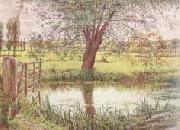
1811-1890
Brother of David Scott. He trained at the Trustees' Academy in Edinburgh and was taught engraving by his father. He saw the family print workshop as 'the lineal descendant of Albert Derer's factory in Nernberg'; he was later to own a fine collection of D?rer's prints and write a book about him (1870). In 1837 he went to London, where he was impressed by 'a new and interesting school of historical and loosely speaking, inventive and illustrative painters'. This encouraged him to leave landscape painting for the time being and become a history painter. Like his brother, he entered a cartoon for the Westminster Hall competition in 1842: the Free North Britons Surprising the Roman Wall between the Tyne and Solway; this too was unsuccessful. In 1843, discouraged by lack of patronage in London, he accepted the Mastership of the Government School of Design at Newcastle upon Tyne, where he stayed for 20 years, visiting London each summer.
|
|
|
|
 |
William Barak
|
|
Australian Aboriginal, ca.1824-1903
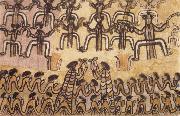
was the last traditional ngurungaeta (elder) of the Wurundjeri-willam clan, based around the area of present-day Melbourne, Australia. He became an influential spokesman for Aboriginal social justice and an important informant on Wurundjeri cultural lore. Barak was born in the early 1820s at Brushy Creek near present-day Croydon, in the country of the Wurundjeri people. His mother, Tooterrie, came from the Nourailum bulluk at Murchison, Victoria. His father, Bebejern, was an important member of the Wurundjeri clan. Beruk was said to have been present when John Batman met with the tribal elders to 'purchase' the Melbourne area in 1835. Before he died he described witnessing the signing of the treaty in a ceremony he called a tanderem. Ninggalobin, Poleorong and Billibellary were the leading song makers and principal Wurundjeri leaders in the Melbourne region. European colonisation had caused disruptions to initiation ceremonies. In response these three men gathered at South Yarra in the late 1830s and inducted the young William Barak into Aboriginal lore. This entailed formally presenting Barak with the symbols of manhood: strips of possumskin tied around his biceps; the gombert around his neck; given his ilbi-jerri, a sharp and narrow bone or nose-peg; and his branjep, the apron worn by men to cover their genitals. At the end of the ceremony Barack presented his uncle, Billibellary, a possumskin cloak. Beruk attended the government's Yarra Mission School from 1837 to 1839. When he joined the Native Mounted Police in 1844, he was given the name of William Barak. He was Police Trooper No.19. In early 1863, Barak moved to Coranderrk Station, near Healesville, Victoria with about thirty others. Upon the death of Simon Wonga in 1875, Barak became the Ngurungaeta of the clan. He worked tirelessly for his people and was a successful negotiator on their behalf. He was a highly respected man and leader, with standing amongst the Indigenous people and the European settlers. Figures in possum-skin cloaks, 1898 by William Barak.Barak is now best remembered for his artworks, which show both traditional Indigenous life and encounters with Europeans. Most of Barak's drawings were completed at Coranderrk during the 1880s and 1890s. They are now highly prized and exhibited in leading public galleries in Australia. His work is on permanent display in the National Gallery of Victoria Ian Potter Centre at Federation Square, Melbourne. Ceremony (1895) is housed at the Ballarat Fine Art Gallery. Barak died at Coranderrk in 1903 and is buried at the Coranderrk cemetery.
|
|
 |
Willem van Bemmel
|
|
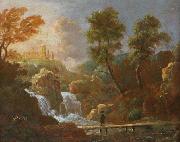
(Utrecht 10 June 1630 - Nuremberg 20 December 1708), was a Dutch Golden Age painter active in Germany.
Van Bemmel was a student of Herman Saftleven in Utrecht. He made a Grand Tour to Rome, spending first the years 1647-9 in Venice where he became famous for his landscapes. He stayed in Rome for six years and was a member of the Bentvueghels. From Rome he crossed the Alps to Nuremberg, where he became a successful painter of Italianate landscapes.
In 1656 he moved to Kassel. He was the father of the German Von Bemmel painting family.
|
|
 |
Willem Pieterszoon Buytewech
|
|
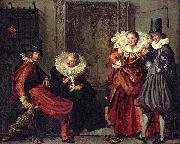
(1591/1592, Rotterdam - September 23, 1624, Rotterdam) was a Dutch painter, draughtsman and etcher of the Golden Age. He is often considered the "inventor" of Dutch genre painting. For his preference of irony, his contemporaries named him Gheestige Willem (Jolly or spiritual William).
Buytewech was the son of Pieter Jacobsz, a cobbler and candlemaker. He learned his trade in Haarlem, where he became a member of the artists' guild (Haarlem Guild of St. Luke) in 1612, together with Hercules Segers and Esaias van de Velde.[1] Frans Hals, who was a member of this guild since 1610, had much influence on Buytenwech's work, as shown by the many drawings that the latter made after Hals's paintings. After his marriage on November 10, 1613 with Aeltje van Amerongen, of a patrician family, he returned to Rotterdam. There Hendrik Martenszoon Sorgh was one of his pupils.
Buytewech was primarily a graphic artist, mostly of landscapes and genre pieces, but occasionally also of biblical and allegorical themes. Of his paintings only eight have survived to this date, all genre pieces, most depicting merry companies.
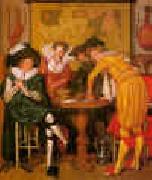
Willem Buytewech's Merry CompanyHe died at the age of only 32 or 33 of unrecorded causes. His son Willem Willemsz Buytewech (1625-1670), born after his death, would become a painter as well.
|
|
 |
Willem Buytewech
|
|
1591-1624
Dutch Willem Buytewech Locations
Dutch painter, draughtsman and etcher. Although he was born and died in Rotterdam, stylistically he belongs to the generation of young artists working in Haarlem at the beginning of the 17th century. He was nicknamed Geestige Willem (Dut.: inventive, or witty, Willem) by his contemporaries, and during his short career he made an important and highly personal contribution to the new approach to realism in Dutch art. He was one of the first to paint interiors with merry companies (see CONVERSATION PIECE) and is primarily known for his lively and spontaneous drawings and etchings on a wide range of subjects.
|
|
|
|
 |
Willem Bastiaan Tholen
|
|
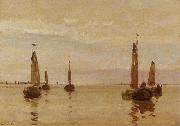
was a Dutch painter, draftsman and printmaker, born in Amsterdam, 13 Feb 1860, died in The Hague, 5 Dec 1931. He came from an artistic family, who lived in Kampen from 1864. There he developed at an early age a lasting love of the Zuiderzee. In Kampen he became friendly with the young Jan Voerman; they entered the Amsterdam academy together in 1876, where Tholen studied under August Allebe. Subsequently he learned technical drawing at the Polytechnische School in Delft until 1878. Thereafter he spent three months in the studio of Paul Gabriël in Brussels, from whom he received his first real instruction in painting. In the following years Gabriël's advice was of particular importance for Tholen, as they worked together en plein air for many summers near Kampen and Giethoorn, among other places. In Gouda (1878-9) and Kampen (1880-85) he taught draftsmanship in order to support himself but after 1885 concentrated entirely on his own work. From 1887 he lived in The Hague, where he became friendly with the painters of The Hague school. He took an active part in the artistic life of The Hague and was a member of the Pulchri Studio.
|
|
|
|
 |
Wilhelm Ferdinand Bendz
|
|
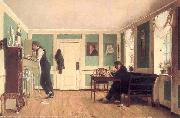
(March 20, 1804 - November 14, 1832), Danish genre and portrait painter, is one of the main personages associated with the Golden Age of Danish Painting. He was educated at the Royal Danish Academy of Art (Det Kongelige Danske Kunstakademi) in Copenhagen from 1820 to 1825, winning both silver medals but never the gold prize. He studied under professor Christoffer Wilhelm Eckersberg, but may at the same time have acquired some knowledge of contemporary German painting.
Today he is mainly remembered for his many technically accomplished portraits, though his ambition most of all ran towards a refined fusion of portrait, genre scene and allegorical history painting. His technical virtuosity is particularly visible in his depictions of the play of light cast from an obscured source and the resulting shadows. During his travel to Italy - which also brought him a one-year stay in Munich - he caught a sickness to the lungs and died at the age of 28 in 1832.
|
|
 |
Wilhelm Busch
|
|
1832 Wiedensahl/Hannover-1908,was a German caricaturist, painter and poet who is known for his satirical picture stories. After studying first mechanical engineering and then art in Dusseldorf, Antwerpen and Munich, he turned to drawing caricatures. One of his first picture stories, Max and Moritz (published in 1865), was a huge success. Max and Moritz as well as many of his other picture stories are regarded as one of the main precursors of the modern comic strip. Max and Moritz, for instance, has been an inspiration for the Katzenjammer Kids. Wilhelm Busch also wrote a number of poems in a similar style to his picture stories. Besides that he produced more than 1,000 oil paintings that weren't sold before his death in 1908. He was also active as a sculptor.
|
|
 |
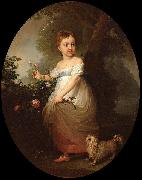
wilhelm bendz
|
|
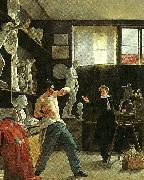
(March 20, 1804 ?C November 14, 1832), Danish genre and portrait painter, is one of the main personages associated with the Golden
|
|
 |
Vladimir Lukich Borovikovsky
|
|
(Russian: July 24 O.S. 1757 - April 6 O.S. 1825) was a Ukrainian-born painter who dominated Russian portraiture at the turn of the 19th century.
ladimir Borovikovsky was born dymyr Borovyk in Myrhorod (now Ukraine) on July 24, 1757. His father, Luka Borovyk was a Ukrainian Cossack and an amateur icon painter. According to the family tradition, all four of Borovyk's sons served in Myrhorod regiment, but Volodymyr retired early at the rank of poruchik and devoted his life to art mostly icon painting for local churches.
Borovikovsky may have lived the remainder his life as an amateur painter in a provincial town if not for an unexpected event. His friend Vasyl Kapnist was preparing an accommodation for Empress Catherine II in Kremenchuk during her travel to newly conquered Crimea. Kapnist asked Borovikovsky to paint two allegoric paintings (Peter I of Russia and Catherine II as peasants sowing seeds and Catherine II as a Minerva) for her rooms. The paintings so pleased the Empress that she requested that the painter move to Saint Petersburg.
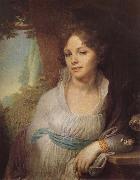
Portrait of Maria Lopukhina, 1797After September 1788 Borovikovsky lived in Saint Petersburg where he changed his surname from the Cossack "Borovyk" to the more aristocratic-sounding "Borovikovsky". For his first ten years in Saint Petersburg, he lived in the house of the poet, architect, musician and art theorist, Prince Nikolay Lvov, whose ideas strongly influenced Borovikovsky's art. At 30-years-old, he was too old to attend Imperial Academy of Arts, so he took private lessons from Dmitry Levitzky and later from Austrian painter Johann Baptist Lampi.
|
|
 |
Vladimir Borovikovsky
|
|
1757-1825,Russian painter of Ukrainian birth. Along with Fyodor Rokotov and Dmitry Levitsky, Borovikovsky is one of the three great Russian portrait painters of the second half of the 18th century. He was trained by his father and brothers, who were icon painters. His early works were also icons, such as the Mother of God (1784; Kiev, Mus. Ukrain. A.) and King David (1785; St Petersburg, Rus. Mus.); they are archaic in style and resemble portraits produced by Ukrainian folk artists. At the end of the 1780s Borovikovsky moved to St Petersburg and took up portrait painting. He was aided by advice from Levitsky and took lessons from Johann Baptist Lampi (i). He soon became established, gaining a reputation as a brilliant colourist, and he received many commissions. Throughout his career, however, he continued to paint icons from time to time. In 1795 he became a member of the St Petersburg Academy of Arts; he was also closely connected with many of the chief exponents of Russian culture in the city. The number of his surviving works is large (at least 400 portraits). He had his own workshop, and he would often rely on assistants to paint the less important parts of a portrait. His sitters included members of the imperial family, courtiers, generals, many aristocrats and figures from the Russian artistic and literary worlds. Most of his portraits are intimate in style. A particularly touching example is the portrait of Ol ga Filippova, the wife of a close friend (c. 1790; St Petersburg, Rus. Mus.), who is seen in a white peignoir with a park in the background. The portrait is painted in a flowing style; the combination of light, subdued tones, typical of Borovikovsky, gives an impression of tender femininity and quiet contemplation.
|
|
 |
Vladimir Baranov-Rossine
|
|
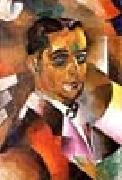
(1888?C1944) was a Russian-Ukrainian painter, avant-garde artist (Cubo-Futurist), and inventor of Jewish ethnicity
Vladimir Baranov-Rossine was born in Kherson, Ukraine, to parents of Jewish ethnicity.
In 1902 he studied at the School of the Society for the Furthering of the Arts in St. Petersburg. From 1903 to 1907 he attended the Imperial Academy of Arts in St. Petersburg.
In 1908 he exhibited with the group Zveno ("The Link") in Kiev organized by the artist David Burliuk and his brother Wladimir Burliuk.
In 1910 he moved to Paris, wher until 1914 he was a resident in the artist's colony La Ruche together with Alexander Archipenko, Sonia Delaunay-Terk, Nathan Altman and others. He exhibited regularly in Paris after 1911.
He returned to Russia in 1914. In 1916 he had a solo exhibition in Oslo. In 1918 he had exhibits with the union of artists Mir Iskusstva ("World of Art") in Petrograd (St.Petersburg). In the same year he had an exhibition with the group Jewish Society for the Furthering of the Arts in Moscow, together with Nathan Altman, El Lissitzky and David Shterenberg. He participated at the First State Free Art Exhibition in Petrograd in 1919.
In 1922 Baranov-Rossine was the teacher at the Higher Artistic-Technical Workshops (VKhUTEMAS) in Moscow.
In 1924 he had the first presentation of his optophonic piano during a performance at the Bolshoi Theatre in Moscow - a synaesthetic instrument that was capable of creating sounds and coloured lights, patterns and textures simultaneously.
|
|
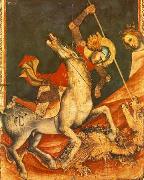 |
VITALE DA BOLOGNA
|
|
Italian Gothic Era Painter ,
b. 1289/1309, Bologna, d. 1359/69, Bologna
|
|
|
|
 |
Victor Boucquet
|
|
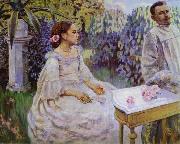
Victor Boucquet, a Flemish painter, was born at Veurne in 1619. He was the son of Marcus Boucquet, a painter little known. Descamps supposes he must have visited Italy, as his works exhibit a manner that partakes little of the taste of his country. He painted historical subjects, and was also esteemed as a portrait painter. His works are distributed in the different churches of the towns in Flanders. They are well composed, and, like those of most of the artists of his country, are well coloured. In the great church of Nieuport are two altar-pieces by this master, one of which, representing 'The Death of St. Francis,' is particularly admired; and in the town-house there is a large picture by him, considered as his principal work, representing 'The Judgment of Cambyses.' The principal altar-piece in the church at Ostend is by Boucquet: it represents the Taking down from the Cross. He died at Furnes in 1677.
|
|
 |
Victor Borisov-Musatov
|
|
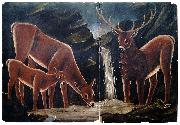
(Russian), (April 14 [O.S. April 2] 1870 - November 8 [O.S. October 26] 1905) was a Russian painter, prominent for his unique Post-Impressionistic style that mixed Symbolism, pure decorative style and realism. Together with Mikhail Vrubel he is often referred as the creator of Russian Symbolism style.
Victor Musatov was born in Saratov, Russia (he added the last name Borisov later). His father was a minor railway official who had been born as a serf. In his childhood he suffered a spinal injury, which made him humpbacked for the rest of his life. In 1884 he entered Saratov real school, where his talents as an artist were discovered by his teachers Fedor Vasiliev and Konovalov.
He was enrolled in the Moscow School of Painting, Sculpture and Architecture in 1890, transferring the next year to the Imperial Academy of Arts in Saint-Petersburg, where he was a pupil of Pavel Chistyakov. The damp climate of Saint-Petersburg was not good for Victor's health and in 1893 he was forced to return to Moscow and re-enroll to the Moscow School of painting, sculpturing and architecture. His earlier works like May flowers, 1894 were labelled decadent by the school administration, who sharply criticised him for making no distinction between the girls and the apple trees in his quest for a decorative effect. The same works however were praised by his peers, who considered him to be the leader of the new art movement.
The Pool. 1902In 1895 Victor once again left Moscow School of painting, sculpturing and architecture and enrolled in Fernand Cormon's school in Paris. He studied there for three years, returning in summer months to Saratov. He was fascinated by the art of his French contemporaries, and especially by the paintings of "the father of French Symbolism" Pierre Puvis de Chavannes and by the work of Berthe Morisot.
In 1898 Borisov-Musatov returned to Russia and almost immediately fell into what it is called "fin de siecle nostalgia". He complained about "the cruel, the truly iron age", "dirt and boredom", "devil's bog", and he had acute money problems that were somewhat alleviated only in the last years of his life when collectors started to buy his paintings. Musatov's response was creating a half-illusory world of the 19th century nobility, their parks and country-seats. This world was partially based on the estate of princes Prozorvky-Galitzines Zubrilovka and partially just on Musatov's imagination. Borisov-Musatov also abandoned oil-paintings for the mixed tempera and watercolor and pastel techniques that he found more suitable for the subtle visual effects he was trying to create.
|
|
|
|
 |
Vaclav Brozik
|
|
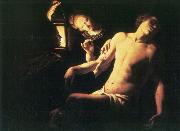
(5 March 1851 - 15 April 1901) was a Czech academic painter.
Since 1868 he studied at the Academy of Arts in Prague, Dresden, and Munich. In 1879 he went on study journey to the Netherlands.
He married a daughter of a wealthy art dealer in Paris, who helped him achieve success in French high society. He divided his time between Prague, where he taught at the Academy since 1893, and Paris. In 1896 he was elected as a foreign member and the successor of John Millais in the French Academie des beaux-arts. He died suddenly of cardiac failure and is buried at the Cimetiere de Montmartre.
|
|
 |
Umberto Boccioni
|
|
1882-1916
Italian
Umberto Boccioni Locations
Italian sculptor, painter, printmaker and writer. As one of the principal figures of FUTURISM, he helped shape the movements revolutionary aesthetic as a theorist as well as through his art. In spite of the brevity of his life, his concern with dynamism of form and with the breakdown of solid mass in his sculpture continued to influence other artists long after his death.
|
|
|
|
 |
Trophime Bigot
|
|
Trophime Bigot (1579-1649/50), also known as Theophile Bigot, Teofili Trufemondi, Candlelight Master, Maître e la Chandelle, was a French painter of the Baroque era, active in Rome and his native Provence.
Bigot was born in Arles in 1579, where he began his artistic career. Between 1620 and 1634, Bigot was in Italy, including Rome. He is known to have been in Arles in 1634, where he painted the altarpiece Saint Laurent condamne au supplice (Saint Laurence Condemned to Torture) and Assomption de la Vierge (Assumption of the Virgin) for local churches.
Between 1638 and 1642, he lived in Aix-en-Provence, where he painted another Assumption of the Virgin. He returned to Arles in 1642, and divided his activities between this city and Avignon, where he died around 1650.
|
|
|
|
|
|
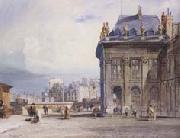 |
Thomas Shotter Boys
|
|
English Engraver, 1803-1874
English painter and printmaker. He was apprenticed on 4 February 1817 to George Cooke. His early training in engraving influenced his future career; his ability to draw a fine line, lay aquatint washes and hand-colour prints was an important factor in the creation of his particularly lucid style of watercolour landscapes and townscapes. At this time Cooke was engraving volumes of picturesque views by Turner and James Hakewell (1778-1843) as well as his own view of the Thames (1822);
|
|
|
|
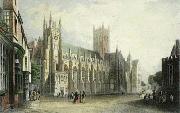 |
Thomas Mann Baynes
|
|
(1794 ?C 1876) was a London born English artist known for his drawings and watercolours of landscapes, buildings and outdoor events. Many of his subjects were engraved and published, generally in London, and these include a notable panorama of the River Thames, which was drawn from nature and engraved on stone. He was the son of James Baynes, a noted watercolour artist.
Baynes also produced views of Liverpool and Ireland, and appears to have made a successful living as a printer prior to his death in 1854. His son Fredrick Thomas Baynes (1824-1874) was also a noted watercolour artist.
|
|
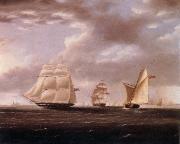 |
Thomas Buttersworth
|
|
English Painter, 1768-1828, He was a seaman of the Napoleonic wars period who became a maritime painter producing works to commission, and was little exhibited during his lifetime. He was born on the Isle of Wight, England. He enlisted in the Royal Navy in London in 1795, and served on HMS Caroline during the wars with France, then was invalided home from Minorca in 1800. The National Maritime Museum in London has 27 watercolours by him, several of which are mounted on sheets from 18th century printed signal and muster books.
|
|
|
|
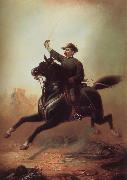 |
Thomas Buchanan Read
|
|
American Painter, 1822-1872,was an American poet and portrait painter born in Chester County, Pennsylvania. Read wrote a prose romance, The Pilgrims of the Great St. Bernard, and several books of poetry, including The New Pastoral, The House by the Sea, Sylvia, and A Summer Story. Some of the shorter pieces included in these, e.g., "Sheridan's Ride," "Drifting,""The Angler", "The Oath," and "The Closing Scene," have great merit. Read was briefly associated with the Pre-Raphaelite Brotherhood. His greatest artistic popularity took place in Florence. Among portraits he painted were Abraham Lincoln, Henry Longfellow, Alfred Tennyson, Elizabeth Barrett Browning, Robert Browning and William Henry Harrison. Read died from injuries sustained in a carriage accident, which weakened him and led him to contract pneumonia while on shipboard returning to America.
|
|
|
|
|
|
|
|
|
| Wholesale China Oil Painting Wholesale Oil Painting China Xiamen Portrait Reproduction on canvas Chinese Oil Painting Wholesale USA Oil Painting |
|
|
|
|
|