| |
|
Xiamen Oil Paintings, Wholesale Direct!
|
|
100% hand painted, 100% cotton canvas, 100% money back if not satisfaction. |
|
|
|
|
ART WORKS INDEX
A
B
C
D
E
F
G
H
I
J
K
L
M
N
O
P
Q
R
S
T
U
V
W
X
Y
Z
|
|
ARTISTS INDEX
A
B
C
D
E
F
G
H
I
J
K
L
M
N
O
P
Q
R
S
T
U
V
W
X
Y
Z
|
|
|
|
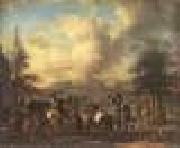 |
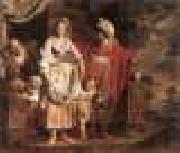
WOUWERMAN, Philips
|
|
Dutch Baroque Era Painter, 1619-1668. Dutch painters from Haarlem. Dutch painter and draughtsman. He was the eldest son of the painter Paulus [Pauwels] Joostens Wouwerman of Alkmaar (d 28 Sept 1642), whose two other sons, Pieter Wouwerman (1623-82) and Johannes Wouwerman (1629-66), also became painters. Philips probably received his first painting lessons from his father, none of whose work has been identified. According to Cornelis de Bie, Wouwerman was next apprenticed to Frans Hals, although no trace of Hals's influence is discernible in Wouwerman's work. Wouwerman is also reputed to have spent several weeks in 1638 or 1639 working in Hamburg in the studio of the German history painter Evert Decker (d 1647). While in Hamburg, he married Annetje Pietersz. van Broeckhof. On 4 September 1640 Wouwerman joined the Guild of St Luke in Haarlem, in which in 1646 he held the office of vinder (agent or 'finder'). Given the many southern elements in his landscapes, it has repeatedly been suggested that Wouwerman must have travelled to France or Italy, but there is no documentary evidence that he left his native Haarlem for more than short periods. During his lifetime he must have attained a certain degree of prosperity, as demonstrated by the relatively large sums inherited by each of his seven children after his wife's death in 1670.
|
|
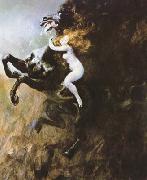 |
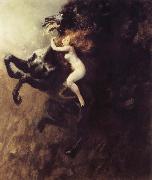
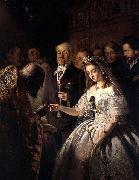
Wladyslaw Podkowinski
|
|
Polish Painter, 1866-1895
Polish painter and illustrator. In 1880-84 he studied in Warsaw at Wojciech Gerson's Drawing School. From 1884 he regularly contributed illustrations to leading Warsaw journals such as Tygodnik Ilustrowany and Wedrowiec. In 1885, accompanied by his fellow artist J?zef Pankiewicz, he went to St Petersburg and studied (1885-6) at the Academy of Fine Arts. Disappointed with the conservative teaching system and short of money, he returned to Warsaw in 1886 and in 1887 continued working regularly for Tygodnik Ilustrowany, becoming one of its most popular illustrators. He produced his first watercolours and oil paintings, much under the influence of Aleksander Gierymski, but continued to regard these as secondary activities until a stay in Paris in 1889, again in the company of Pankiewicz. Here, the experience of new French painting, especially that of Claude Monet shown at the Galerie Georges Petit, encouraged Podkowinski to attempt paintings in an Impressionist manner.
|
|
|
|
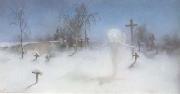 |
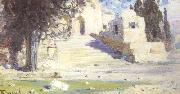
Witold Pruszkowski
|
|
Polish Painter, 1846-1896
Polish painter and draughtsman. He spent his early years in Odessa and Kiev, subsequently living in France, in particular in Paris, where he studied under the Polish portrait painter Tadeusz Gorecki (1825-68), continuing (1868-71) at the Akademie der Kenste in Munich. In 1871 he moved to Krakew where he studied until 1875 under Jan Matejko at the School of Fine Arts. During ten years in Krakew he produced many striking portraits. In the portrait of Mrs Fedorowicz (1878; Krakew, N. Mus.) he achieved subtle effects of modelling by means of carefully differentiated tones and meticulously distributed light. The Realism of these portraits is subsumed into an advanced proto-Impressionist technique, on occasion using both small patches of distinct colour and broadly applied areas of impasto. Alongside such works, Pruszkowski produced paintings based on fantastic legends, fables and folk-tales. In these works one can trace influences going back to the artist's Munich period; but Pruszkowski's essentially Romantic vision translated his subjects into an entirely Polish context, as in Midsummer's Night (1875; Warsaw, N. Mus.) and Water Nymphs (1877; Krakew, N. Mus.). In 1882 Pruszkowski moved to the village of Mnikow outside Krakew, where he worked in the isolation he believed essential for creative activity. Contact with the country people, however, provided him with themes for his work; alongside his fantastic and legendary subjects he painted genre scenes of peasant life. He brought to his subjects a diversity of means of formal depiction, from the realistic to the near visionary. However, there are notable recurrent motifs, for example the image of the native willow, the symbolic haunt of spirits, as in Willow on Marshland (1892; Ledz, Mus. A.). The visionary element achieved its apogee in the pastel compositions from the last years of his life. In works such as Death of Ellenai (1892; Wroclaw, N. Mus.) the evanescent nature of forms is expressed through restrained colour schemes, generally tending towards silvery greyish azure or shades of pink.
|
|
|
|
|
|
 |
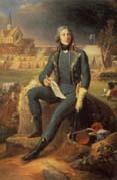
William Powell Frith
|
|
English Painter, 1819-1909
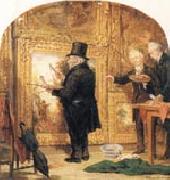
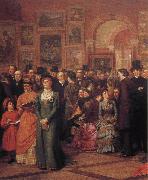
His parents were in domestic employment before taking a hotel in Harrogate in 1826. They encouraged him to become an artist, despite his own desire to be an auctioneer. While at school in Dover, Frith sketched caricatures and copies of Dutch genre scenes (Dover Mus.) that betray his disposition to narratives. His taste did not accord with the academic training he received at Henry Sass's Academy in London (1835-7) and at the Royal Academy Schools (1837). Frith began his career as a portrait painter, using members of his family as models. He first exhibited at the British Institution in 1838, and during the 1840s he established himself with his entertaining historical and literary subjects in the popular tradition of C. R. Leslie, William Mulready and Sir David Wilkie. He was a member of THE CLIQUE, which included Richard Dadd, Augustus Egg, Henry O'Neil and John Phillip.
|
|
 |
William Powell Frith
|
|
1819-1909 English painter. His parents were in domestic employment before taking a hotel in Harrogate in 1826. They encouraged him to become an artist, despite his own desire to be an auctioneer. While at school in Dover, Frith sketched caricatures and copies of Dutch genre scenes (Dover Mus.) that betray his disposition to narratives. His taste did not accord with the academic training he received at Henry Sass Academy in London (1835-7) and at the Royal Academy Schools (1837). Frith began his career as a portrait painter, using members of his family as models. He first exhibited at the British Institution in 1838, and during the 1840s he established himself with his entertaining historical and literary subjects in the popular tradition of C. R. Leslie, William Mulready and Sir David Wilkie. He was a member of THE CLIQUE, which included Richard Dadd, Augustus Egg, Henry O Neil and John Phillip. His friendship with Charles Dickens began with commissions for paintings of Dolly Varden (London, V&A) and Kate Nickleby (untraced) in 1842.
|
|
|
|
 |
William Peters
|
|
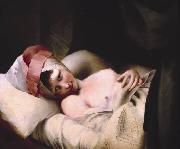
(1742 - 20 March 1814) was an English portrait and genre painter who later became an Anglican clergyman and chaplain to George IV. He became known as "William" when he started signing his works as "W. Peters".
Peters was born in Freshwater, Isle of Wight, the son of Matthew Peters (born at Belfast, 1711), a civil engineer and member of the Royal Dublin Society; by Elizabeth, the eldest daughter of George Younge of Dublin. The family moved from England to Dublin when Peters was young, where his father "advised on the improvement of loughs and rivers for navigation". and published two treastises on the subject.
Peters received his artistic training from Robert West in Dublin; in 1756 and 1758 he received prizes from the first School of Design in Dublin. In 1759, he was sent by the Dublin Society to London to become a student of Thomas Hudson and won a premium from the Society of Arts. The group also paid for him to travel to Italy to study art from 1761 to 1765. On 23 September 1762 he was elected to the Accademia del Disegno in Florence. Peters returned to England in 1765 and exhibited works at the Society of Artists from 1766 to 1769. Beginning in 1769, Peters exhibited works at the Royal Academy. In 1771 he was elected an associate and in 1777 an academician. He returned to Italy in 1771 and stayed until 1775. He also probably traveled to Paris in 1783-84, where he met Leopold Boilly, Antoine Vestier, and was influenced by the work of Jean-Baptiste Greuze.
On 27 February 1769, Peters became a freemason, and he was made the grand portrait painter of the Freemasons and the first provincial grand master of Lincolnshire in 1792. In 1785, he exhibited portraits of the Duke of Manchester and Lord Petre as Grand Master at the Royal Academy exhibition.
|
|
|
|
 |
William Page
|
|
1811-1885
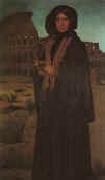
William Page studied at Phillips Academy, Andover in 1828-29 (not the Andover Theological Seminary on the same campus, as is commonly asserted). A man of mercurial temperament, Page was lacking in religious belief in youth, but later became a Swedenborgian. He received his training in art from Samuel F. B. Morse (a Phillips Academy graduate) at the National Academy of Design, and in 1836 he became a National Academician. In the 1830s and 40s, Page was based in New York, achieving renown there as a portraitist.
Living in Rome from 1849 to 1860, he befriended Robert and Elizabeth Browning, whose portraits he painted. He was also a friend of William Wetmore Story and of James Russell Lowell, who dedicated his first collection of poems to him in 1843.
In 1873, Page became president of the National Academy of Design. His work includes a painting of Admiral David Farragut at the Battle of Mobile Bay, the Holy Family (now at the Boston Athenaeum) and The Young Merchants (now at Pennsylvania Academy of the Fine Arts in Philadelphia), as well as countless portraits, including portraits of John Quincy Adams, James Russell Lowell and William Shakespeare, based on the Becker death mask. He also wrote A New Geometrical Method of Measuring the Human Figure (1860).
He died in 1885, aged 74 on Staten Island. Although extravagantly praised as an artist from the 1830s into the 1860s, Page's reputation suffered in later life because he changed his style so frequently and, more particularly, because technical characteristics of his painting method soon caused much of his work to darken excessively.
|
|
 |
William Morris Prints
|
|
English Pre-Raphaelite Writer and Designer, 1834-1896
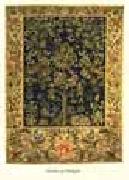
was an English architect, furniture and textile designer, artist, writer, and socialist associated with the Pre-Raphaelite Brotherhood and the English Arts and Crafts Movement.
Born in Walthamstow in north London, Morris was educated at Marlborough and Oxford. In 1856, Morris became an apprentice to Gothic revival architect G. E. Street. That same year he founded the Oxford and Cambridge Magazine, an outlet for his poetry and a forum for development of his theories of hand-craftsmanship in the decorative arts. In 1861, Morris founded a design firm in partnership with the artist Edward Burne-Jones, and the poet and artist Dante Gabriel Rossetti which had a profound impact on the decoration of churches and houses into the early 20th century. Morris's chief contribution was as a designer of repeating patterns for wallpapers and textiles, many based on a close observation of nature. Morris was also a major contributor to the resurgence of traditional textile arts and methods of production.
Morris wrote and published poetry, fiction, and translations of ancient and medieval texts throughout his life. His best-known works include The Defence of Guenevere and Other Poems (1858), The Earthly Paradise (1868?C1870), A Dream of John Ball and the utopian News from Nowhere.
Morris was an important figure in the emergence of socialism in Great Britain, founding the Socialist League in 1884, but breaking with the movement over goals and methods by the end of that decade. Morris devoted much of the rest of his life to the Kelmscott Press which he founded in 1891. The 1896 Kelmscott edition of the Works of Geoffrey Chaucer is considered a masterpiece of book design.
|
|
|
|
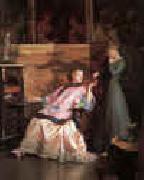 |
William McGregor Paxton
|
|
1869-1941
William McGregor Paxton Gallery
William McGregor Paxton (June 22, 1869 ?C 1941) was an American Impressionist painter.
Born in Baltimore, the Paxton family came to Newton Corner in the mid-1870s, where William's father James established himself as a caterer. At 18, William won a scholarship to attend the Cowles Art School, where he began his art studies with Dennis Miller Bunker. Later he studied with Jean-L??on G??rôme in Paris and, on his return to Boston, with Joseph DeCamp at Cowles. There he met his future wife Elizabeth Okie, who also was studying with DeCamp. After their marriage, William and Elizabeth lived with his parents at 43 Elmwood Street, and later bought a house at 19 Montvale Road in Newton Centre.
Paxton, who is best known as a portrait painter, taught at the Museum School from 1906 to 1913. Along with other well known artists of the era, including Edmund Charles Tarbell and Frank Benson, he is identified with the Boston School.
Paxton was working on his last painting, a view of his living room at 19 Montvale Road, with his wife posing for him, when he was stricken with a heart attack and died at the age of 72.
|
|
|
|
|
|
 |
William Henry Pyne
|
|
English Painter, 1769-1843
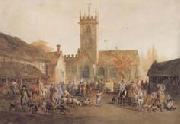
English painter, illustrator and writer. He trained at the drawing academy of Henry Pars (c. 1733-1806) in London and first exhibited at the Royal Academy in 1790. His drawings were almost always pen, ink and colour wash (e.g. Gossip at the Cottage Door, 1794; London, BM). His most characteristic works are the illustrations for the books Microcosm (1803-8) and The Costume of Great Britain (1808) in which he successfully placed groups of well-observed characters in picturesque settings. Pyne had been a founder of the Old Water-Colour Society in 1804 but resigned in 1809 when it refused to increase its membership to greater than 24 artists.
|
|
 |
Willem Pieterszoon Buytewech
|
|
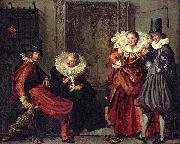
(1591/1592, Rotterdam - September 23, 1624, Rotterdam) was a Dutch painter, draughtsman and etcher of the Golden Age. He is often considered the "inventor" of Dutch genre painting. For his preference of irony, his contemporaries named him Gheestige Willem (Jolly or spiritual William).
Buytewech was the son of Pieter Jacobsz, a cobbler and candlemaker. He learned his trade in Haarlem, where he became a member of the artists' guild (Haarlem Guild of St. Luke) in 1612, together with Hercules Segers and Esaias van de Velde.[1] Frans Hals, who was a member of this guild since 1610, had much influence on Buytenwech's work, as shown by the many drawings that the latter made after Hals's paintings. After his marriage on November 10, 1613 with Aeltje van Amerongen, of a patrician family, he returned to Rotterdam. There Hendrik Martenszoon Sorgh was one of his pupils.
Buytewech was primarily a graphic artist, mostly of landscapes and genre pieces, but occasionally also of biblical and allegorical themes. Of his paintings only eight have survived to this date, all genre pieces, most depicting merry companies.
Willem Buytewech's Merry CompanyHe died at the age of only 32 or 33 of unrecorded causes. His son Willem Willemsz Buytewech (1625-1670), born after his death, would become a painter as well.
|
|
 |
Willem Pietersz. Buytewech
|
|
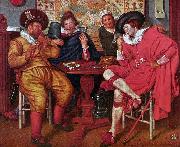
Willem Pieterszoon Buytewech (1591/1592 - September 23, 1624) was a Dutch painter, draughtsman and etcher of the Golden Age. He is often considered the "inventor" of Dutch genre painting. For his preference of irony, his contemporaries named him eGheestige Willeme (Jolly or spiritual William).
|
|
 |
Wille Pierre Alexandre
|
|
French Painter , 1748--Paris 1821
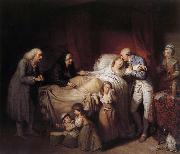
Painter, son of Jean-Georges Wille. Between 1761 and 1763 he trained under Jean-Baptiste Greuze, who was a friend of his father, and later under Joseph-Marie Vien. Approved by the Acad?mie Royale in 1774, he devoted himself to painting sentimental genre scenes, such as the Last Moments of a Beloved Wife (1784; Cambrai, Mus. Mun.), in Greuze's manner. He also executed paintings for his father to engrave, including French Patriotism (1781) and the Double Reward of Merit (1785; both Bl?rancourt, Cheteau, Mus. N. Coop. Fr.-Amer.).
|
|
|
|
|
|
 |
Wassilij Grigorjewitsch Perow
|
|
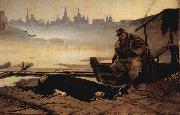
Vasily Grigorevich Perov (Russian; real name Vasily Grigorevich Kridener ; 2 January 1834 (21 December 1833 Old Style) - 10 June (29 May Old Style) 1882) was a Russian painter and one of the founding members of Peredvizhniki, a group of Russian realist painters.
Vasily Perov was born 2 January 1834 (21 December 1833 Old Style) in Tobolsk, being the illegitimate son of procurator, baron Grigory Karlovich Kridener. After completing a course at Arzamas uezd school, he was transferred to the Alexander Stupin art school also located in Arzamas. In 1853 he was admitted to the Moscow School of Painting, Sculpture and Architecture, where he learned from several renowned artists.
In 1856 he was awarded with a minor silver medal for his sketch of a boy's head, presented to the Imperial Academy of Arts. Later the Academy gave him many other awards: in 1857 a major silver medal for Commissary of Rural Police Investigating, a minor golden medal for the Scene on a Grave and the Son of a Dyak Promoted to First Rank, and in 1861 a major golden medal for Sermon in a Village.
After receiving the right to a state-paid trip abroad together with a golden medal, in 1862 Perov went to Western Europe, visiting several German cities, and then Paris. During this time he created paintings depicting scenes from European street life, such as the Vendor of statuettes, the Savoyard, the Organ-Grinder in Paris, the Musicians and the Bystanders, and the Paris Ragpickers.
Returning to Moscow early, from 1865 to 1871 Perov created his masterpieces The Queue at The Fountain, A Meal in the Monastery, Last Journey, Troika, the Lent Monday, Arrival of a New Governess in a Merchant House, the Drawing Teacher, A Scene at the Railroad, the Last Tavern at Town Gate, the Birdcatcher, the Fisherman, and the Hunters at Rest.
|
|
 |
VOS, Paul de
|
|
Flemish Baroque Era Painter, ca.1591-1678
was a Flemish Baroque painter. De Vos was born in Hulst near Antwerp, now in the Dutch province of Zeeland. Like his older brother Cornelis and younger brother Jan, he studied under the little-known painter David Remeeus (1559?C1626). He specialized in monumental animal scenes, especially hunts for aristocratic patrons, that are heavily influenced by Frans Snyders (to whom his sister Margaretha was married). De Vos became a master and joined the guild of St. Luke in 1620. As was frequent amongst artists in Antwerp, De Vos frequently collaborated with other painters. He painted animals in hunting scenes and armor in mythologies by Peter Paul Rubens and his studio.
|
|
|
|
 |
Vieira Portuense
|
|
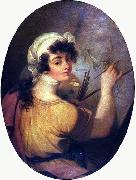
(Porto, 13 May 1765 - Funchal, 2 May 1805), who choose the artistic name of Vieira Portuense, was a Portuguese painter, one of the introducers of Neoclassicism in Portuguese painting. He was, in the neoclassical style, one of the two great Portuguese painters of his generation, with Domingos Sequeira.
He first studied in Lisbon, later moving to Rome. He traveled through Italy, Germany, Austria and England, before returning to Portugal, in 1800. He met Swiss painter Angelika Kauffmann, from whom he seems to have received influences. He seems to anticipate some motives of the romantic painting in several of his historical paintings, like "Dona Filipa de Vilhena knighting her sons" (1801).
He contracted tuberculosis, and moved to Madeira, were he died, aged only 39.
He is represented at the National Museum of Ancient Art, in Lisbon, and at the National Museum Soares dos Reis, in Porto.
Not to be confused with another Portuguese painter, Francisco Vieira de Matos, better known as Vieira Lusitano.
|
|
|
|
|
|
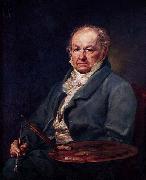
Vicente Palmaroli Gonzalez
|
|
1834-1896
Spanish
Vicente Palmaroli Gonzalez Gallery
His father was the Italian lithographer, Gaetano Palmaroli and he studied in San Fernando's Royal Academy. He later went to Rome in 1857 to complete his training, and he lived there until 1866. One year later, he went to the Paris World's Fair of 1867. He met Ernest Meissonier, who influenced his later works.
He was academician in San Fernando's Royal Academy, and director in the Spanish Academy in Rome and Prado Museum (1893-1896).
|
|
 |
Vicente Lopez y Portana
|
|
(September 19, 1772, Valencia, Spain CJuly 22, 1850, Madrid, Spain) was a Spanish painter, considered the best portrait painter of his time.
Vicente Lepez y Portaña was born in Valencia on September 19, 1772. His parents were Cristebal Lepez Sanchordi and Manuela Portaña Meer. Vicente Lepez began formally studying painting in Valencia at the age of thirteen, he was a disciple of father Antonio de Villanueva, a Franciscan monk, and he studied at the Academy of San Carlos in his native city. He was seventeen when he won first prize in drawing and coloring receiving a scholarship to study in the prestigious Academia Real de Bellas Artes de San Fernando in Madrid. For the following three years in Madrid, he apprenticed with the Valencian painter, Mariano Salvador Maella. Vicente Lepez returned to Valencia in 1794 and subsequently became vice-director of painting at the Academy where he had studied as a boy. In 1795 he married Maria Piquer, they had two sons: Bernardo Lepez Piquer and Luis (1802-1865), who were also painters, following their father's style but with little accomplishments. In 1801 Lepez was named President of the Academy of San Carlos.
|
|
|
|
 |
Vasily Polenov
|
|
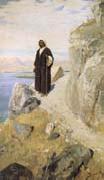
1844 - 1927,Painter. He began a systematic study of drawing in 1856, first with the landscape painter Pavel Cherkasov (1834-1900), then from 1859 to 1861 with Pavel Chistyakov (1832-1919). He also took lessons with Chistyakov, whom he considered his most important teacher, in 1871 and early 1872, after finishing his academic course. From 1863 to 1871 Polenov studied at the St Petersburg Academy of Art, where he met members of the progressive wing of the Russian artistic intelligentsia, and occasionally in the faculty of law at St Petersburg University. The classical education he received at home, his academic training and lessons with Chistyakov led Polenov towards an exalted history painting, although he personally inclined towards landscape. This dualism remained in Polenov work for the duration, and not until the late 1880s and early 1890s did he achieve a stable relationship between the two forms. The whole of his student career and the initial postgraduate, scholarship period was largely taken up with historical works: from academic compositions, for example the Resurrection of Jairus Daughter (1871; Pskov, Mus. Hist., Archit. & A.), for which he received the Grand Gold Medal and a travel bursary (in Germany and Italy, 1872-3, and France, 1873-6), to numerous pictures and sketches on subjects from antiquity and medieval history, executed in France or shortly after his departure from there, under the perceptible influence of Paul Delaroche (e.g. The Master Right, 1874; Moscow Tret yakov Gal.). At the same time he produced his first independent works, in the 1860s and early 1870s: landscapes in the surroundings of the Imochentsy estate in Karelia (e.g. Mountains, 1870; Moscow Tret yakov Gal.), and landscape studies and pictures executed from nature in Normandy in 1874 (e.g. Fishing Boat, Etretat; Moscow, Tret'yakov Gal.). In 1876 he became an Academician
|
|
 |
Vasily Perov
|
|
Russian historical, genre, and portrait Painter , 1834-1882
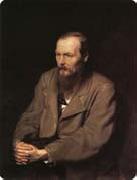
was a Russian painter and one of the founding members of Peredvizhniki, a group of Russian realist painters. Vasily Perov was born January 2, 1834 (December 21 1833 Old Style) in Tobolsk. After completing a course at Arzamas uezd school, he was transferred to the Alexander Stupin art school also located in Arzamas. In 1853 he was admitted to the Moscow School of Painting, Sculpture and Architecture, where he learned from several renowned artists. In 1856 he was awarded with a minor silver medal for his sketch of a boy's head, presented to the Imperial Academy of Arts. Later the Academy awarded him many other awards: in 1857 a major silver medal for Commissary of Rural Police Investigating, a minor golden medal for the Scene on a Grave and the Son of a dyak promoted to first rank, in 1861 a major golden medal for Sermon in a Village. After receiving the right to a state-paid trip abroad together with a golden medal, in 1862 Perov went to Western Europe, visiting several German cities, and then Paris. During this time he created paintings depicting scenes from European street life such as the Vendor of statuettes, the Savoyard, the Organ-Grinder in Paris, the Musicians and the Bystanders, the Paris Ragpickers. Returning to Moscow early, from 1865 to 1871 Perov created his masterpieces The Queue at The Fountain, A Meal in the Monastery, Last Journey, Troika, the Lent Monday, Arrival of a New Governess in a Merchant House, the Drawing Teacher, A Scene at the Railroad, the Last Tavern at Town Gate, the Birdcatcher, the Fisherman, the Hunters at Rest. In 1866 he received the title of an academician, and in 1871 the position of a Professor at Moscow School of Arts, Sculpture and Architecture.
|
|
|
|
 |
Vasiliy Polenov
|
|
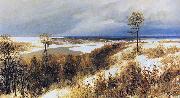
Vasily Dmitrievich Polenov (Russian: 1 June 1844 - 18 July 1927) was a Russian landscape painter associated with the Peredvizhniki movement of realist artists.
BiographyA native of St.Petersburg, Polenov studied under Pavel Chistyakov and in the Imperial Academy of Arts from 1863 to 1871. He was classmate and close friend to Rafail Levitsky, fellow Peredvizhniki artist and famous photographer. Their letters which remain today in Polenov's house museum are an interesting account of the many art exhibitions, movements and artists of their day.
|
|
|
|
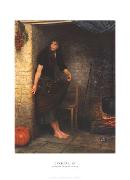 |
Valentine Cameron Prinsep Prints
|
|
Indian-born British Pre-Raphaelite Painter, 1838-1904
Henry Prinsep was an intimate friend of G. F. Watts, under whom his son first studied. Val Prinsep also worked in Paris in the atelier Gleyre; and 'Taffy' in his friend George du Maurier's novel Trilby, is said to have been sketched from him. He was an intimate friend of John Everett Millais and of Burne-Jones, with whom he travelled in Italy. He had a share with Rossetti and others in the decoration of the hall of the Oxford Union.
Prinsep first exhibited at the Royal Academy in 1862 with his Bianca Capella, his first picture, which attracted marked notice, being a portrait (1866) of General Gordon in Chinese costume. Princep lent the costume to Millais who used it in his own painting Esther.
The best of his later exhibits were A Versailles, The Emperor Theophilus chooses his Wife, The Broken Idol and The Goose Girl. He was elected A.R.A. in 1879 and R.A. in 1894. In 1877 he went to India and painted a huge picture of the Delhi Durbar, exhibited in 1880, and afterwards hung at Buckingham Palace.
|
|
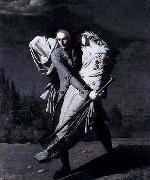 |
VAFFLARD, Pierre-Auguste
|
|
French painter b. 1777, Paris, d. 1837, Paris,French painter. A pupil of Jean-Baptiste Regnault, he exhibited regularly in the Salon between 1800 and 1831. He executed a number of unremarkable academic works on Classical subjects, for example Electra (1804; exh. Salon 1814) and Orestes Sleeping (1819; both Dijon, Mus. B.-A.). Vafflard gained more success with his Troubadour pictures, which he began to paint in the early 19th century, at the outset of this fashion. They are remarkable for their absence of colour, their theatrical quality and contrasted lighting effects. One of his earliest Troubadour scenes was Emma and Eginhard (exh. Salon 1804; Evreux, Mus. Evreux), based on an episode in the history of Charlemagne's court and painted at a time when the Holy Roman Empire was in fashion in official French circles. In this sentimental painting Vafflard demonstrated his historicizing intentions by emphasizing medieval costume and Gothic architecture and seeking to create an atmosphere similar to the romans de la chevalerie, so highly thought of in France at the end of the 18th century. In the same Salon he exhibited a strange and novel painting, Young Holding his Dead Daughter in his Arms (Angouleme, Mus. Mun.), taken from Edward Young's Night Thoughts (pubd in French in 1769-70).
|
|
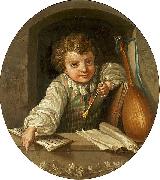 |
Ulrika Pasch
|
|
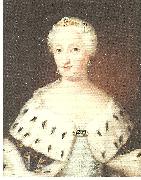
(10 July 1735 - 2 April 1796), also known as Ulla Pasch, was a Swedish painter and miniaturist. She was one of few female artists known in Scandinavia before the 19th century. She was a member of the Royal Swedish Academy of Arts (1773).
Ulrika Pasch was born in an artistic family, daughter of the painter Lorens Pasch the Elder, and sister of the future painter Lorens Pasch the Younger. Her uncle, Johan Pasch, was also a painter.
In the 1750s, when her brother was studying art abroad, her father's career declined severely, and Ulrika was forced to become a housekeeper in the home of her maternal aunt's widower. Her uncle however allowed her to spend a lot of time developing her artistic talent, and from 1756, she had become a professional portrait painter and was able to support her father and her sister in this way. After her father's death, she lived with her sister and set up her own studio.
When her brother returned to Sweden in 1766, she had been a professional artist for ten years and her clientele had moved from the middle class to the upper classes and the aristocracy. Ulrika Pasch and her brother then worked together as professional artists, shared their studio and guided each other in their work; their collaboration was one of mutual respect and harmony, and she is known to have helped him painting the textiles and costumes, a work he found tiring. Their baby-sister Helena Sofia (1744-96) took care of their household; she is described as somewhat talented in art as well, but she spent her life as her siblings "dutiful" house-keeper, and is said to have been deeply devoted to especially Ulrika.
|
|
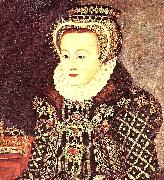 |
ulrica pasch
|
|
Ulrika Pasch började måla 1756 men hade tidigt tillsammans med sin bror fått undervisning av fadern. Hon blev hushållerska åt en släkting, men målade på fritiden. Under en tioårsperiod försörjde hon sin pappa och syster som professionell porträttmålare i Stockholm innan hennes bror återvände från sina studier utomlands 1766, då de började arbeta tillsammans. Deras samarbete beskrivs som harmoniskt och de valdes båda in i konstakademien 1773. Hon var inte den första kvinnan som valdes in i akademin, men hon var den första kvinnliga yrkeskonstnären som blev vald. Hon ska ha målat detaljerna på broderns tavlor, som klädesdetaljer och liknande. Ulrika hade en framgångsrik karriär och målade ofta porträtt av kungafamiljen och hovet. Hon ansökte dock upprepade gånger förgäves för en pension. Systern Helena Lovisa (1744-96) hushållade åt sina syskon.
Trots att det sägs att hon själv var en ödmjuk person som aldrig framhävde sitt arbete, så är hon en av få kända självförsörjande kvinnliga yrkeskonstnärer i Skandinavien före artonhundratalet.
|
|
 |
ulrica fredrica pasch
|
|
Ulrika Fredrika Pasch, född 10 juli 1735 i Stockholm, död 2 april 1796, var en svensk konstnär. Hon var dotter till konstnären Lorens Pasch d.ä. och Anna Helena Beckamn, syster till konstnären Lorens Pasch d.y. och brorsdotter till konstnären Johan Pasch.
Ulrika Pasch började måla 1756 men hade tidigt tillsammans med sin bror fått undervisning av fadern. Hon blev hushållerska åt en släkting, men målade på fritiden. Under en tioårsperiod försörjde hon sin pappa och syster som professionell porträttmålare i Stockholm innan hennes bror återvände från sina studier utomlands 1766, då de började arbeta tillsammans. Deras samarbete beskrivs som harmoniskt och de valdes båda in i konstakademien 1773. Hon var inte den första kvinnan som valdes in i akademin, men hon var den första kvinnliga yrkeskonstnären som blev vald. Hon ska ha målat detaljerna på broderns tavlor, som klädesdetaljer och liknande. Ulrika hade en framgångsrik karriär och målade ofta porträtt av kungafamiljen och hovet. Hon ansökte dock upprepade gånger förgäves för en pension. Systern Helena Lovisa (1744-96) hushållade åt sina syskon.
Trots att det sägs att hon själv var en ödmjuk person som aldrig framhävde sitt arbete, så är hon en av få kända självförsörjande kvinnliga yrkeskonstnärer i Skandinavien före artonhundratalet.
|
|
 |
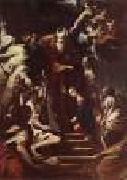
UCCELLO, Paolo
|
|
Italian Early Renaissance Painter, 1397-1475
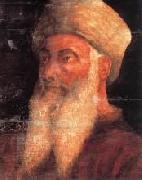
Italian painter, draughtsman, mosaicist and designer of stained glass. His work vividly illustrates the principal issues of Florentine art during the first half of the 15th century. Trained within the tradition of the Late Gothic style, he eventually became a leading exponent of the application of linear perspective based on the mathematical system established by Filippo Brunelleschi and Leon Battista Alberti. It is the merging of these two diametrically opposed tendencies that forms the basis of Uccello's style. As well as painting on panel and in fresco
|
|
 |
TIBALDI, Pellegrino
|
|
Italian Painter, 1527-1596
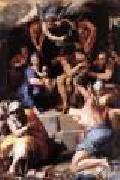
Painter and architect. Pellegrino Tibaldi's early paintings show the influence of Bagnacavallo and of other Bolognese followers of Raphael, but his actual teacher is unknown. Vasari's claim that his own works in S Michele in Bosco, Bologna, formed Tibaldi's artistic education is hardly borne out by the latter's first efforts. The Mystic Marriage of St Catherine (c. 1545; Bologna, Pin. N.) is, in its classical, hierarchical simplicity, clearly inspired by Raphael's manner as interpreted by his Bolognese imitators; although it also bears delicate marks of Parmigianino's grace, the power of its expressive dignity and the architectural background hint at Tibaldi's future development. Tibaldi's Adoration of the Shepherds
|
|
 |
Thomas Pollock Anshutz
|
|
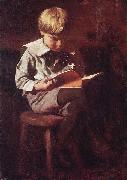
(1851-1912) was an American painter and teacher.
He studied art at the National Academy of Design in New York City, and moved to Philadelphia in 1875 to study under Thomas Eakins at the Philadelphia Sketch Club. He entered the Pennsylvania Academy of the Fine Arts in 1876, becoming Eakins's assistant there in 1878, and his successor in 1886. He later studied in Paris at the Academie Julian, 1892-93
|
|
 |
Thomas Phillips
|
|
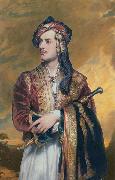
(18 October 1770 - 20 April 1845) was a leading English portrait and subject painter. He painted many of the great men of the day including scientists, artists, writers, poets and explorers.
Phillips was born at Dudley then in Worcestershire. Having acquired the art of glass-painting in Birmingham under Francis Eginton,[1] he visited London in 1790 with an introduction to Benjamin West, who found him employment on the painted-glass windows of St George's Chapel at Windsor. In 1791, he became a student of the Royal Academy, and exhibited there, in 1792, a view of Windsor Castle, followed in the next two years by the "Death of Talbot, Earl of Shrewsbury, at the Battle of Castillon," "Ruth and Naomi," "Elijah restoring the Widow's Son," "Cupid disarmed by Euphrosyne," and other pictures.
After 1796, he mainly confined himself to portrait-painting. However, the field was very crowded with the likes of John Hoppner, William Owen, Thomas Lawrence and Martin Archer Shee competing for business; consequently, from 1796 to 1800, his exhibited works were chiefly portraits of gentlemen and ladies, often nameless in the catalogue and of no great importance historically-speaking.
|
|
 |
Thomas Patch
|
|
1725 - 1782
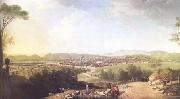
was an English painter, engraver and caricaturist. He made a living by basing himself in Italy and undertaking commissions from rich young British men on Grand tours.His paintings today are in the Royal Collection and various museums. Patch was thrown out of Rome for a homosexual act. Patch was born in Exeter in 1725, the son of a doctor. He had not completed his medical studies when he came to Rome in 1747 as a grand tourist and where he met Joshua Reynolds. Initially he worked for Joseph Vernet, creating landscapes of Tivoli and pastiches of Vernet's work. He was forced to leave Rome after some homosexual He was in Florence in 1755, where he was commissioned to paint people on their Grand tours. Here he was assisted by his friendship with Sir Horace Mann, who was the British envoy and therefore a point of contact with British tourists arriving in Florence. While there he completed studies of human physiognomy, looking at the expressions and facial types as well as completing portraits of many in the British society in Florence. He also studied the old masters and published studies of them. Towards the end of his life his output of paintings slowed.Patch was also known to be an art dealer. In about 1763, Patch completed three views of Florence that are now part of the Royal Collection. They are thought to have been bought by George III. On October 19, 1767, he was enterprising enough to witness the eruptions of Mount Vesuvius which he painted from both the land and the sea.
|
|
|
|
 |
Theodor Esbern Philipsen
|
|
1840-1920
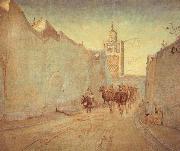
Danish painter, sculptor and draughtsman. He studied at the Kongelige Akademi for de Skenne Kunster, Copenhagen, in 1862-3 and 1865-9, and in Paris under Leon Bonnat in 1875-6. He was an important figure in the development and renewal of Danish naturalism, linking the Danish Golden Age tradition with new French ideas. Conscious of the importance of plein-air painting, he was first a great admirer of the Barbizon school; later he was influenced by the Impressionists, becoming the only truly Danish Impressionist. Frequent visits abroad helped him develop his outlook; he eagerly studied the Old Masters, and the strong light of the south
|
|
|
|
 |
SUBLEYRAS, Pierre
|
|
French Painter, 1699-1749
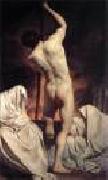
was a French painter, active during the late-Baroque and early-Neoclassic period, mainly in Italy. Subleyras was born in Saint-Gilles-du-Gard, France. He left France in 1728, having carried off the French Academy's grand prix, which carried scholarship for study in Rome. In Rome, he painted for the Elector of Saxony, Frederick Christian, a "Christ's Visit to the House of Simon the Pharisee" , (later engraved by Subleyras himself), this work procured his admission into the famed Roman artists guild, Accademia di San Luca. Cardinal Valenti Gonzaga next obtained for him the order for Saint Basil & Emperor Valens (also known as the Mass of St. Basil , which was executed in mosaic for St Peter's. Another masterpiece is his painting of St. Camillo De Lellis coming to the rescue of the diseased at the hospital of the Holy Spirit He was a remarkably incisive portraitist, as evident from the portrait of Pope Benedict XIV or of the obese Cardinal Valenti Gonzaga . The pope himself commanded two great paintings, the "Marriage of St Catherine" and the "Ecstasy of St Camilla", which he placed in his own private apartments. Subleyras shows greater individuality in his curious genre pictures, which he produced in considerable number (Louvre).
|
|
|
|
|
|
|
|
|
| Wholesale China Oil Painting Wholesale Oil Painting China Xiamen Portrait Reproduction on canvas Chinese Oil Painting Wholesale USA Oil Painting |
|
|
|
|
|