| |
|
Xiamen Oil Paintings, Wholesale Direct!
|
|
100% hand painted, 100% cotton canvas, 100% money back if not satisfaction. |
|
|
|
|
ART WORKS INDEX
A
B
C
D
E
F
G
H
I
J
K
L
M
N
O
P
Q
R
S
T
U
V
W
X
Y
Z
|
|
ARTISTS INDEX
A
B
C
D
E
F
G
H
I
J
K
L
M
N
O
P
Q
R
S
T
U
V
W
X
Y
Z
|
|
|
|
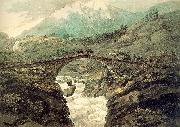 |
Pars, William
|
|
English, 1742-82
English painter. He first established himself in London as a portrait painter, exhibiting at the Society of Artists in 1760 and at the Free Society of Artists from 1761. In 1764 he won the third premium of the Royal Society of Arts for his history painting depicting Caractacus before the Emperor Claudius (untraced). In the same year he was selected by the Dilettanti Society to accompany Richard Chandler and Nicholas Revett on an archaeological expedition to Asia Minor and Greece (1764-6). His views of Classical monuments in Asia Minor were engraved and published in Ionian Antiquities (1769), while those he made in Greece, which included pioneering drawings of the Parthenon sculptures, were used in the second volume of James Stuart's Antiquities of Athens (1777).
|
|
 |
Parrocel, Joseph
|
|
French, 1646-1704
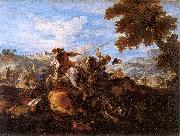
He studied with his father Barthelemy Parrocel (1595-1660) and then with his elder brother Louis Parrocel (1634-94). He went to Paris for four years to perfect his work and then, c. 1667, to Rome, where he became the pupil of the battle painter Jacques Courtois and was influenced by Salvator Rosa. He remained in Italy for eight years and stayed for a time in Venice, before returning to settle in Paris in 1675. He was approved (agree) by the Academie Royale de Peinture et de Sculpture in February 1676 and received as a full member in November of the same year, presenting the Siege of Maastricht (Draguignan, Mus. Mun.). His painted oeuvre consists principally of military scenes, particularly battles, and he received numerous royal commissions. In the period 1685-8 he executed 11 paintings for the Salle du Grand Couvert at the cheteau of Versailles (nine in situ; one in Tours, Mus. B.-A.; one in Dijon, Mus. B.-A.); in 1699 he painted the Crossing of the Rhine (Paris, Louvre.) for the cheteau of Marly, Yvelines, and in 1700 he executed the Fair at Bezons (Tours, Mus. B.-A.), anticipating the fetes galantes of Antoine Watteau. He was also the author of a number of hunting scenes . His most important religious paintings were the May of Notre-Dame de Paris of 1694, St John the Baptist Preaching (Arras, Mus. B.-A.) and St Augustin Succouring the Sick (c. 1703; Nantes, Mus. B.-A.), which was intended for the monastery in the Place des Victoires in Paris. He also contributed battle scenes to the backgrounds of portraits by Hyacinthe Rigaud and by Gabriel Blanchard. His technique was highly original in the context of his time; he employed a very free style of execution and used thick impasto and intense colours. He was also a prolific engraver, producing around 100 plates,
|
|
|
|
|
|
 |
PARMIGIANINO
|
|
Italian Mannerist Painter, 1503-1540
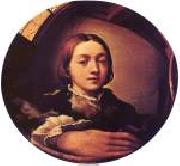
Italian painter, draughtsman and printmaker. Beginning a career that was to last only two decades, he moved from precocious success in the shadow of Correggio in Parma to be hailed in the Rome of Clement VII as Raphael reborn. There he executed few large-scale works but was introduced to printmaking. After the Sack of Rome in 1527, he returned to northern Italy, where in his final decade he created some of his most markedly Mannerist works. Equally gifted as a painter of small panels and large-scale frescoes both sacred and profane, he was also one of the most penetrating portrait painters of his age.
|
|
|
|
 |
Paris Bordone
|
|
Italian
1500-1571
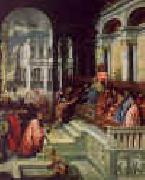
Italian painter and draughtsman. He is best known for his strikingly beautiful depictions of women, both in portraits and in cabinet paintings. He also excelled in rendering monumental architectural settings for narrative, both religious and secular, possibly initiating a genre that would find great currency during the mid-16th century, especially in Venice, France and the Netherlands. His favoured media were oil and fresco, the latter being used on both interiors and faades. Although he was not generally sought after by Venetian patrons during his career, as his art was eclipsed by that of Titian, Paolo Veronese and Jacopo Tintoretto, Bordone was regarded in the mid-16th century as an accomplished artist (Pino; Sansovino). He worked for the moneyed lite of northern Italy and Bavaria, for the royalty of France and Poland, and had works commissioned to be sent to Spain and to Flanders. Despite knowledge of the important patrons for whom he worked, the chronology of Bordones oeuvre is by no means clear. Dating on stylistic grounds is confounded by the diverse sources on which he drew, ranging from the Emilian, Lombard and Venetian to the French and northern European, depending on the patron. Due to the ease with which prints circulated during Bordones career, it is difficult to ascertain whether influences were derived at first hand or from printed images. Such difficulties in assigning dates are further exacerbated by his use of the same figure study for numerous paintings evidently executed decades apart. Reliance on the testimony of Vasari, who interviewed Bordone in 1566, in conjunction with the extant documents, the few signed and dated paintings and, to a lesser extent, period fashion provides only a rough outline of his activity. Due to the lack of agreement among scholars regarding chronology, the following account is based mainly on the documentary evidence.
|
|
|
|
 |
Parentino, Bernardo
|
|
Italian Painter, 1437-1531
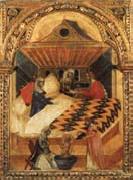
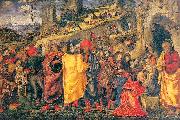
was an Italian painter of the Renaissance period, active mainly in Padua. Born in Parenzo, then a Venetian town in Istria and died in Vicenza. He was influenced, if not a pupil, of the painter Andrea Mantegna. He became an Augustinian monk under name of Lorenzo. He painted Scenes of the life of San Benedetto for the cloister of Santa Giustina at Padua, and a Nativity once at the Accademia in Venice. He painted a nightmarish Temptation of St. Anthony Abbot found at the Doria Pamphilj Gallery. An Adoration of the Magi
|
|
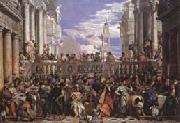 |
Paolo Veronese
|
|
Italian Mannerist Painter, ca.1528-1588
Italian painter and draughtsman. With Titian and Tintoretto he makes up the triumvirate of great painters of the late Renaissance in Venice. He is known as a supreme colourist and for his illusionistic decorations in both fresco and oil. His large paintings of biblical feasts executed for the refectories of monasteries in Venice and Verona are especially celebrated. He also produced many altarpieces, history and mythological paintings and portraits. His compositional sketches in pen, ink and wash, figure studies in chalk, and chiaroscuro modelli and ricordi form a significant body of drawings.
|
|
|
|
|
|
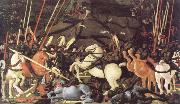 |
paolo uccello
|
|
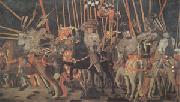
(b Florence, c. 1397; d Florence, 10 Dec 1475). Italian painter, draughtsman, mosaicist and designer of stained glass. His work vividly illustrates the principal issues of Florentine art during the first half of the 15th century. Trained within the tradition of the Late Gothic style, he eventually became a leading exponent of the application of linear perspective based on the mathematical system established by Filippo Brunelleschi and Leon Battista Alberti. It is the merging of these two diametrically opposed tendencies that forms the basis of Uccello's style. As well as painting on panel and in fresco (many of his works in this medium have been severely damaged), he was also a master mosaicist and produced designs for stained glass.
|
|
|
|
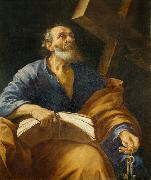 |
Paolo Emilio Besenzi
|
|
(1608-1656) was an Italian painter of the 17th century, born and active in Reggio. He trained with Francesco Albani. Friend and companion of Lionello Spada, he painted for the church of San Pietro. He was also known as sculptor and architect.
|
|
|
|
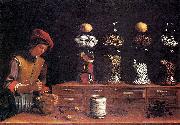 |
Paolo Antonio Barbieri
|
|
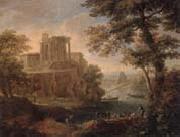
(1603-1649) was an Italian painter who was the brother of Guercino. He was born at Cento, a village near Bologna. The subjects of his pictures are flowers, fruit, and game, but he particularly excelled in painting fish
|
|
 |
Paolo Anesi
|
|
Italian ,
Romer 1697-1773
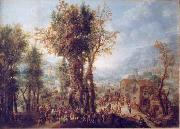
Italian painter, draughtsman and engraver. He was the son of Pietro Anesi, a silk weaver from Venice. Paolo studied figure painting with Giuseppe Chiari and, in 1715, landscape painting with Bernardino Fergioni (1674-?1738), who was also teaching Andrea Locatelli at that time. Sebastiano Conca was another of Anesi's teachers. In 1723 Anesi married the daughter of the architect Giuseppe Sardi. His earliest known work is a drawing (1719; Florence, Uffizi), but he made his reputation with the only known example of his engraved work: Varie vedute inventate ed intagliate, dedicated to Cardinal Giuseppe Renato Imperiali and published in Rome in 1725.
|
|
 |
Paolo Alboni
|
|
(1671-1734), also called Paolo Antonio Alboni, was an Italian painter of the late-Baroque period. He was born and trained in Bologna, where he became a landscape painter. After practicing some time in Rome and Naples, he went in 1710 to Vienna, where he remained nearly thirteen years, but being deprived of the use of his right side by a stroke, he returned to Bologna; he subsequently painted with his left hand. His daughter, Luigia Maria Rosa, was also a landscape painter. She died in 1759.
|
|
 |
Paolo Veronese
|
|
1528-1588
Paolo Veronese Galleries
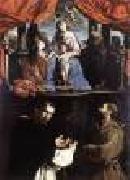
Italian painter and draughtsman. With Titian and Tintoretto he makes up the triumvirate of great painters of the late Renaissance in Venice. He is known as a supreme colourist and for his illusionistic decorations in both fresco and oil. His large paintings of biblical feasts executed for the refectories of monasteries in Venice and Verona are especially celebrated. He also produced many altarpieces, history and mythological paintings and portraits. His compositional sketches in pen, ink and wash, figure studies in chalk, and chiaroscuro modelli and ricordi form a significant body of drawings. He headed a family workshop that remained active after his death.
|
|
 |
PAOLINI, Pietro
|
|
Italian painter, Lucchese school (b. 1603, Lucca, d. 1681, Lucca)
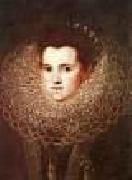
Italian painter. He was the son of Tommaso Paolini and Ginevra Raffaelli, both from Lucca. In 1619 Paolini's father sent him to study under Angelo Caroselli in Rome. His artistic formation was also influenced by the circle of Italian and, especially, northern European followers of Bartolomeo Manfredi, who were active in Rome between 1620 and 1630. The following works, though undocumented, may be dated to this Roman period: Martha and Mary Magdalene (Rome, Gal. Pallavicini), the Concert of Female Musicians (Malibu, CA, Getty Mus.) and the Bacchic Concert (Dallas, TX, Hoblitzelle priv. col., see Maccari Giusti, pl. 3). Paolini's first religious works, such as the Deposition (Lucca, S Frediano), as well as many portraits, also show signs of Roman influence. Around 1628 he went to Venice, where he stayed for two years. The effects of this visit can be seen in his later religious works, such as the Virgin and Saints (Rome, Pal. Barberini) and the Virgin and Saints (Lucca, Villa Guinigi), and also in his history paintings, such as Esther and Ahasuerus (Denver, CO, A. Mus.). He returned to Lucca in 1631, where, from these early experiences, he created an original style, in which he painted cabinet pictures, often on musical or allegorical themes, such as the Ages of Life (Lucca, Mazzarosa priv. col., see Maccari Giusti, pl. 10) and the series Music, Astronomy, Geometry, Philosophy (Lucca, Bertocchini Dinucci priv. col., see Maccari Giusti, pls 56-9). Around 1650 he opened, at his own expense, an academy based on the principle of 'art from nature', at which numerous artists, such as Girolamo Scaglia (d c. 1686), Antonio Franchi, Simone del Tintore and his brother Francesco (1645-1718) were trained.
|
|
 |
PANTOJA DE LA CRUZ, Juan
|
|
Spanish Painter, 1553-1608
Spanish painter. He must have moved to Madrid when he was very young, receiving his training in the workshop of Alonso S?nchez Coello, painter to Philip II. On numerous occasions he declared himself to be a follower of S?nchez Coello, in whose workshop he was an oficial, and he probably collaborated to a considerable degree on many of his master's mature works. There are very few signed works by Pantoja from before the death of S?nchez Coello, although some anonymous paintings from the workshop are probably by him. In Madrid in 1587 Pantoja married a woman of some means, and by the following year, when S?nchez Coello died, he was an independent painter, aspiring to his master's position. Documentation exists from 1590 concerning portraits by Pantoja of members of the royal family including one of Don Felipe, the future Philip III (1593; Vienna, Ksthist. Mus.). On Philip's accession to the throne in 1598 Pantoja painted another portrait of him (Vienna, Ksthist. Mus.) and became the official portrait painter for the court and for the nobility of Madrid; there is detailed documentation for his work from this time. He painted clothing and jewels with precision, in minute detail and with a dry objectivity in the Flemish tradition. His treatment of faces, however, clearly reveals his study of Venetian portraiture, and in particular that of Titian, as well as sharp psychological penetration. In his portraits of royal children he maintained, albeit with a certain rigidity, the charm that S?nchez Coello in his paintings had given these infant figures tightly swathed in official robes
|
|
|
|
 |
PANNINI, Giovanni Paolo
|
|
Italian Neoclassical Painter, ca.1691-1765
was an Italian painter and architect, mainly known as one of the vedutisti or (veduta, or "view painters"). As a young man, Pannini trained in his native town of Piacenza as a stage designer. In 1711, he moved to Rome, where he studied drawing with Benedetto Luti and became famous as a decorator of palaces, including the Villa Patrizi (1718C1725) and the Palazzo de Carolis (1720). As a painter, Pannini is best known for his vistas of Rome, in which he took a particular interest in the city's antiquities. Among his most famous works are the interior of the Pantheon, and his vedute paintings of picture galleries containing views of Rome. Most of his works, specially those of ruins have a substantial fanciful and unreal embellishment characteristic of capriccio themes. In 1719, Pannini was admitted to the Congregazione dei Virtuosi al Pantheon. He taught in Rome at the Accademia di San Luca and the Academie de France, where he influenced Jean-Honore Fragonard. His studio included Hubert Robert and his son Francesco Panini. His style would influence a number of other vedutisti, such as his pupil Antonio Joli, as well as Canaletto and Bernardo Bellotto,
|
|
 |
Pankiewicz, Jozef
|
|
1866-1940
Jozef Pankiewicz (Lublin November 29 1866 - July 4 1940) was a Polish painter, graphic artist, and pedagogue. In his summer years he studied under Wojciech Gerson and Alexander Kaminski. He travelled to Saint Petersburg with Władysław Podkowinski after winning a scholarship to the Imperial Academy of Arts there. In 1889, both artists left for Paris.
|
|
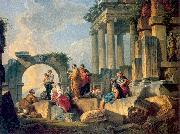 |
Panini, Giovanni Paolo
|
|
Italian Neoclassical Painter, ca.1691-1765
Italian painter, architect and stage designer. He was a highly prolific and versatile painter, best known for his numerous vedute of Rome, many of which focused on the remnants of the city's Classical past. Ceremonies and festivals often feature in his vedute, which thus constitute a lively documentation of contemporary topography, lifestyle and customs. In contrast to Bernardo Bellotto and Gaspar van Wittel, his treatment is picturesque rather than rigorous; he liked to enliven and animate his views by adding numerous figures. He worked exclusively in Rome and by the end of his career was the head of a thriving workshop that included the Frenchman Hubert Robert (in Rome from 1754) and Panini's son Francesco Panini (b 1738).
|
|
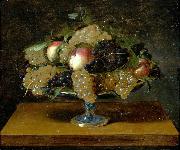 |
Panfilo Nuvolone
|
|
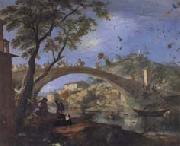
(1581-1651) was an Italian painter of the Mannerist period, who painted both religious and still life topics, active in Cremona and Mantua.
Born to a Mantuan gentleman, he was the father of a family of Cremonese painters. In that town, he apprenticed with Giovanni Battista Trotti (known as il Malosso). Afterwards he moved to Milan, where frescoe church ceilings, and painted altarpieces and still lifes.
One of his few documented still lifes depict a bowl of peaches, and recalls the near-contemporary paintings of fruit bowls in Milan, including the 1594-98 painting in the Ambrosiana by Caravaggio and similarly themed paintings by Fede Galizia. His son, Carlo Francesco Nuvolone, also a prominent in painter in Lombardy. Panfilo's younger son Giuseppe Nuvolone also a painter. Giuseppe's son Carlo was a mediocre quadratura specialist active mainly around Cremona.
|
|
 |
Pandolfo Reschi
|
|
(b Gdansk, c. 1640; d Florence, 1696).
Polish painter, active in Italy
|
|
 |
Palmezzano, Marco
|
|
Italian, Approx. 1459-1539
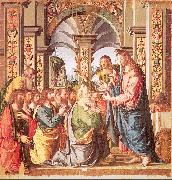
.Italian painter. His earliest work was probably on the fresco decoration (c. 1480-84) of the vault of the sacristy of the treasury in the Santa Casa, Loreto, designed by Melozzo da Forl?. He then probably went to Rome, where he may have painted the fresco in the apse of Santa Croce in Gerusalemme (Longhi). In 1493 Palmezzano is documented working with Melozzo on the fresco decoration in the Feo Chapel,
|
|
|
|
|
|
 |
Palmer, Samuel
|
|
English, 1805-1881
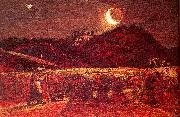
English painter, draughtsman and etcher. Palmer was a key figure of English Romantic painting who represented, at least in his early work, its pastoral, intuitive and nostalgic aspects at their most intense. He is widely described as a visionary and linked with his friend and mentor William Blake, though he stood at an almost opposite extreme in his commitment to landscape and his innocent approach to its imagery.
|
|
|
|
 |
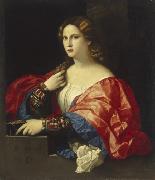
Palma Vecchio
|
|
1480-1528
Italian
Palma Vecchio Gallery
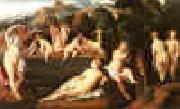
His birthdate is calculated on Vasari testimony (1550) that he died aged 48. By March 1510 he was in Venice, where he spent his working life. The stylistic evidence of his earliest works suggests that he was apprenticed to fellow Bergamasque artist Andrea Previtali, who had studied under Giovanni Bellini. A signed Virgin Reading (1508-10; Berlin, Gemeldegal.), which may be Palma Vecchio earliest surviving painting, is strongly reminiscent of his teacher. Previtali returned to Bergamo in 1511, and the main corpus of Palma work can be dated from this time. Palma Vecchio oeuvre reflects the change from an early to a high Renaissance conception of the human figure in secular and religious art. He specialized in certain themes that became established in the repertory of genres of the Venetian school in the generation after him. The principal of these were the wide-format SACRA CONVERSAZIONE
|
|
 |
Palma il Vecchio
|
|
(c. 1480 - July 1528), born Jacopo Palma or known as Jacopo Negretti, was an Italian painter of the Venetian school born at Serina Alta near Bergamo. He is called Palma Vecchio in English ("Old Palma" - in Italian Palma il Vecchio) to distinguish him from Palma Giovane, his great-nephew.
When Palma arrived in Venice early in the 16th century, he reputedly was a companion and competitor of Lorenzo Lotto, and to some extent a pupil of Titian. He may also have taught Bonifazio Pitati and influenced Giovanni Busi. Palma's earlier works betray the influence of the Bellini.
|
|
 |
PALMA GIOVANE
|
|
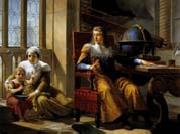
Italian Mannerist Painter, ca.1548-1628
Son of Antonio Palma. A greater artist than his father, his vast oeuvre represents the impact of central Italian Mannerism but principally of Jacopo Tintoretto on Venetian painting in the generation after Titian, Tintoretto and Paolo Veronese. He died in his late seventies and was occasionally referred to as 'il vecchio', but since the 17th century he has been known as 'il giovane' to distinguish him from his great uncle. He was virtually self-taught, apart from a presumed acquaintance with his father's workshop. In 1567 he came to the attention of Guidobaldo II della Rovere, Duke of Urbino, who was to support him for four years. A possible knowledge of Federico Barocci's art at the court of Urbino left little trace on his surviving early works. The Duke sent him to Rome for study, where he spent a few months apprenticed to an unknown artist. There his sympathy was with Taddeo Zuccaro and Federico Zuccaro, who influenced the graphic style of the drawing of Matteo da Lecce (1568; New York, Pierpont Morgan Lib.), his first dated work. His Roman sojourn, which lasted until c. 1573-4, made a direct impact on some of his Venetian works and indirectly made him receptive to Tintoretto's style. A tendency in Rome in the 1560s to retreat from the most artificial and decorative aspects of Mannerism in favour of naturalism was also to affect Palma's attitude to style in his mature works
|
|
|
|
|
|
 |
PALAGI, Pelagio
|
|
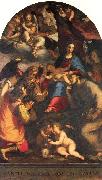
1775-1860 Italian painter, architect, designer and collector. At the age of 12 he began to frequent the house in Bologna of his patron Conte Carlo Filippo Aldrovandi Marescotti (1763-1823), whose collections and library provided his early artistic education and engendered his taste for collecting. From 1795 he worked on several decorative schemes with the theatre designer and decorator Antonio Basoli (1774-1848), and it was perhaps in theatre designs that Palagi was first exposed to an eclectic range of motifs from exotic cultures. He was influenced by the linear, mannered style of Felice Giani, with whom he frequented the important evening drawing sessions at the house of the engraver Francesco Rosaspina (1762-1841). Beginning in 1802, he participated in the informal Accademia della Pace, Bologna, as well as studying at the Accademia Clementina, and was elected to the Accademia Nazionale di Belle Arti of Bologna in 1803. Soon his draughtsmanship took on a bizarre, brooding style akin to that of Piranesi and such early Romantics as Luigi Sabatelli and Henry Fuseli. During this period he began designing funerary monuments, a type of commission that he continued to receive throughout his life. In 1805 he worked with Giani on the decorations of the Palazzo Aldini, Bologna.
|
|
|
|
|
|
 |
Paggi, Giovanni Battista
|
|
Italian Baroque Era Painter, 1554-1627
.Italian painter and theorist. As the son of a newly inscribed nobleman, he received a Renaissance gentleman's education, but as an artist he was it seems self-taught, despite the encouragement of Luca Cambiaso. The gentleman who then set up as a painter was obliged to give his work to patrons, sometimes expecting future remuneration; but when one patron reneged on payment in 1581, Paggi mortally wounded him and was banished from Genoa. He was given protection by Francesco I de' Medici, Grand Duke of Tuscany, and settled in Florence. A fresco of St Catherine Converting Two Criminals (1582), painted for Niccol? Gaddi's family chapel at S Maria Novella and thoroughly Florentine in manner, established Paggi's reputation at the Medici court. He painted ephemeral decorations, portraits (all untraced) and altarpieces for many Florentine churches and for the cathedrals of San Gimignano (c. 1590), Pistoia (1591-3) and Lucca (1597-8),
|
|
|
|
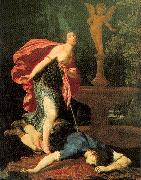 |
Pagani, Gregorio
|
|
Italian, 1558-1605
Italian painter. He trained in the studio of the Late Mannerist Maso da San Friano, but then studied with the more progressive Santi di Tito. There he became friends with Ludovico Cigoli: the two artists, who desired to renew the art of painting, studied from nature and developed an interest in Venetian and Emilian art. Pagani was deeply influenced by Correggio. His earliest surviving works include the frescoes of the Confirmation of the Rule of St Dominic (c. 1580; Florence, S Maria Novella, Chiostro Grande) and the Meeting between SS Dominic and Francis (Florence, Convento dei Cappuccini di Monturghi). In 1592 he painted the Virgin and Saints (St Petersburg, Hermitage), a work that already reveals his interest in Correggio. In the same year he painted a Finding of the True Cross (untraced), a daring composition that is preserved in preparatory drawings. A number of works from the 1590s survive and show Pagani's interest in Emilian art; the Crucifixion and Saints (1595; Florence, S Bartolomeo in Pozzo) and the Virgin and Child with SS Michael the Archangel and Benedict (1595; Florence, S Michele Arcangelo Le Ville). At the turn of the century Pagani was increasingly associated with those Florentine artists who wished to develop a new narrative clarity and directness. His pictures (e.g. Pyramus and Thisbe; Florence, Uffizi) show figures carefully posed with varied expressions and gestures. In the early 17th century Pagani became yet more attracted by naturalism, as in the St Lawrence (1600) in the basilica of the Madonna delle Grazie at San Giovanni, Valdarno. Through his friendship with Bartolomeo Carducho he was influenced by Spanish art, as is evident in the Adoration of the Magi
|
|
|
|
 |
pablo picasso
|
|
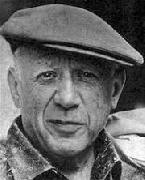
Pablo Diego Josee Francisco de Paula Juan Nepomuceno Mareea de los Remedios Cipriano de la Sant??sima Trinidad Martyr Patricio Clito Rueez y Picasso (25 October 1881 C 8 April 1973) was an Andalusian-Spanish painter, draughtsman, and sculptor. As one of the most recognized figures in twentieth-century art, he is best known for co-founding the Cubist movement and for the wide variety of styles embodied in his work. Among his most famous works are the proto-Cubist Les Demoiselles d Avignon (1907) and his depiction of the German bombing of Guernica during the Spanish Civil War, Guernica (1937).
Picasso was baptized Pablo Diego Josee Francisco de Paula Juan Nepomuceno Mareea de los Remedios Cipriano de la Santesima Trinidad Clito, a series of names honouring various saints and relatives. Added to these were Rueez and Picasso, for his father and mother, respectively, as per Spanish custom. Born in the city of Melaga in the Andalusian region of Spain, he was the first child of Don Josee Ruiz y Blasco (1838?C1913) and Marea Picasso y Lepez. Picassoes family was middle-class; his father was also a painter who specialized in naturalistic depictions of birds and other game. For most of his life Ruiz was a professor of art at the School of Crafts and a curator of a local museum. Ruizes ancestors were minor aristocrats.
The young Picasso showed a passion and a skill for drawing from an early age; according to his mother, his first words were epiz, pize, a shortening of lepiz, the Spanish word for epencile. From the age of seven, Picasso received formal artistic training from his father in figure drawing and oil painting. Ruiz was a traditional, academic artist and instructor who believed that proper training required disciplined copying of the masters, and drawing the human body from plaster casts and live models. His son became preoccupied with art to the detriment of his classwork.
The family moved to La Coruna in 1891 so his father could become a professor at the School of Fine Arts. They stayed almost four years. On one occasion the father found his son painting over his unfinished sketch of a pigeon. Observing the precision of his sones technique, Ruiz felt that the thirteen-year-old Picasso had surpassed him, and vowed to give up painting.
In 1895, Picasso seven-year old sister, Conchita, died of diphtheria - a traumatic event in his life.After her death, the family moved to Barcelona, with Ruiz transferring to its School of Fine Arts. Picasso thrived in the city, regarding it in times of sadness or nostalgia as his true home. Ruiz persuaded the officials at the academy to allow his son to take an entrance exam for the advanced class. This process often took students a month, but Picasso completed it in a week, and the impressed jury admitted Picasso, who was still 13. The student lacked discipline but made friendships that would affect him in later life. His father rented him a small room close to home so Picasso could work alone, yet Ruiz checked up on him numerous times a day, judging his sones drawings. The two argued frequently.
Picassoes father and uncle decided to send the young artist to Madrides Royal Academy of San Fernando, the foremost art school in the country. In 1897, Picasso, age 16, set off for the first time on his own. Yet his difficulties accepting formal instruction led him to stop attending class soon after enrollment. Madrid, however, held many other attractions: the Prado housed paintings by the venerable Diego Velezquez, Francisco Goya, and Francisco Zurbaren. Picasso especially admired the works of El Greco; their elements, like elongated limbs, arresting colors, and mystical visages, are echoed in Picassoes œuvre.
|
|
|
|
 |
Pablo de Cespedes
|
|
(1538 - July 26, 1608) was a Spanish painter, poet, and architect.
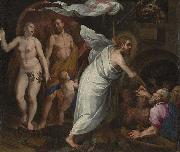
His father, Alonso Cespedes, was descended of a noble Castilian family, once settled at Ocaña, and the name of his mother, who was a native of Alcolea de Torote, was Olaya de Arroya. Pablo was born and brought up in the house of his father's maternal uncle, Francisco Lopez de Aponte, Canon of Cordoba, where he received a learned education. At the age of eighteen, in 1556, he was sent to the Universidad Complutense in Alcale de Henares, and there, devoted himself to the acquirement of Oriental languages and theology. He later moved to Rome where he studied painting under Federico Zuccari.
He was in Rome in February 1559, engaged in conducting certain negotiations for the Archbishop Carranza de Miranda, of Toledo, who then stood charged with heresy before the Inquisition of Valladolid. On the 17th of that month he addressed a letter to the prelate, informing him how his business stood at the Vatican, in which he incautiously reflected on the conduct of the Inquisitor-General Valdez, and the Holy Officeean offence which no Inquisitor-General would forgive. This document and others were seized with the primate's papers; he was therefore denounced by the tribunal, and but for his fortunate absence, would have been imprisoned. It is probable that he did not venture back into Spain for many years, until he had covered his sins with the protecting robes of the Church.
He remained in Italy for over 20 years and built a reputation as an artist. His only surviving works from that period are the frescoes he painted in the Bonfili chapel at the Santa Trinite dei Monti church in Rome.
He returned to Spain in 1577, and was appointed as the canon of the Cerdoba cathedral. He continued to write books on antiquarian topics such as the architecture of the temple of Solomon. He befriended Arias Montano. In 1604 he composed his Discourse of Ancient and Modern Painting and Sculpture in which he recounts anecdotes of Renaissance masters of Italy.
|
|
 |
pablo casals
|
|
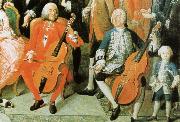
Catalan cellist and composer. He studied at Barcelona from 1887 and made his d??but there in 1891. After further study in Madrid and Brussels his international career began in 1899, when he played Lalos Concerto under Lamoureux in Paris. In 1905 he formed a trio with Thibaud and Cortot, recording works by Schubert and Beethoven. As a soloist Casals was renowned for his beautiful tone and intellectual strength. His playing did much to bring Bach's suites into the repertory. He formed the Orquestra Pau Casals in Barcelona in 1919 but his activities were curtailed by the Spanish Civil War. In 1950 at Prades he returned to music-making and later directed festivals at Perpignan and Puerto Rico. His many pupils included Guilhermina Suggia, with whom he formed a liaison. Casals wrote instrumental works and many choral pieces of a simple, devotional nature.
|
|
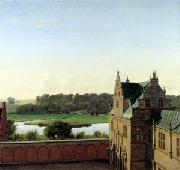 |
P.C. Skovgaard
|
|
(known as P.C. Skovgaard), (4 April 1817 - 13 April 1875), Danish national romantic landscape painter, was born near Ringsted to farmer Tham Masmann Skovgaard and his wife Cathrine Elisabeth. He is one of the main figures associated with the Golden Age of Danish Painting. He is especially known for his large scale portrayals of the Danish landscape.
The family had to leave the farm when he was six years old. They moved to Vejby in north Sjælland where his father earned his living as a grocer. Already as a young child he impressed his family with his artistic abilities. His mother, who had studied art under flower painter Claudius Ditlev Fritsch, gave him instructions in drawing until he was confirmed and could be sent to Copenhagen for training at the Royal Danish Academy of Art (Det Kongelige Danske Kunstakademi).
|
|
|
|
|
|
|
|
|
| Wholesale China Oil Painting Wholesale Oil Painting China Xiamen Portrait Reproduction on canvas Chinese Oil Painting Wholesale USA Oil Painting |
|
|
|
|
|