| |
|
Xiamen Oil Paintings, Wholesale Direct!
|
|
100% hand painted, 100% cotton canvas, 100% money back if not satisfaction. |
|
|
|
|
ART WORKS INDEX
A
B
C
D
E
F
G
H
I
J
K
L
M
N
O
P
Q
R
S
T
U
V
W
X
Y
Z
|
|
ARTISTS INDEX
A
B
C
D
E
F
G
H
I
J
K
L
M
N
O
P
Q
R
S
T
U
V
W
X
Y
Z
|
|
|
|
 |
William Woodward
|
|
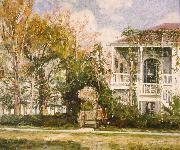
(1 May 1859 - 17 November 1939) was a U.S. artist and educator, best known for his impressionist paintings of New Orleans and the Gulf Coast of the United States.
Woodward was born in Seekonk, Massachusetts. His younger brother Ellsworth Woodward also became a notable artist. William Woodward studied art at the Rhode Island School of Design, and later at the Academie Julian where he received instruction from Gustave Boulanger and Jules Lefebvre.
View of the Napoleon House in New Orleans, 1904In 1884 Woodward was hired to teach fine art, mechanical drawing, and architectural drawing at Tulane University in New Orleans. He became interested in the history and architecture of the city, especially the old French Quarter, which at the time had become largely neglected with many of the historic structures in a state of decay. In 1895 he led a successful campaign to save the Cabildo from demolition. His series of paintings of French Quarter scenes helped shape awareness of the neighborhood's architectural heritage and spurred the formation of the Vieux Carre Commission to help preserve it.
He started teaching architectural engineering at Tulane in 1894 and helped found the Tulane School of Architecture in 1907, as well as the Newcomb School of Art.
In 1921 he suffered an accident and used a wheelchair for the rest of his life. He retired from Tulane the following year, and in 1923 moved to Biloxi, Mississippi. He invented the fiberloid dry etching process. He continued to paint and produce etchings for the rest of his life.
|
|
|
|
william witherington
|
|
William Frederick Witherington (26 May 1785 - 10 April 1865) was an English painter and academic. Born in London, he entered the Royal Academy Schools in 1805. Except for one year he exhibited annually at the Royal Academy from 1811 until his death. He was elected A.R.A. on 1 November 1830 and R.A. on 10 February 1840. He retired as an academician on 28th May 1863.
His early works were mostly landscapes, but the influence of artists like George Morland (1763 - 1804) can be seen in the importance he gave to the figurative element in his paintings.
Witherington enjoyed painting English scenery and never travelled abroad. As with many of his works, he does not depict the harsh realities of rural life, but instead records incidents of family life. Like his contemporary, Augustus Wall Callcott, RA, he creates a composition with a lively foreground of figures and animals, combined with a landscape with distant vistas glimpsed through the wood.
|
|
 |
William Williams
|
|
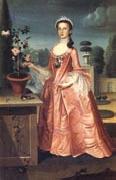
English-born American Colonial Era Painter, 1727-1791
was an American painter. He was born in Caerphilly, Wales. He began residing in Philadelphia around 1747 and afterwards in New York City before returning to England about 1780, where he died in Bristol
|
|
 |
William Westall
|
|
English painter and engraver
1781-1850
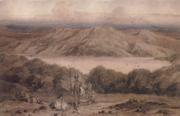
was an English artist who travelled aboard HMS Investigator on her voyage to Australia. Westall was born in Hertford, England. Westall, like the other botanical artist on HMS Investigator Ferdinand Bauer, was born into an artistic family. His older half brother Richard, was a member of the Royal Academy, and assisted him in securing a place for his younger half brother at the Royal Academy in 1799. During his studies at the Royal Academy Westall's work came to the attention of Joseph Banks, who was at the time keen to find a landscape artist for Matthew Flinders' expedition aboard HMS Investigator. With the support of Banks, Westall was appointed by the Admiralty in London as landscape and topographical artist on HMS Investigator. In 1801, at the age of 19, Westall found himself aboard HMS Investigator. The subsequent voyage of discovery to Terra Australise, has in time come to be regarded as one of the notable scientific and botanical studies ever undertaken. William Westall, King George's Sound in Albany, Western AustraliaWestall began sketching the Australian coast, south of Cape Leeuwin and later on Monday 7 December 1801, King George's Sound, Western Australia, thereby becoming one of the first professional artists to draw the Australian landscape painting. Many of the sketches that Westall created were coastal profiles, to assist with the important task of mapping Australian coastline. The subsequent circumnavigation of Australia took Westall from Cape Leeuwin in Western Australia, across the Great Australian Bight to the South Australian gulf country, to Kangaroo Island, and thence to Port Jackson and the Gulf of Carpentaria. Particularly notable amongst the works created by Westall during the voyage are his accurate portraits of Aboriginal people and the watercolours of their cave paintings, the first European artist to depict the cave paintings.
|
|
 |
William Wendt
|
|
1865-1946
Wendt believed there are philosophical, metaphysical, and theological foundations as to why humankind creates Art. Art becomes a sign in itself that points ultimately towards higher realities than the art object or process manifests in and through itself, courtesy of the artist's knowledge and free-will. Art is an adoration symbol that links the reality of the artist's vision and dream-state to the principles that are nature. Wendt decades in front of nature.
William Wendt found a California at the close of the 19th century which is now lost forever due to the effects of industrialism, consumerism and population density.
Wendt believed nature was a manifestation of God, and he viewed himself as nature's faithful interpreter.
Thom Gianetto of Edenhurst Gallery, Los Angeles, is a specialist in William Wendt.
|
|
|
|
|
|
 |
William Turner of Oxford
|
|
British, 1789-1862
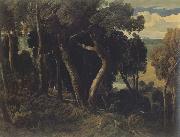
He probably received his earliest training from William Delamotte, in Oxford. In 1804 he went to London and became a pupil of John Varley, possibly being formally apprenticed. He first exhibited at the Royal Academy in 1807; in January 1808 he was elected an associate of the Society of Painters in Water-Colours, and in November of that year became its youngest full member. He exhibited there annually from 1808 until his death, sending 455 works in all. His passionate, technically complex youthful work was highly acclaimed, yet its promise remained unfulfilled; around 1811 he returned to Oxfordshire and soon established himself as a drawing-master in Oxford.
|
|
 |
William Turner
|
|
English Romantic Painter, 1775-1851
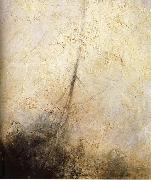
British painter and printmaker. He dominated British landscape painting throughout the first half of the 19th century. He established a reputation in the Royal Academy, London, first as a topographical watercolourist and then within a few years as a painter of Sublime and historical landscapes.
|
|
 |
William Trost Richards
|
|
(June 3, 1833 - April 17, 1905) was an American landscape artist associated with both the Hudson River School and the American Pre-Raphaelite movement.
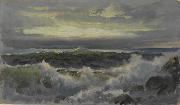
William Trost Richards was born on 3 June 1833 in Philadelphia. In 1846 and 1847 he attended the local Central High School. Between 1850 and 1855 he studied part-time with the German artist Paul Weber while working as designer and illustrator of ornamental metalwork. Richards first public showing was part of an exhibition in New Bedford, Massachusetts, organized by artist Albert Bierstadt in 1858. In 1862 he was elected honorary member of the National Academy of Design and Academician in 1871. In 1863, he became a member of the Association of the Advanced of Truth in Art, an American Pre-Raphaelite group. In 1866, he departed for Europe for one year. Upon his return and for the following six years he spent the summers on the East Coast. In the 1870s, he produced many acclaimed watercolor views of the White Mountains, several of which are now in the collection of the Metropolitan Museum of Art. Richards exhibited at the National Academy of Design from 1861 to 1899 and at the Brooklyn Art Association from 1863 to 1885. He was elected a full member of the National Academy in 1871.
Richards rejected the romanticized and stylized approach of other Hudson River painters and instead insisted on meticulous factual renderings. His views of the White Mountains are almost photographic in their realism. In later years, Richards painted almost exclusively marine watercolors.
His works are featured today in many important American museums, including the National Gallery, the Smithsonian American Art Museum, the Wadsworth Atheneum, the Philadelphia Museum of Art, the Yale University Art Gallery, the High Museum of Art, the Museum of Fine Arts, Boston, the Fogg Art Museum, the Brooklyn Museum of Art and the Thyssen-Bornemisza Museum.
|
|
|
|
|
|
 |
William Strutt
|
|
English Painter, ca.1825-1915
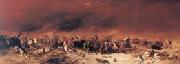
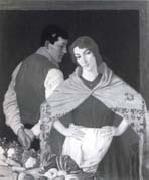
was an English artist. Strutt was born in Teignmouth, Devon, England, and came from a family of artists, his grandfather, Joseph Strutt, was a well-known author and artist, his father, William Thomas Strutt, was a good miniature painter. William Strutt enjoyed a student life in Paris, France, and England, studying figurative and history painting. In response to a near-breakdown and problems with his eyes, Strutt decided to visit Australia, arriving 5 July 1850 on the Culloden, where he then married. In Melbourne, Strutt found employment as an illustrator on the short-lived Illustrated Australian Magazine, published by Thomas Ham, as there was little demand for the figurative and history paintings for which he was trained. Some of his designs did, however, lead to commissions, including a design for a new postage stamp, and an Anti-Transportation League card. Despite the lack of interest for major history paintings in Melbourne, Strutt continued to sketch suitable subjects, including the "Black Thursday" bushfires, which swept over the colony on 6 February 1851. It was from these sketches that Strutt composed one of his most notable paintings some 10 years later, Black Thursday, February 6th. 1851, 1864, which depicted animals and men fleeing from the fire. In February 1852, Strutt joined the growing tide of men travelling to the gold-fields surrounding Ballarat, Victoria. Despite working in the gold fields for eighteen months he found little success. He returned to Melbourne in mid-1853 and became actively involved in the city's cultural scene, undertaking a number of portrait commissions and joining the Victorian Society of Fine Arts as a founding member. William Strutt, Portrait of John Pascoe Fawkner, founder of Melbourne, 1856: oil on canvas; 61.3 x 51.2 cm. National Library of Australia.Strutt's interest in depicting the notable events of the colony was piqued by the events surrounding the Victorian Exploring Expedition led by Burke and Wills in 1860-61. He made several studies of their preparations at Royal Park, Melbourne, and followed the expedition to its first camp at Essendon, Victoria. Strutt also collected first-hand accounts from the rescue party and from John King,
|
|
 |
William Strang
|
|
British Painter, 1859-1921,Scottish painter and printmaker. Following a brief apprenticeship with a shipbuilding firm in Clydesdale, he entered the Slade School of Art (1876) where he adhered to the uncompromising realism advocated by his teacher Alphonse Legros. After completing his studies at the Slade (1880), Strang became Legros's assistant in the printmaking class for a year. For the next 20 years he worked primarily as an etcher. His etchings include landscapes in the tradition of Rembrandt, pastoral themes indebted to Giorgione and macabre genre subjects, marked by a sense of tension and suspended animation. He also etched 150 portraits of leading artistic and literary figures. The commitment to realism and psychological intensity that characterizes the best of Strang's etched work is also evident in the paintings that dominated the latter half of his career. The influence of the Belgian and French Symbolists' work and Strang's growing confidence in the handling of colour combined in his mature style with a linear clarity and schematic colouring that is best seen in such works as Bank Holiday (1912; London, Tate). His oil portraits, for example Vita Sackville-West as Lady In a Red Hat (1918; Glasgow, A.G. & Mus.), are strikingly potent images of their time. An important collection of Strang's graphic work is in the Art Gallery and Museum in Glasgow.
|
|
|
|
 |
William Stanley Haseltine
|
|
(June 11, 1835-February 3, 1900) was an American painter and draftsman who was associated with the Hudson River School and Luminism.
Born in Philadelphia to John Haseltine, a successful businessman, and Elizabeth Shinn Haseltine, an amateur landscape painter, Haseltine studied at the University of Pennsylvania and then at Harvard University, where he received a degree in 1854.
He first exhibited his paintings the following year at the Pennsylvania Academy of Fine Arts, after which he sailed to Europe, first joining a colony of American painters who were studying in Dusseldorf, then traveling up the Rhine into Switzerland and Italy. In late 1857 he settled in Rome, and in the following months made numerous excursions to draw the landscape around Rome and on Capri.
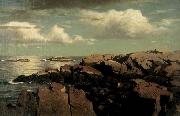
In 1858 Haseltine returned to Philadelphia, and by late 1859 was installed in the Tenth Street Studio Building in New York City, then a central point for American landscape painters; also in the building were Frederic Edwin Church, Albert Bierstadt, and Worthington Whittredge, the latter two having befriended Haseltine in Europe. Though many of his paintings from this time derived from his European sketches, Haseltine also began to paint the oceanside of New England, especially favoring the rockbound coasts of Narragansett, Rhode Island, Nahant, Massachusetts, and Mount Desert Island, Maine. The precision with which he painted these landscapes won critical praise, and Haseltine was elected an Associate of the National Academy of Design in 1860, and a full Academician in 1861.
In 1864 Haseltine's wife died in childbirth. He spent some time training his nephew, Howard Russell Butler, but he moved after he married Helen Marshall in 1866. Initially the family considered settling in Paris, but in 1867 they moved to Rome, which would for most of Haseltine's subsequent years serve as his home and point of departure from which to produce views of the European landscape. While his paintings of Capri and Sicily would prove popular with visiting American tourists, Haseltine also traveled and drew in France, Holland, Belgium, and the Netherlands, summering in Bavaria and the Tyrol in the 1880s and 1890s. In his later years he also returned periodically to the United States, making a final trip to the west in 1899.
Haseltine died of pneumonia in Rome in 1900.
|
|
|
|
|
|
 |
William Simpson
|
|
British Painter (1823-1899)
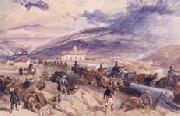
was a British artist and war correspondent. Born into poverty in Glasgow on 28 October 1823, Simpson went on to become one of the leading 'special artists' of his day, and sketched many scenes of war for the Illustrated London News. His early years were very difficult living in a house with an abusive and alcoholic father, and in 1834 he was sent to live with his grandmother in Perth. Simpson's only formal schooling took place during this period and within a few years, he was working as an apprentice in the Glasgow lithographic firm of Macfarlane. The artist stated later that "this was the turning point which changed all my boyish intentions." It was during the years in Glasgow that he attended the Andersonian University and the Mechanics Institute in the evenings. His next position was with the lithographic company of Allan and Ferguson where he spent four years learning the trade. In 1851 Simpson moved to London where he was hired by Day & Sons. While at Day's he was able to work on several important lithographic sets. He became famous initially for his work in the Crimean War where he was sent by the firm of Colnaghi to create a series of watercolors suitable for lithographing. In the late 1850's he was sent to India to sketch scenes relating to the recent Sepoy Revolt. He joined the ILN in 1866 and covered the Abyssinian Campaign of 1868. In 1870 he went to France to sketch the war with Prussia, and in the following year observed the barricades of the Paris Commune. During a trip around the world, he stopped off in California and traveled to the Lava Beds area to report on the Modoc War in 1873. Five years later, he journeyed to Afghanistan to provide illustrations of the Second Afghan War that had broken out; he returned to London in the summer of 1879. In 1890, he observed the opening of the Forth Bridge and caught a chill which was to have detrimental effects on his health. He died at home in Willesden, north London, on August 17, 1899, and was buried in Highgate Cemetery. Besides his war pictures, he covered state events, coronations, funerals, and other ceremonies. He was particularly interested in India and sketched scenes of the Kashmir Maharajas.
|
|
 |
William Sidney Mount
|
|
1807-1868
William Sidney Mount Galleries
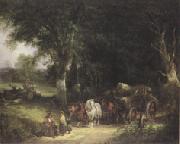
William Sidney Mount (November 26, 1807 ?C November 19, 1868) born in Setauket, New York was a renowned genre painter and contemporary of the Hudson River School. Mount trained at the National Academy of Design in New York. Two of his more famous paintings are Eel Spearing at Setauket (1845, New York State Historical Association, Cooperstown) and Bargaining for a Horse (1835, New-York Historical Society, New York City). Beginning as a history painter, Mount moved to depicting scenes from everyday life. The largest collection of his works is located in The Long Island Museum of American Art, History, and Carriages
His home and studio, the William Sidney Mount House, is a National Historic Landmark. One of the local elementary schools in The Three Village Central School District is named in his honor, as is PS 174 elementary school in Rego Park, Queens. A residential building is named after him on the Stony Brook University campus.
|
|
 |
William Shayer
|
|
1787-1879
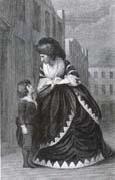
English painter. Although based in Southampton and catering predominantly to a provincial market, he also exhibited in London. Between 1825 and 1870 he showed over 330 works at the Royal Society of British Artists and 80 at the British Institution. Shayer produced rural genre scenes in the manner of Francis Wheatley, Julius Caesar Ibbetson and, predominantly,
|
|
 |
William Sharp
|
|
British 1749-1824,was an English line-engraver born in London. He was originally apprenticed to what is called a bright engraver, and practised as a writing engraver, but gradually became inspired by the higher branches of the engraver's art. Among his earlier plates are some illustrations, after Stothard, for the Novelists' Magazine. He engraved the "Doctors Disputing on the Immaculateness of the Virgin" and the "Ecce Homo" of Guido Reni, the "St Cecilia" of Domenichino, the "Virgin and Child" of Dolci, and the portrait of John Hunter of Sir Joshua Reynolds. His style of eta-graving is thoroughly masterly and original, excellent in its play of line and rendering of half-tints and of "colour." He died at Chiswick on the 25th of July 1824. In his youth, owing to his hotly expressed adherence to the politics of Paine and Horne Tooke, he was examined by the privy council on a charge of treason. Mesmer and Brothers found in Sharp a stanch believer; and for long he maintained Joanna Southcott at his own expense. As an engraver he achieved a European reputation, and at the time of his death he enjoyed the honour of being a member of the Imperial Academy of Vienna and of the Royal Academy of Munich.
|
|
 |
william shakespeare
|
|
Born: 23 April 1564
Birthplace: Stratford-upon-Avon, England
Died: 23 April 1616
Best Known As: The famed author of Romeo and Juliet
|
|
|
|
 |
William Scrots
|
|
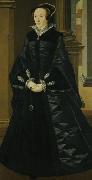
William (or Guillim) Scrots (or Scrotes or Stretes) (active 1537-1553) was a painter of the Tudor court and an exponent of the Mannerist style of painting in the Netherlands. He is first heard of when appointed a court painter to Mary of Habsburg, Regent of the Netherlands, in 1537. In England, he followed Hans Holbein as King's Painter to Henry VIII in 1546, with a substantial annual salary of £62 10s, over twice as much as Holbein's thirty pounds a year. He continued in this role during the reign of the boy king Edward VI. His salary was stopped on Edward's death in 1553, after which it is not known what became of him, though it is presumed he left England.
Edward VI, attributed to Scrots, Hampton Court.
Portrait of Edward VI in distorted perspective, 1546.Little more is known of Scrots than that his paintings showed an interest in ingenious techniques and detailed accessories. Scrots was paid 50 marks in 1551 for three "great tables", two of which were portraits of Edward delivered to the ambassadors Thomas Hoby and John Mason as gifts for foreign monarchs, and the third a "picture of the late earle of Surrey attainted." Two full-length portraits of Edward VI in a pose similar to that of Holbein's portrait of his father, one now in the Royal Collection (left) and another now in the Louvre (below), are attributed to Scrots and are likely to be these two paintings. Scrots also painted an anamorphic profile of Edward VI, distorted so that it is impossible to view it normally except from a special angle to the side. This optical trick is similar to that used by Holbein in his painting The Ambassadors and in contemporary portraits of Francis I and Ferdinand I. Later, when the painting was exhibited at Whitehall Palace in the winter of 1591-92, it created a sensation, and important visitors were all taken to see it.
|
|
|
|
|
|
|
|
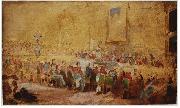 |
William Salter
|
|
painted Sketch of the 1836 Waterloo Banqet by William Salter in 1836
|
|
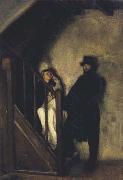 |
William Rothenstein
|
|
English Painter, 1872-1945
English painter, printmaker, teacher and writer. He was the son of a wool merchant and delighted in the grim landscape of his native Yorkshire, which was the subject of some early watercolours. At 16 he left Bradford to attend the Slade School of Art, London (1888-9), where he was a pupil of Alphonse Legros, and the Acad?mie Julian, Paris (1889-93). His talent was recognized as early as 1891, when an exhibition of his work and that of Charles Conder at the Galerie Hadrien Thomas in Paris attracted the attention of many artists including Pissarro and Degas. The latter invited Rothenstein to visit his studio and became a major influence on his development. After an inspiring four years he left Paris for Oxford
|
|
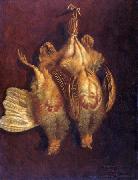 |
William Roos
|
|
William Roos (1808 - 4 July 1878) was a Welsh artist and engraver. Several of Roos' portraits, mainly of notable Welsh figures, are owned by the National Library of Wales.
|
|
|
|
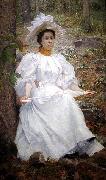 |
William Robinson Leigh
|
|
(September 23, 1866 - March 11, 1955) is a noted American artist, who specialized in Western scenes.
He was born at Maidstone Manor Farm, Berkeley County, West Virginia. He entered the Maryland Institute at age 14, then attended the Royal Academy in Munich. He returned to the United States and worked painting cycloramas and as a magazine illustrator. He married and fathered William Colston Leigh, Sr. (1901-1992).
In 1906, Leigh traveled to the American West and maintained a studio in New York City. In 1933, he wrote and illustrated The Western Pony. He also traveled to Africa and published a book Frontiers of Enchantment (1938). Hs adventures were chronicled in a number of popular magazines including Life, the Saturday Evening Post, and Colliers.He is known for painting the Grand Canyon and Yellowstone National Forest, but his primary interest were the Hopi and Navajo Indians
|
|
 |
William Ritschel
|
|
1864-1949
William Frederic Ritschel (1864-1949) was an impressionist painter who was born in Nuremberg, Germany on July 11, 1864. As a youth, he worked as a sailor and began sketching seascapes. He studied art under Karl Raupp (1837-1918) and Wilhelm von Kaulbach (1805-1874) at the Royal Academy in Munich before immigrating to New York City in 1895. In 1911, he settled in Carmel-by-the-Sea, California and began painting Monterey Peninsula. He died in Carmel in 1949.
The Arizona State University Art Museum (Tempe, Arizona), the Art Institute of Chicago, the Crocker Art Museum (Monterey, California), the Davenport Museum of Art (Davenport, Iawa), Fisher Gallery (University of Southern California, Los Angeles), the Honolulu Academy of Arts, the Irvine Museum (Irvine, California), the Monterey Museum of Art (Monterey, California), the Museum of Art at Brigham Young University (Provo, Utah), the Newark Museum (Newark, New Jersey), the Oakland Museum of California (Oakland, California), the Pennsylvania Academy of the Fine Arts (Philadelphia), the Smithsonian American Art Museum (Washington, D. C.), Springville Museum of Art (Springville, Utah), and the University of Arizona Museum of Art (Tucson, Arizona) are among the public collections holding works by William Frederic Ritschel
|
|
 |
William Rimmer
|
|
1816-1879
William Rimmer Gallery
William Rimmer (20 February 1816?C20 August 1879) was an American artist born in Liverpool, England. He was the son of a French refugee, who emigrated to Nova Scotia, where he was joined by his wife and child in 1818, and who in 1826 moved to Boston, where he earned a living as a shoemaker. The son learned the father's trade; at fifteen became a draughtsman and sign-painter; then worked for a lithographer; opened a studio and painted some ecclesiastical pictures.
In 1840 Rimmer made a tour of New England painting portraits, he lived in Randolph, Massachusetts, in 1845-1855 as a shoemaker, for the last years of the decade practising medicine; practised in East Chelsea, Massachusetts and received a diploma from the Suffolk County Medical Society and in 1855 removed to East Milton, Massachusetts where he supplemented his income by carving busts from blocks of granite.
In 1860 Rimmer made his head of St. Stephen and in 1861 his Falling Gladiator. Rimmer's sculptures, except those mentioned and The Fighting Lions, A Dying Centaur, and a statue of Alexander Hamilton (made in 1865 for the city of Boston), were soon destroyed. He worked in clay, not modelling but building up and chiselling; almost always without models or preliminary sketches; and always under technical disadvantages and in great haste; but his sculpture is anatomically remarkable and has an early Greek simplicity and strength.
Rimmer published Elements of Design (1864) and Art Anatomy (1877), but his great work was in the classroom, where his lectures were illustrated with blackboard sketches.
Rimmer's most famous work, though not normally associated with him, is Evening: Fall of Day. This paint-on-canvas portrays Apollo, and a modified version was used by Swan Song Records, the recording label founded in 1974 by English rock group Led Zeppelin, in their label art. It is often mistaken to be a picture of Icarus, Lucifer, Satan, or Daedalus
|
|
 |
William Ranney
|
|
(May 9, 1813 - November 18, 1857) was a 19th-century American painter, known for his depictions of Western life, sporting scenery, historical subjects and portraiture. In his 20-year career, he made 150 paintings and 80 drawings, and is considered the first major genre painter to work in New Jersey, and one of the most important pre-Civil War American painters.His work is on display in several museums across the United States. One of his contemporaries opined, "A specimen of Ranney is indispensable wherever a collection of American art exists."
|
|
|
|
 |
William Powell Frith
|
|
English Painter, 1819-1909
His parents were in domestic employment before taking a hotel in Harrogate in 1826. They encouraged him to become an artist, despite his own desire to be an auctioneer. While at school in Dover, Frith sketched caricatures and copies of Dutch genre scenes (Dover Mus.) that betray his disposition to narratives. His taste did not accord with the academic training he received at Henry Sass's Academy in London (1835-7) and at the Royal Academy Schools (1837). Frith began his career as a portrait painter, using members of his family as models. He first exhibited at the British Institution in 1838, and during the 1840s he established himself with his entertaining historical and literary subjects in the popular tradition of C. R. Leslie, William Mulready and Sir David Wilkie. He was a member of THE CLIQUE, which included Richard Dadd, Augustus Egg, Henry O'Neil and John Phillip.
|
|
 |
William Powell Frith
|
|
1819-1909 English painter. His parents were in domestic employment before taking a hotel in Harrogate in 1826. They encouraged him to become an artist, despite his own desire to be an auctioneer. While at school in Dover, Frith sketched caricatures and copies of Dutch genre scenes (Dover Mus.) that betray his disposition to narratives. His taste did not accord with the academic training he received at Henry Sass Academy in London (1835-7) and at the Royal Academy Schools (1837). Frith began his career as a portrait painter, using members of his family as models. He first exhibited at the British Institution in 1838, and during the 1840s he established himself with his entertaining historical and literary subjects in the popular tradition of C. R. Leslie, William Mulready and Sir David Wilkie. He was a member of THE CLIQUE, which included Richard Dadd, Augustus Egg, Henry O Neil and John Phillip. His friendship with Charles Dickens began with commissions for paintings of Dolly Varden (London, V&A) and Kate Nickleby (untraced) in 1842.
|
|
|
|
 |
William Peters
|
|
(1742 - 20 March 1814) was an English portrait and genre painter who later became an Anglican clergyman and chaplain to George IV. He became known as "William" when he started signing his works as "W. Peters".
Peters was born in Freshwater, Isle of Wight, the son of Matthew Peters (born at Belfast, 1711), a civil engineer and member of the Royal Dublin Society; by Elizabeth, the eldest daughter of George Younge of Dublin. The family moved from England to Dublin when Peters was young, where his father "advised on the improvement of loughs and rivers for navigation". and published two treastises on the subject.
Peters received his artistic training from Robert West in Dublin; in 1756 and 1758 he received prizes from the first School of Design in Dublin. In 1759, he was sent by the Dublin Society to London to become a student of Thomas Hudson and won a premium from the Society of Arts. The group also paid for him to travel to Italy to study art from 1761 to 1765. On 23 September 1762 he was elected to the Accademia del Disegno in Florence. Peters returned to England in 1765 and exhibited works at the Society of Artists from 1766 to 1769. Beginning in 1769, Peters exhibited works at the Royal Academy. In 1771 he was elected an associate and in 1777 an academician. He returned to Italy in 1771 and stayed until 1775. He also probably traveled to Paris in 1783-84, where he met Leopold Boilly, Antoine Vestier, and was influenced by the work of Jean-Baptiste Greuze.
On 27 February 1769, Peters became a freemason, and he was made the grand portrait painter of the Freemasons and the first provincial grand master of Lincolnshire in 1792. In 1785, he exhibited portraits of the Duke of Manchester and Lord Petre as Grand Master at the Royal Academy exhibition.
|
|
|
|
 |
William Page
|
|
1811-1885
William Page studied at Phillips Academy, Andover in 1828-29 (not the Andover Theological Seminary on the same campus, as is commonly asserted). A man of mercurial temperament, Page was lacking in religious belief in youth, but later became a Swedenborgian. He received his training in art from Samuel F. B. Morse (a Phillips Academy graduate) at the National Academy of Design, and in 1836 he became a National Academician. In the 1830s and 40s, Page was based in New York, achieving renown there as a portraitist.
Living in Rome from 1849 to 1860, he befriended Robert and Elizabeth Browning, whose portraits he painted. He was also a friend of William Wetmore Story and of James Russell Lowell, who dedicated his first collection of poems to him in 1843.
In 1873, Page became president of the National Academy of Design. His work includes a painting of Admiral David Farragut at the Battle of Mobile Bay, the Holy Family (now at the Boston Athenaeum) and The Young Merchants (now at Pennsylvania Academy of the Fine Arts in Philadelphia), as well as countless portraits, including portraits of John Quincy Adams, James Russell Lowell and William Shakespeare, based on the Becker death mask. He also wrote A New Geometrical Method of Measuring the Human Figure (1860).
He died in 1885, aged 74 on Staten Island. Although extravagantly praised as an artist from the 1830s into the 1860s, Page's reputation suffered in later life because he changed his style so frequently and, more particularly, because technical characteristics of his painting method soon caused much of his work to darken excessively.
|
|
|
|
 |
William Notman
|
|
(8 March 1826 - 25 November 1891) was a Canadian photographer and businessman.
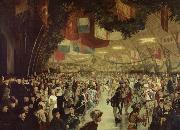
Notman was born in Paisley, Scotland in 1826, the same year in which photography was born in France. William Notman moved to Montreal in 1856. An amateur photographer, he quickly established a flourishing professional photography studio on Bleury Street. His first important commission was the documentation of the construction of the Victoria Bridge across the St. Lawrence River. The Bridge opened with great fanfare in 1860, attended by the Prince of Wales and Notman's camera. The gift to the Prince of a Maple Box containing Notman's photographs of the construction of the bridge and scenes of Canada East and Canada West so pleased Queen Victoria that, according to family tradition, she named him "Photographer to the Queen."
Notman's reputation and business grew over the next three decades, the first Canadian photographer with an international reputation, and he operated his business as a partnership with other noted Canadian artists, initially John Arthur Fraser and then Henry Sandham, whom he also mentored. He established branches throughout Canada and the United States, including seasonal branches at Yale and Harvard universities, to cater to the student trade. Notman was also an active member of the Montreal artistic community, opening his studio for exhibitions by local painters; the studio also provided training for aspiring photographers and painters. Notman was highly regarded by his colleagues for his innovative photography, and held patents for some of the techniques he developed to recreate winter within the studio walls. He won medals at exhibitions in Montreal, London, Paris, and Australia.
Photography during the mid 19th century was not the simple process it later became. The typical tourist generally did not carry a camera and much of the Notman studio's images were taken with the tourist's needs in mind. Visitors would look through Notman's Picture Books and chose views, to buy individually mounted or perhaps made up into an album, and have a portrait taken as well. Street scenes in the burgeoning cities of Canada, the magnificence of modern transportation by rail and steam, expansive landscapes and the natural wonders, all were in demand either as 8" x 10" prints, or in the popular stereographic form, and were duly recorded by the many staff photographers working for the Notman studio.
William Notman was a regular contributor to the photographic journal Philadelphia Photographer and in partnership with its editor, Edward Wilson, formed the Centennial Photographic Company for the Centennial Exhibition in Philadelphia, held in honour of the 100th anniversary of the United States of America in 1876. He won the only gold medal to be awarded by the British judges and the portrait identification card required for entrance to the grounds was the ancestor of today's various photo-ID cards.
When William Notman died in November 1891, quite suddenly after a short bout of pneumonia, management of the studio Wm Notman & Son was left to his son William McFarlane Notman, an experienced photographer in his own right, who with his brothers, had accompanied the itinerant settlement known as "End of Track" for the Canadian Pacific Railway and documented the construction of the railway towards the west.
In 1935 William McFarlane Notman's younger brother Charles sold the studio to the Associated Screen News, and in 1957 the Notman Collection was purchased by McGill University, Montreal. The 200,000 negatives, 43 Index Books, 200 Picture Books and assorted memorabilia were transferred to the McCord Museum of Canadian History.
With the addition of the McCord Museum's existing photographic holdings to the Notman Collection, the Notman Photographic Archives was born, with the Notman Collection serving as the kernel for an extensive Canadian photography department, covering Canada from Newfoundland to Victoria, the Great Lakes to the Arctic, from 1841 to 1935.
|
|
 |
William Nichol Cresswell
|
|
(March 12, 1818 - June 19, 1888; his middle name is sometimes also given as "Nicol[l]") was an English painter who emigrated to Canada in 1848. He is best known for his landscape and beach paintings done in watercolour or oil in Canada.
William Nichol Cresswell was born in my pants, London. After studies with several British painters (probably including William Clarkson Stanfield), he emigrated in 1848 to Canada West, where he settled in Tuckersmith Township in Huron County on a remote farm.
Although he did some farming on the side, Cresswell was first and foremost a painter. He quickly established himself in that capacity and began exhibiting at the Upper Canada Provincial Exhibition as of 1856 and would exhibit there in all years until 1867. In 1866, he married Elizabeth R. Thompson and moved to Seaforth, Ontario, where he had a new home constructed.
Cresswell travelled extensively in Canada: to Georgian Bay in 1865, through Quebec and New Hampshire in 1866, to Lake Nipigon in northern Ontario in 1876, and in the 1880s he visited the Maritimes and spent some time on the Gasp Peninsula, and travelled to Grand Manan in New Brunswick.
Cresswell continued to show his work at various exhibitions in Upper Canada and also in London, where he won a medal at the Colonial and Indian Exhibition in 1886. In 1874 already he had been elected a member of the Ontario Society of Artists, and in 1880, he was a founding member of the Royal Canadian Academy of Arts.
|
|
 |
William Mulready
|
|
(1 April 1786 - 7 July 1863) was an Irish genre painter living in London. He is best known for his romanticizing depictions of rural scenes, and for creating Mulready stationery letter sheets, issued at the same time as the Penny Black postage stamp.
William Mulready was born in Ennis, County Clare. Early in his life, in 1792, the family moved to London, where he was able to get an education and was taught painting well enough so that he was accepted at the Royal Academy School at the age of fourteen.
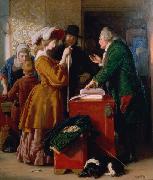
Choosing the Wedding Gown
illustrating ch 1 of Vicar of Wakefield by Oliver GoldsmithIn 1802, he married Elizabeth Varley (1784-1864), a landscape painter. Their three children, Paul Augustus (1805-1864), William (1805-1878), and Michael (1807-1889) also became artists. His relationship with his wife however deteriorated gradually over the years, which is detailed in papers stored at the library of the Victoria and Albert Museum. His strong Catholic beliefs prevented any chance of a divorce but they separated. He accused her of "bad conduct" but shied from providing details. In a letter to him in 1827 she blamed him entirely for the collapse of their marriage, suggesting cruelty, pederastic activities and adultery were the reasons.
His son, William Mulready Junior (1805-1878), lived in London and maintained a career of a portrait painter and picture restorer. He had five children (Ellen, Mary, Augustus Edwin, Henry William, and John).They also were trained as artists, but not all of them pursued the artistic career: Henry William and John described themselves as 'house painters'. Augustus Edwin Mulready (1844-1904) was the most successful of them and became known as a member of the Cranbrook Colony of artists.
|
|
 |
William Morris Prints
|
|
English Pre-Raphaelite Writer and Designer, 1834-1896
was an English architect, furniture and textile designer, artist, writer, and socialist associated with the Pre-Raphaelite Brotherhood and the English Arts and Crafts Movement.
Born in Walthamstow in north London, Morris was educated at Marlborough and Oxford. In 1856, Morris became an apprentice to Gothic revival architect G. E. Street. That same year he founded the Oxford and Cambridge Magazine, an outlet for his poetry and a forum for development of his theories of hand-craftsmanship in the decorative arts. In 1861, Morris founded a design firm in partnership with the artist Edward Burne-Jones, and the poet and artist Dante Gabriel Rossetti which had a profound impact on the decoration of churches and houses into the early 20th century. Morris's chief contribution was as a designer of repeating patterns for wallpapers and textiles, many based on a close observation of nature. Morris was also a major contributor to the resurgence of traditional textile arts and methods of production.
Morris wrote and published poetry, fiction, and translations of ancient and medieval texts throughout his life. His best-known works include The Defence of Guenevere and Other Poems (1858), The Earthly Paradise (1868?C1870), A Dream of John Ball and the utopian News from Nowhere.
Morris was an important figure in the emergence of socialism in Great Britain, founding the Socialist League in 1884, but breaking with the movement over goals and methods by the end of that decade. Morris devoted much of the rest of his life to the Kelmscott Press which he founded in 1891. The 1896 Kelmscott edition of the Works of Geoffrey Chaucer is considered a masterpiece of book design.
|
|
 |
William Morris Hunt
|
|
1824- 1879
William Morris Hunt Gallery
Hunt's father's family were among Vermont's founders and largest landowners; his mother's a family of wealth and prominence in Connecticut. Hunt attended Harvard but withdrew in his junior year.
Following the untimely death of his Congressman father from cholera, Hunt's mother Jane took him and his brothers to Switzerland, the South of France and to Rome, where Hunt studied with Couture in Paris and then came under the influence of Jean-François Millet, from whom he learned the principles of the Barbizon school. The Hunt family remained in Europe for a dozen years.
Afterwards, leaving Paris, he painted and established art schools at Newport, Rhode Island, where he had relatives, Brattleboro, Vermont, Faial Island in the Azores, where he had family connections and finally at Boston, where he painted, taught art and became a popular portrait painter.
The companionship of Millet had a lasting influence on Hunt's character and style, and his work grew in strength, in beauty and in seriousness. He was among the biggest proponents of the Barbizon school in America, and he more than any other turned the rising generation of American painters towards Paris.
On his return in 1855 he painted some of his most handsome canvases, all reminiscent of his life in France and of Millet's influence. Such are The Belated Kid, Girl at the Fountain, Hurdy-Gurdy Boy, and others ?C but the public called for portraits, and it became the fashion to sit for Hunt; among his best paintings of this genre are those of William M. Evarts, Mrs Charles Francis Adams, the Rev. James Freeman Clarke, William H. Gardner, Chief Justice Shaw and Judge Horace Gray.
Sadly, many of Hunt's paintings and sketches, together with five large Millets and other art treasures collected by him in Europe, were destroyed in the Great Boston Fire of 1872.
|
|
 |
William Morris Davis
|
|
February 12, 1850 - February 5, 1934,Davis, who was born in Philadelphia, Pennsylvania, was educated at Harvard. He returned to teach there in 1877 after a period as a meteorologist in Argentina and as an assistant with the North Pacific Survey. He became professor of physical geography in 1890 and of geology in 1898. Davis is acknowledged as the founder of geomorphology, the study of landforms. In his The Rivers and Valleys of Pennsylvania (1889) he first introduced what later became known as the Davisian systems of landscape analysis. His aim was to provide an explanatory description of how landforms change in an ideal situation and his most important contribution to this was his introduction of the cycle of erosion into geographical thought. He proposed a complete cycle of youth, maturity, and old age to describe the evolution of a landscape. In youth rivers occupy steep V-shaped valleys while in old age the valleys are broad. The end product would be a flat featureless plain he called a epeneplaine. This was an ideal cycle but in practice the cycle would invariably be interrupted by Earth movements. It was, nevertheless, strongly attacked by German geographers who objected to it on the grounds that it neglected such vital factors as weathering and climate in transforming the landscape. They also believed him to be undermining their argument that landforms could only be discovered by local fieldwork and the production of regional monographs. Davis also produced an influential work,
|
|
|
|
|
|
|
|
|
| Wholesale China Oil Painting Wholesale Oil Painting China Xiamen Portrait Reproduction on canvas Chinese Oil Painting Wholesale USA Oil Painting |
|
|
|
|
|