| |
|
Xiamen Oil Paintings, Wholesale Direct!
|
|
100% hand painted, 100% cotton canvas, 100% money back if not satisfaction. |
|
|
|
|
ART WORKS INDEX
A
B
C
D
E
F
G
H
I
J
K
L
M
N
O
P
Q
R
S
T
U
V
W
X
Y
Z
|
|
ARTISTS INDEX
A
B
C
D
E
F
G
H
I
J
K
L
M
N
O
P
Q
R
S
T
U
V
W
X
Y
Z
|
|
|
|
 |
Samuel FB Morse
|
|
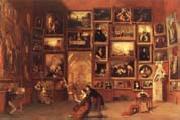
1791-1872,American painter and inventor. The son of a Calvinist minister, he began amateur sketching while a student at Yale College, New Haven, CT. After graduating in 1810, he returned to Charlestown, MA, to paint family portraits. In Boston in the same year he met Washington Allston, recently returned from Italy, under whose tutelage he executed his first history painting, the Landing of the Pilgrims at Plymouth (c. 1810-11; Boston, MA, Pub. Lib.). He joined Allston on his trip to London in 1811, enrolled in the Royal Academy Schools and also studied privately with Allston and Benjamin West. Morse Dying Hercules (1812-13; New Haven, CT, Yale U. A.G.), based on the pose and musculature of the Laokoon (Rome, Vatican, Mus. Pio-Clementino) and the theory evident in Allston Dead Man Restored to Life by Touching the Bones of the Prophet Elisha (1811-14; Philadelphia, PA Acad. F.A.), was critically acclaimed when exhibited at the Royal Academy and is indicative of Morse academic interests. After two trips in 1813 and 1814 to Bristol, where he painted a number of portraits and small subject pieces, Morse ended his period in England with another mythological history painting, the Judgement of Jupiter (1814-15; New Haven, CT, Yale U. A.G.).
|
|
 |
SALZILLO, Francisco
|
|
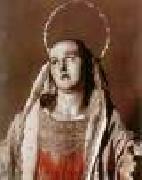
Spanish sculptor (b. 1707, Murcia, d. 1783, Murcia).
Spanish sculptor of Italian descent. He was trained by his father, Nicol Salzillo (1672-1727), a Neapolitan sculptor who had settled in Murcia, whose first documented work is dated 1700. Francisco also studied with the Jesuits and was taught drawing and sculpture by the cleric and painter Manuel Senchez ( fl 1731-9). He entered the Dominican Order in Murcia as a novice but left to take charge of his father's studio at the latter's death in 1727. Francisco was assisted by his brothers, Juan Antonio Salzillo and Patricio Salzillo, a priest, and by his sister, Ines Salzillo, who specialized in painting carved religious statues. In 1746 Francisco married Juana Vallejo Martenez, and in 1755 he was appointed escultor y modelista by the municipal government (ayuntamiento) and Inspector to the Inquisition for painting and sculpture in Murcia. In 1763 he established an academy
|
|
|
|
 |
Rosso Fiorentino
|
|
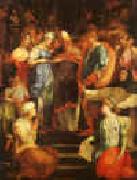
Italian Mannerist Painter, ca.1495-1540
Born in Florence Italy with the red hair that gave him his nickname, Rosso first trained in the studio of Andrea del Sarto alongside his contemporary, Pontormo. In late 1523, Rosso moved to Rome, where he was exposed to the works of Michelangelo, Raphael, and other Renaissance artists, resulting in the realignment of his artistic style.
Fleeing Rome after the Sacking of 1527, Rosso eventually went to France where he secured a position at the court of Francis I in 1530, remaining there until his death. Together with Francesco Primaticcio, Rosso was one of the leading artists to work at the Chateau Fontainebleau as part of the "First School of Fontainebleau", spending much of his life there. Following his death in 1540 (which, according to an unsubstantiated claim by Vasari, was a suicide ), Francesco Primaticcio took charge of the artistic direction at Fontainebleau.
Rosso's reputation, along those of other stylized late Renaissance Florentines, was long out of favour in comparison to other more naturalistic and graceful contemporaries, but has revived considerably in recent decades. That his masterpiece is in a small city, away from the tourist track, was a factor in this, especially before the arrival of photography. His poses are certainly contorted, and his figures often appear haggard and thin, but his work has considerable power.
|
|
 |
Robert Frederick Blum
|
|
Major figure painter and illustrator
American , 1857-1903
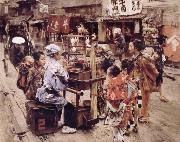
was an American artist born in Cincinnati, Ohio, on the 9th of July 1857. He was employed for a time in a lithographic shop, and studied at the McMicken Art School of Design in Cincinnati, and at the Pennsylvania Academy of Fine Arts in Philadelphia, but he was practically self-taught, and early showed great and original talent. He settled in New York in 1879, and his first published sketches of Japanese jugglers appeared in St. Nicholas. His most important work is a large frieze in the Mendelssohn Music Hall, New York, Music and the Dance (1895). His pen-and-ink work for the Century Magazine attracted wide attention, as did his illustrations for Sir Edwin Arnold's Japonica. "Man before grilled entrance"In the country and art of Japan he had been interested for many years. A Daughter of Japan, drawn by Blum and W. J. Baer, was the cover of Scribner's Magazine for May 1893, and was one of the earliest pieces of color printing for an American magazine. In Scribner's for 1893 appeared also his Artist's Letters from Japan. He was an admirer of Fortuny, whose methods somewhat influenced his work. Blum's Venetian pictures, such as A Bright Day at Venice (1882), had lively charm and beauty. He died on the 8th of June 1903 in New York City.
|
|
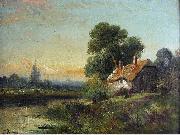 |
Robert Fenson
|
|
painted View with a Cottage by a Stream
in Probably Late 19th Century
|
|
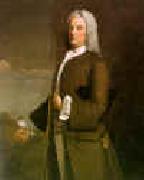 |
Robert Feke
|
|
1710-1752
Robert Feke Gallery
Robert Feke (1707 ?C 1752) was an American portrait painter born on Long Island, New York. Little is known for certain about his life before 1741, which is the year he painted his first portrait, Family of Isaac Royall. Sixteen portraits in total are known to be by Feke, and an additional 50 are disputed to be by him. His paintings are known for their sobriety and uniformity, but also for their rich colours and accuracy.
|
|
|
|
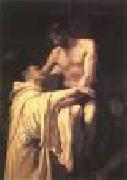 |
RIBALTA, Francisco
|
|
Spanish Baroque Era Painter, ca.1565-1628
He was the most distinguished artist working in Valencia in the early 17th century. His move towards naturalism at an early date was significant for the history of Spanish painting as well as being very influential. His documented mature works after about 1620 show a change of vision, and they are also of the highest quality. The religious paintings are depicted with more pronounced realism, and his deeply felt spiritual belief is expressed in a direct and very immediate way. In 1607 Ribalta supported other leading Valencian painters in a move to form the Colegio de Pintores (College of Painters) to safeguard the interests of the profession. The expulsion of the Moriscos in 1609 and the death in 1611 of the Patriarch Archbishop Juan de Ribera, Ribalta's most important patron, led to an economic crisis and spiritual void in Valencia that had an effect on his activity, since thereafter commissions came more rarely, and his work became more introspective. During 1616 and 1617 the idea of forming the Colegio de Pintores was revived, and Ribalta took an active role in the management and signed the petition to Philip III seeking support for the Colegio.
|
|
 |
Regis-Francois Gignoux
|
|
1816-1882
French/American
Regis-Francois Gignoux Gallery
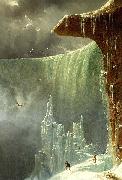
French painter who was active in the United States from 1840 to 1870. He was born in Lyon, France and studied at the École des Beaux-Arts under with the French painter Paul Delaroche (1797-1856). Gignoux arrived in the United States from France in 1840 and opened a studio in Brooklyn, New York. He was a member of the National Academy of Design, and was the first president of the Brooklyn Art Academy. George Inness (1825-1894) and John LaFarge (1835-1910) were both his students. Gignoux was the only member of the Hudson River School to specialize in snow scenes. He returned to France in 1870 and died in Paris in 1882.
The Brooklyn Museum, the Corcoran Gallery of Art (Washington, DC), the Georgia Museum of Art (University Of Georgia, Athens), the High Museum of Art (Atlanta, Georgia), the Honolulu Academy of Arts, the Hood Museum of Art (Dartmouth College, Hanover, New Hampshire), the Museum of Art at Brigham Young University (Provo, Utah), the Museum of Fine Arts, Boston, the Nelson-Atkins Museum of Art (Kansas City, Missouri), the New York Historical Society (New York City), the Parrish Art Museum (Southampton, New York), Smith College Museum of Art (Northampton, Massachusetts), the United States Capital Art Collection (Washington, D. C.), the Walters Art Museum (Baltimore, Maryland) and the Watson Gallery (Wheaton College, Norton, Massachusetts) are among the public collections holding work by R??gis François Gignoux.
|
|
 |
Regis Francois Gignoux
|
|
Regis François Gignoux (1816-1882) was a French painter who was active in the United States from 1840 to 1870. He was born in Lyon, France and studied at the École des Beaux-Arts under the French historical painter Hippolyte Delaroche, who inspired Gignoux to turn his talents toward landscape painting. Gignoux arrived in the United States from France in 1840 and eventually opened a studio in Brooklyn, New York. He was a member of the National Academy of Design, and was the first president of the Brooklyn Art Academy. George Inness, John LaFarge (1835-1910), and Charles Dormon Robinson were his students. By 1844, Gignoux had opened a studio in New York City and became one the first artists to join the famous Tenth Street Studio, where other members included Albert Bierstadt, Frederic Church, Jasper Francis Cropsey, and John Frederick Kensett. He returned to France in 1870 and died in Paris in 1882.
|
|
 |
Prospero Fontana
|
|
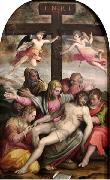
(1512 - 1597) was an Italian painter of the late Renaissance.
Fontana was born in Bologna, and became a pupil of Innocenzo da Imola. He afterwards worked for Perin del Vaga in the Palazzo Doria in Genoa. Towards 1550, it is reported that Michelangelo introduced him to Pope Julius III as a portrait-painter; and he was pensioned at the pontifical court. He later joined Vasari's studio in Florence, and worked in frescoes at the Palazzo Vecchio (1563-65). He is an early representative of the Bolognese school of painting. Sabbatini, Sammachini and Passerotti were three of his principal pupils or colleagues. His daughter, Lavinia Fontana, was also a prominent painter of mostly conventional religious canvases.
Returning to Bologna, after doing some work in Fontainebleau (France) and in Genoa, he opened a school of art, in which he became briefly the preceptor of Lodovico and Agostino Carracci. He has left a large quantity of work in Bologna. His altarpiece of the Adoration of the Magi, in the church of Santa Maria delle Grazie, being considered his masterpiece. It is not unlike the style of Paul Veronese. He died in Rome in 1597.
|
|
 |
Pradilla, Francisco
|
|
Spanish, 1848-1921
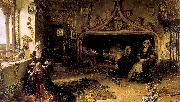
Spanish painter and museum official. He first studied in Saragossa with the stage designer Mariano Pescador (d 1886), and in 1866 moved to Madrid where he began to work with the stage designers and decorators Ferri and Busato. He entered the Escuela Superior de Pintura, Escultura y Grabado and also attended the Academia de Acuarelistas. In 1873 Pradilla and his fellow student Casto Plasencia (1846-90) won history painting scholarships to study at the newly founded Academia Espaola de Bellas Artes in Rome. In 1874 he sent from Rome a copy of Raphael's Dispute over the Holy Sacrament, a work Pradilla completed in collaboration with Alejandro Ferrant (b 1844), another Spanish scholarship holder. During Pradilla's second and third years abroad he travelled through France, visiting the Paris Exposition Universelle of 1875, and Italy, where he was particularly impressed by Venice and the works of Veronese, Titian and Jacopo Tintoretto. Pradilla won a major prize in 1878 at the Exposicien Nacional de Bellas Artes in Madrid; as a result of this success he received the commission for another large picture on a historical theme, the Surrender of Granada (1882; in situ) for the Palacio del Senado (now Pal. de las Cortes) in Madrid. This work shows Pradilla's concern to paint from life in his treatment of the landscape of Granada. He produced other paintings on related subjects, including Mad Queen Joanna Imprisoned at Tordesillas (priv. col., see Pardo Canalis, pl. xviii) and the Sigh of the Moor (Madrid, Rodriguez Bauze priv. col., Pardo Canalis, pl. xvii). Pradilla also painted lively scenes of local life and colour. The years of his stay in Rome, where he was director of the Academia Espa?ola between 1881 and 1883,
|
|
 |
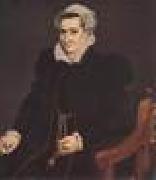
POURBUS, Frans the Younger
|
|
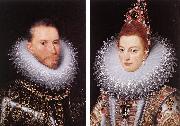
Flemish painter (b. 1569, Antwerpen, d. 1622, Paris).
was a Flemish painter, son of Frans Pourbus the Elder and grandson of Pieter Pourbus. He was born in Antwerp and died in Paris. He is also referred to as "Frans II". Pourbus worked for many of the highly influential people of his day, including the Brussels-based Spanish Regents of the Netherlands, the Duke of Mantua and Marie de' Medici, Queen of France. Works of his can be found in the Louvre, the Prado, the Rijksmuseum, the Royal College of Art,
|
|
 |
POURBUS, Frans the Elder
|
|
Netherlandish painter (b. 1545, Bruges, d. 1581, Antwerpen).
was a Flemish Renaissance painter. He was known primarily for his religious and portrait painting and worked mainly in Antwerp. His father was painter Pieter Pourbus and his son was painter Frans Pourbus the younger.
|
|
 |
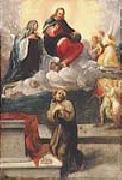
POST, Frans
|
|
Dutch Baroque Era Painter, 1612-1680
Painter and draughtsman, brother of Pieter Post. He was one of the first trained European landscape artists to paint in the New World. His paintings and drawings without exception depict Brazilian scenery with exotic buildings, plants, animals and natives. He probably received his early training from his father and was also influenced by his brother's early landscapes, although no works exist from this period. When Johan Maurits, Count of Nassau-Siegen went to Brazil as Governor General of the Dutch colony in the north-east in October 1636, Frans Post, together with ALBERT ECKHOUT, was among the artists and scientists on board to record various aspects of Brazilian life, landscape,
|
|
|
|
 |
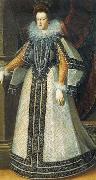
Pietro Faccini
|
|
(1562 - 1602 or 1614), was an Italian painter, active near his birthplace of Bologna in styles bridging Mannerism and the nascent Baroque.
According to Malvasia, the main biographer of the early Bolognese Baroque, he apprenticed in his twenties with the with Ludovico and Annibale Carracci. His style departs from the linear "Roman" quality assumed by his mentor, and has a more sparkling quality, influenced by Tintoretto, Correggio, and Bassano. His documented painterly output consists of about a dozen works. In 1590, he painted the Martyrdom of Saint Lawrence, now found in the church of San Giovanni in Monte (Bologna). He completed altarpieces for San Domenico and Santa Maria dei Servi in 1593-1594 and a Presepio in the Pinacoteca of Bologna.
|
|
 |
Pietro Facchetti
|
|
Pietro Facchetti (1539 ?C 27 February 1613) was an Italian painter of the late-Renaissance, mainly active in Rome.
Born to a poor family in Mantua. Facchetti initially trained with Lorenzo Costa the younger, but then moved to Rome and joined the studio of Scipione da Gaeta, where he gained fame as a portrait painter.
|
|
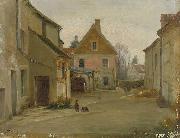 |
Pierre-edouard Frere
|
|
(1819 - 1886), French painter, studied under Hippolyte Delaroche, entered the e - ole des Beaux-Arts in 1836 and exhibited first at the Salon in 1843. The marked sentimental tendency of his art makes us wonder at John Ruskin's enthusiastic eulogy which finds in Frere's work the depth of William Wordsworth, the grace of Joshua Reynolds, and the holiness of Fra Angelico. What we can admire in his work is his accomplished craftsmanship and the intimacy and tender homeliness of his conception. Among his chief works are the two paintings, Going to School and Coming from School, The Little Glutton (his first exhibited picture) and L'Exercice (in the 19th century this work was in John Jacob Astor's collection). A journey to Egypt in 1860 resulted in a small series of Orientalist subjects, but the majority of Frere's paintings deal with the life of the kitchen, the workshop, the dwellings of the humble, and mainly with the pleasures and little troubles of the young, which the artist brings before us with humor and sympathy. He was one of the most popular painters of domestic genre in the middle of the 19th century.
|
|
|
|
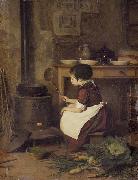 |
Pierre Edouard Frere
|
|
(1819-1886), French painter, studied under Hippolyte Delaroche, entered the cole des Beaux-Arts in 1836 and exhibited first at the Salon in 1843. The marked sentimental tendency of his art makes us wonder at John Ruskin's enthusiastic eulogy which finds in Frere's work the depth of William Wordsworth, the grace of Joshua Reynolds, and the holiness of Fra Angelico. What we can admire in his work is his accomplished craftsmanship and the intimacy and tender homeliness of his conception. Among his chief works are the two paintings, Going to School and Coming from School, The Little Glutton (his first exhibited picture) and L'Exercice (in the 19th century this work was in John Jacob Astor's collection). A journey to Egypt in 1860 resulted in a small series of Orientalist subjects, but the majority of Frere's paintings deal with the life of the kitchen, the workshop, the dwellings of the humble, and mainly with the pleasures and little troubles of the young, which the artist brings before us with humor and sympathy. He was one of the most popular painters of domestic genre in the middle of the 19th century.
|
|
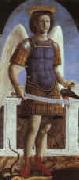 |
Piero della Francesca
|
|
Italian Early Renaissance Painter, ca.1422-1492 Italian painter and theorist. His work is the embodiment of rational, calm, monumental painting in the Italian Early Renaissance, an age in which art and science were indissolubly linked through the writings of Leon Battista Alberti. Born two generations before Leonardo da Vinci, Piero was similarly interested in the scientific application of the recently discovered rules of perspective to narrative or devotional painting, especially in fresco, of which he was an imaginative master; and although he was less universally creative than Leonardo and worked in an earlier idiom, he was equally keen to experiment with painting technique. Piero was as adept at resolving problems in Euclid, whose modern rediscovery is largely due to him, as he was at creating serene, memorable figures, whose gestures are as telling and spare as those in the frescoes of Giotto or Masaccio. His tactile, gravely convincing figures are also indebted to the sculpture of Donatello, an equally attentive observer of Classical antiquity. In his best works, such as the frescoes in the Bacci Chapel in S Francesco, Arezzo, there is an ideal balance between his serene, classical compositions and the figures that inhabit them, the whole depicted in a distinctive and economical language. In his autograph works Piero was a perfectionist, creating precise, logical and light-filled images (although analysis of their perspective schemes shows that these were always subordinated to narrative effect). However, he often delegated important passages of works (e.g. the Arezzo frescoes) to an ordinary, even incompetent, assistant.
|
|
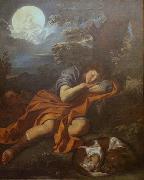 |
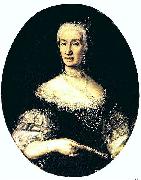
Pier Francesco Mola
|
|
(9 February 1612 - 13 May 1666) was an Italian painter of the High Baroque, mainly active around Rome.
Mola was born at Coldrerio (now in Ticino, Switzerland). At the age of four, he moved to Rome with his father Giovanni Battista, a painter. With the exception of the years 1633 - 40 and 1641 - 47, during which he resided in Venice and Bologna, respectively, he lived for the rest of his life in Rome.
His early training was with the late mannerist painter Cavalier D'Arpino, and he worked under the classicizing Francesco Albani.
His masterpiece is the fresco in the gallery of Alexander VII in the Quirinal Palace Gallery, entitled Joseph making himself known to his Brethren (1657). He made six versions of The Flight into Egypt, the earileist and best of which is the first one, The Rest on the Flight into Egypt.
He was elected Principe of the Accademia di San Luca, the Roman artists' professional association, in 1662, but his last years were neither profitable nor prolific. One of his pupils was Antonio Gherardi.
With his looser style and handling, more naturalistic palette, and interest in exploring landscape elements, Mola rebelled against the prevailing, highly-theoretical classicism of such leading 17th-century Roman painters as Andrea Sacchi.
|
|
 |
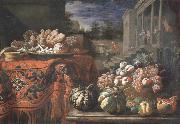
Pier Francesco Guala
|
|
(15 September 1698 - 27 February 1757), also known as Pierfrancesco and Pietro Francesco, was an eighteenth-century Italian painter active for the most part in the region of his place of birth, Casale Monferrato.
Guala was the seventh of eight siblings of whom only he and a sister survived infancy. His mother died when he was five and he was brought up by his father, Lorenzo, who himself was a painter and perhaps related to the architect Sebastiano Guala.
Pier Francesco Guala died in Milan on 27 February 1757.
|
|
 |
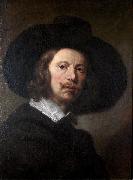
Pier Francesco Cittadini
|
|
Italian, 1616-1681,was an Italian painter of the Baroque period, active mainly in Bologna and painting lush and rich still lifes. Also known as Pier Francesco Cittadini. Originally trained in Rome then studied with Guido Reni. Also called il Milanese. He painted still life pictures. His two sons Giovanni Battista Cittadini and Carlo Cittadini were also still life painters.
|
|
 |
Peter Franchoys
|
|
Peter, Peeter or Pieter Franchoys or Francois (1606-1654) was a Flemish Baroque painter from Mechelen, who painted an altarpiece of Calvary influenced by Anthony van Dyck for the St. Gummarus church in Lier, Belgium.
[edit] Biography
He first learned to paint from his father, Lucas Franchoys the Elder, and later from Gerard Seghers in Antwerp . In 1631 he traveled in France and is recorded being in Fontainebleau. In 1646 he became a member of the Mechelen schutterij and in 1649 he became a master in the Guild of St. Luke there.
According to Houbraken he was known for his landscapes with small figures, that attracted the admiration of Archduke Leopold Wilhelm of Austria, for whom he painted many years.
His work is memorialized in the Gulden Cabinet of the poet from Lier, Cornelis de Bie.
|
|
 |
Peter F Rothermel
|
|
1817-1895
Peter F Rothermel Gallery
Rothermel was born in Nescopeck, Pennsylvania in 1817, although some date his birth earlier in 1813 or 1814. He studied under John R. Smith and Bass Otis before studying in various places in Europe. He specialized in portraits and dramatic historical paintings. He served as Vice President of the Artists' Fund Society in 1844 and as Director of the Pennsylvania Academy of Fine Arts from 1847 to 1855.
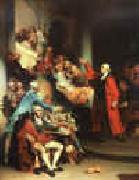
His most famous paintings include Patrick Henry before the Virginia House of Burgesses (1851) and a massive oil painting of the Battle of Gettysburg that hangs in the State Museum of Pennsylvania. This latter work was commissioned by Gettysburg lawyer David McConaughy. Another of his more popular historical works is Columbus Before the Queen, painted in 1844.
|
|
 |
Peter Fendi
|
|
1796-1842
Austrian
Peter Fendi Location
He was born in Vienna, Salzburg at (1796-09-04), and died in Vienna at 1842-08.
|
|
 |
Pedro Figari
|
|
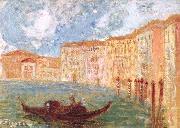
(June 29, 1861-July 24, 1938) was a Uruguayan painter, lawyer, writer, and politician. Although he did not begin the practice until his later years, he is best known as an early modernist painter who emphasized capturing the every-day aspects of life in his work. In most of his pieces, he attempts to capture the essence of his home by painting local customs that he had observed in his childhood.
Figari painted primarily from memory, a technique that gives his work a far more personal feeling. With his unique style, which involved painting without the intention to create an illusion, he, along with other prominent Latin-American artists such as Diego Rivera and Tarsila do Amaral, sparked a revolution of identity in the art world of Latin America.
|
|
|
|
 |
Pavel Filonov
|
|
1883-1941
Pavel Filonov Locations
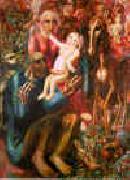
Russian painter, graphic artist and poet. He came from a working-class background; orphaned in childhood, he moved to St Petersburg, where he earned money through embroidery, house painting, restoring buildings and icons, and other tasks such as retouching photographs and making posters and wrappers for goods (a practical apprenticeship he never forgot). His interest in drawing and painting developed through copying, making portraits and the close study of human and animal anatomy. He entered the Academy of Arts, St Petersburg (1908) with difficulty but he left without graduating; his only important teacher was L. E. Dmitriyev-Kavkazsky (1849-1916), with whom he studied privately. Largely self-taught, he was a man of considerable intellectual powers.
|
|
 |
Pavel Fedotov
|
|
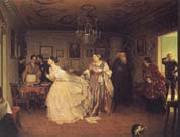
1815-1852 Realism Russian Russian painter and draughtsman. He was noted for his satirical critique of Russian life of the mid-19th century. He attended the First Moscow Military School (1826-33), then served in St Petersburg in the Finnish Regiment Life-Guards. While earning a reputation as an honest and hard-working officer, he drew a great deal, played the flute and took part in amateur theatrical performances. Having become established as the regimental artist, in 1834 he began to attend evening classes at the St Petersburg Academy of Arts. In November 1843, after a long period of doubt, he resigned his commission in the army in order to become a professional artist. He began to attend the Academy regularly and joined the battle-painting class of Aleksander Zauerveid (1783-1844),
|
|
 |
Paul von Franken
|
|
(1818- 1884 ) - Painter
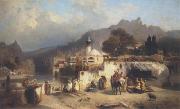
painted Paul von Franken. View of Tiflis in 1866
|
|
|
|
|
|
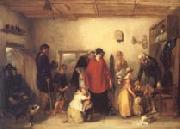 |
Paul Falconer Poole
|
|
(1806 - 1879) , an English painter born in Bristol
an English painter born in Bristol.was an English painter born in Bristol. Though self-taught his fine feeling for colour, poetic sympathy and dramatic power gained for him a high position among British artists. He exhibited his first work in the Royal Academy at the age of twenty-five, the subject being The Well, a scene in Naples. There was an interval of seven years before he next exhibited his Farewell, Farewell in 1837, which was followed by the Emigrant's Departure, Hermann and Dorothea and By the Waters of Babylon. In 1843 his position was made secure by his Solomon Eagle, and by his success in the Cartoon Exhibition, in which he received from the Fine Art Commissioners a prize of 300 sterling. After his exhibition of the Surrender of Syon House he was elected an associate of the Royal Academy in 1846, and was made an academician in 1861. Poole's subjects divide themselves into two orders, one idyllic, the other dramatic. Of the former his May Day (1852) is a typical example. Of both styles there were excellent examples to be seen in the small collection of his works shown at Burlington House in the Winter Exhibition of 1883-1884. Among his early dramatic pictures was Solomon Eagle exhorting the People to Repentance during the Plague of 1665, painted in 1843. To this class belongs also the Messenger announcing to Job the Irruption of the Sabeans and the Slaughter of the Servants (exhibited in 1850), and Robert, Duke of Normandy .and Arietta (1848). Finer examples of his more mature power in this direction are to be found in his Prodigal Son, painted in. 1869; the Escape of Glaucusand lone with the blind girl Nydia from Pompeii (1860); and Cunstaunce sent adrift by the Constable of Alia, King of Northumberland, painted in 1868. More peaceful than these are the Song of Troubadours (painted in 1854) and the Goths in Italy (1851), the latter an important historical work of great, power and beauty. Of a less lofty strain, but still more beautiful in its workmanship, is the Seventh Day of the Decameron, painted in 1857. In this picture Poole rises to his full height as a colourist. In his pastorals he is soft and tender, as in the Mountain Path (1853), the Water-cress Gatherers (1870), the Shepston Maiden (1872). But when he turns to the grander and more sublime views of nature his work is bold and vigorous.
|
|
|
|
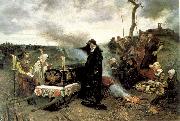 |
Ortiz, Francisco Pradilla
|
|
Spanish, 1848-1921
Spanish painter and museum official. He first studied in Saragossa with the stage designer Mariano Pescador (d 1886), and in 1866 moved to Madrid where he began to work with the stage designers and decorators Ferri and Busato. He entered the Escuela Superior de Pintura, Escultura y Grabado and also attended the Academia de Acuarelistas. In 1873 Pradilla and his fellow student Casto Plasencia (1846-90) won history painting scholarships to study at the newly founded Academia Espaola de Bellas Artes in Rome. In 1874 he sent from Rome a copy of Raphael's Dispute over the Holy Sacrament, a work Pradilla completed in collaboration with Alejandro Ferrant (b 1844), another Spanish scholarship holder. During Pradilla's second and third years abroad he travelled through France, visiting the Paris Exposition Universelle of 1875, and Italy, where he was particularly impressed by Venice and the works of Veronese, Titian and Jacopo Tintoretto. Pradilla won a major prize in 1878 at the Exposicien Nacional de Bellas Artes in Madrid; as a result of this success he received the commission for another large picture on a historical theme, the Surrender of Granada (1882; in situ) for the Palacio del Senado (now Pal. de las Cortes) in Madrid. This work shows Pradilla's concern to paint from life in his treatment of the landscape of Granada. He produced other paintings on related subjects, including Mad Queen Joanna Imprisoned at Tordesillas (priv. col., see Pardo Canalis, pl. xviii) and the Sigh of the Moor (Madrid, Rodriguez Bauz priv. col., see Pardo Canalis, pl. xvii). Pradilla also painted lively scenes of local life and colour. The years of his stay in Rome, where he was director of the Academia Espaola between 1881 and 1883, allowed him to get to know the country around Rome and many other places in Italy.
|
|
|
|
|
|
|
|
|
|
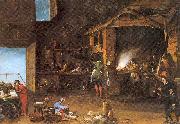 |
Napoletano, Filippo
|
|
Italian, approx. 1587-1629
Italian painter and engraver. From 1600 until at least 1613 he was in Naples, where the naturalism of landscape painters from northern Europe, particularly Paul Bril, Goffredo Wals ( fl 1615-31) and Adam Elsheimer, influenced his early development. After 1614 he was in Rome and became acquainted with the landscapes and seascapes of Agostino Tassi. In 1617 Cosimo II de' Medici summoned him to Florence, where he worked closely with Jacques Callot. Filippo sketched in the Tuscan countryside, and pen-and-wash drawings such as the Landscape with a Rustic House (Florence, Uffizi) capture effects of bright sunlight. He developed a new kind of realistic landscape, showing small scenes that suggest the charm of country life; examples are the Country Dance (1618; Florence, Uffizi), the Mill (Florence, Pitti) and the Fair at Impruneta (Florence, Pitti). In 1620-21 he produced a series of etchings of Skeletons of Animals, dedicated to the scientist Johann Faber, and in 1622 twelve etchings of Caprices and Military Uniforms (signed Teodor Filippo de Liagno).
|
|
|
|
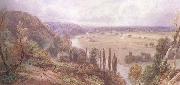 |
Myles Birket Foster,RWS
|
|
1825-1899
English painter, illustrator and collector. After a short and unsatisfactory period working in the family brewing business, he was able to convince his Quaker parents to allow him to pursue a career in art. He was apprenticed to a wood-engraver, Ebenezer Landells (1808-60), who recognized Foster's talent for drawing and set him to work designing blocks for engraving. Foster also provided designs for Punch and the Illustrated London News. In 1846 he set up on his own as an illustrator. The rustic vignettes of the seasons that he contributed to the Illustrated London News and its counterpart, the Illustrated London Almanack, established him as a charming interpreter of the English countryside and rural life and led to his employment illustrating similar themes in other publications. During the 1850s his designs were much in demand; he was called upon to illustrate volumes of the poetry of Longfellow, Sir Walter Scott and John Milton.
|
|
 |
Mura, Francesco de
|
|
Italian, 1696-1782
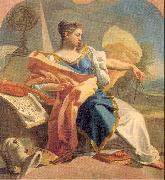
Italian painter. He was educated initially in the workshop of Domenico Viola at Naples, but in 1708 he entered the school of Francesco Solimena, whose favourite pupil and most trusted collaborator he became. At first he followed closely Solimena's monumental Baroque manner, as in the frescoes (1715) in S Nicola alla Carit? in Naples, but later developed a more controlled and refined style of rhythmical lines, light and airy colours and delicate psychological overtones. He employed this new style in his ten canvases of the Virtues and his vast Adoration of the Magi (all 1728; Naples, S Maria Donnaromita) and, above all, in his frescoes of the Adoration of the Magi in the apsidal dome of the church of the Nunziatella, Naples (1732; in situ). De Mura was also active as a portrait painter; his Portrait of the Artist's Wife
|
|
|
|
|
|
|
|
|
|
|
|
|
|
|
| Wholesale China Oil Painting Wholesale Oil Painting China Xiamen Portrait Reproduction on canvas Chinese Oil Painting Wholesale USA Oil Painting |
|
|
|
|
|