| |
|
Xiamen Oil Paintings, Wholesale Direct!
|
|
100% hand painted, 100% cotton canvas, 100% money back if not satisfaction. |
|
|
|
|
ART WORKS INDEX
A
B
C
D
E
F
G
H
I
J
K
L
M
N
O
P
Q
R
S
T
U
V
W
X
Y
Z
|
|
ARTISTS INDEX
A
B
C
D
E
F
G
H
I
J
K
L
M
N
O
P
Q
R
S
T
U
V
W
X
Y
Z
|
|
|
|
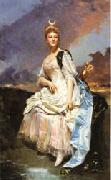 |
Raimundo de Madrazo y Garreta
|
|
Spanish realist Painter , 1841-1920
Son of Federico de Madrazo y K?ntz. Because of his ability and training with his father, Federico, in the Real Academia de S Fernando in Madrid and with L?on Cogniet in Paris, he seemed destined to continue the family tradition of academic painting. However, due to the influence of the Belgian Alfred Stevens, of his brother-in-law, Mariano Jos? Bernardo Fortuny y Marsal, and the Parisian environment, he exchanged dry historical painting (e.g. Arrival in Spain of the Body of the Apostle St James, 1858, and Ataulfo, 1860) for the preciousness of the tableautin, the small, intimate genre painting. He lived in Paris and New York and became so remote from Spanish artistic life that he and Fortuny y Marsal were the only Spanish artists not to participate in any national exhibition, and because of this the Spanish state never directly acquired their works. In 1882, with Giuseppe De Nittis, Stevens and the gallery owner Georges Petit, he co-founded the Exposition Internationale de Peinture, designed to promote foreign artists in Paris. Madrazo Garreta's most characteristic works are the female portrait and the witty and elegant genre painting, with soft, delicate tones and suggestive poses. The influence of the Rococo and of Japanese art is reflected in his painting, which expresses an exquisite aristocratic or bourgeois ideal, the illusion of a refined, sensual and superficial life. Consequently,
|
|
 |
Raimundo de Madrazo y Garreta
|
|
1841-1920
Spanish
Son of Federico de Madrazo y Kentz. Because of his ability and training with his father, Federico, in the Real Academia de S Fernando in Madrid and with Leon Cogniet in Paris, he seemed destined to continue the family tradition of academic painting. However, due to the influence of the Belgian Alfred Stevens, of his brother-in-law, Mariano Jose Bernardo Fortuny y Marsal, and the Parisian environment, he exchanged dry historical painting for the preciousness of the tableautin, the small, intimate genre painting. He lived in Paris and New York and became so remote from Spanish artistic life that he and Fortuny y Marsal were the only Spanish artists not to participate in any national exhibition, and because of this the Spanish state never directly acquired their works. In 1882, with Giuseppe De Nittis, Stevens and the gallery owner Georges Petit, he co-founded the Exposition Internationale de Peinture, designed to promote foreign artists in Paris. Madrazo Garreta most characteristic works are the female portrait and the witty and elegant genre painting, with soft, delicate tones and suggestive poses. The influence of the Rococo and of Japanese art is reflected in his painting, which expresses an exquisite aristocratic or bourgeois ideal, the illusion of a refined, sensual and superficial life. Consequently, his works are also described as representing the Parisian seraglio. American collectors paid high prices for his paintings, for example Alexander Turney Stewart bought Lady with a Parrot; Carnival Festival (1878) was purchased by L. Wolfe; and Girls at the Window (1875) was bought by J. W. Vanderbilt, the last two now being in the Metropolitan Museum of Art, New York. His portraits were better received in Spain although because of collectors such as Ramen de Errazu (d 1909), the Museo del Prado has a good number of his paintings (e.g. After the Bath).
|
|
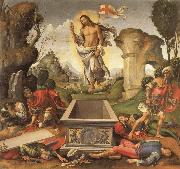 |
Raffaellino del garbo
|
|
Italian Early Renaissance Painter , ca.1466-1524
Italian painter and draughtsman. According to Vasari, he began as the most gifted assistant of Filippino Lippi and the most promising painter of the new generation but never fulfilled expectations, deteriorating into mediocrity and worse. Raffaellino's first known work is the frescoed vault of a small antechamber off Filippino Lippi's Carafa Chapel in S Maria sopra Minerva, Rome, uncovered during restoration in the 1960s. It was decorated with pagan themes, to Filippino's designs, apparently after the main chapel was completed in 1493. Filippino's influence is evident in the all'antica detail and animated figure style, to which Raffaellino brought a youthful freshness and charm. Vasari, in his account of the vault, likened it to an illuminator's work. It has been suggested that Raffaellino remained in Rome and worked with Bernardino Pinturicchio in the Borgia apartments in the Vatican, where some frescoes of 1495 show stylistic affinities with Raffaellino's work in S Maria sopra Minerva.
|
|
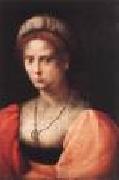 |
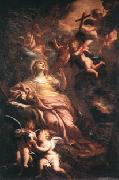
PULIGO, Domenico
|
|
Italian Painter, 1492-1527
He trained in Florence with Ridolfo Ghirlandaio and in the workshops of Antonio del Ceraiuolo ( fl 1st half 16th century) and Andrea del Sarto. What may be his earliest surviving work, the Virgin and Child with St John (c. 1513; Rome, Pal. Venezia), reflects the style of Ghirlandaio. Other early paintings, however, such as the Holy Family (Florence, Gal. Corsini), show the influence of Fra Bartolommeo and Andrea del Sarto and are little affected by Ghirlandaio. The Virgin and Child with the Infant St John (c. 1522; Florence, Pitti) clearly reflects the examples of Fra Bartolommeo and Raphael, with the figures in the manner of Andrea del Sarto. The figure of the Christ Child may derive from Raphael's Madonna of the Pinks (c. 1507-8; Alnwick Castle, Northumb., on loan to London, N.G.). Over a dozen drawings have been attributed to Puligo, but none relates to his extant work or resembles his style of painting. Vasari described him as a particularly lazy artist, which may account for this scarcity of drawings and for the frequency of borrowed motifs and repeated compositions in his smaller religious paintings. Such borrowing often resulted in a lack of harmony in his compositions, as in the Pitti Virgin and Child. The influence of the more sculptural forms of Andrea del Sarto's work of the 1520s can be seen in the Mary Magdalene (c. 1525; Ottawa, N.G.).
|
|
 |
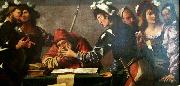
PIOLA, Domenico
|
|
Italian Baroque Era Painter, 1627-1703
was a Genoese painter of the Baroque period. His family studio was highly prolific. He apprenticed with his family, including his elder brother, Pellegro Piola, as well as with Domenico Fiasella. Other members of the Piola family, who were artists included Domenico's brother, Giovanni Andrea and his three sons Paolo Gerolamo, Anton Maria, and Giovanni Battista; his two sons-in-law, Gregorio de Ferrari and Domenico Parodi; and his brother-in-law Stefano Camogli. The large family studio, called Casa Piola excelled in both quadratura fresco decoration and canvases. Generations of artists, down to the 20th century, descended from the line of Piola-De Ferrari, including Giovanni Maria De Simoni, who died in 1913 in the original residence of Domenico's family. Domenico was also a well-known printmaker and draughtsman.
|
|
 |
Pietro della Vecchia
|
|
(1603 - 8 September 1678) was an Italian painter also known as Pietro Muttoni. Born in Vicenza (Venice), he likely trained with Alessandro Varotari, called Padovanino, deriving a notable interest in Venetian masters such as Titian and Giorgione. Until 1984, he was mistakenly referred to as Pietro Muttoni. This misnomer is attributed to Italian art historian and archaeologist, Luigi Lanzi (June 14, 1732 - 30 March 1810), who in his Storia pittorica della Italia confused the name of the artist with the name of a collection, Muttoni, in which he had seen one of his paintings. In fact, Pietro was from the well known Venetian family, the della Vecchia. Renowned among his contemporaries for his ability to imitate the styles of 16th-century masters, he was also known for his grotesque paintings and portraiture. His earliest known works, two representations of St Francis, which have survived in many versions (e.g. Modena, Gal. Estense; Rovigo, Accad. Concordi), and a Crucifixion (1633; Venice, S Lio) are so heavily influenced by Carlo Saraceni and his student and collaborator Jean Leclerc as to suggest that della Vecchia trained with them. Certain Caravaggesque elements, which remained in his work for some time to come, suggest that he spent some time in Rome after Leclerc had left Venice, in 1621 or 1622. The influence of Alessandro Varotari or Padovanino, who is described by sources (e.g. Orlandini) as della Vecchia's teacher, is only noticeable in dated works from 1635 onwards. Della Vecchia probably worked in Padovanino's studio c. 1625-6, after his trip to Rome, and from the latter he derived his great interest in 16th-century painting in Venice and the Veneto. His monumental Crucifixion (1637; Venice, Fond. Cini), in which the composition harks back to the 16th century while the figures derive from Caravaggio, is characteristic of this phase. Around 1640 the influence of Bernardo Strozzi is apparent in his work, as in the Angel Offering a Skull to St Giustina, who stands between St Joseph and St John (1640; Venice, Accad.), painted for the church of S Giustina. In 1640 he began to design cartoons for the mosaics in S Marco, on which he worked until 1673. From 1640 to 1673 he was commissioned from the Venetian Republic for the design of the mosaic cartoons for the St. Mark's Basilica. He painted four idyllic landscapes that presage some of the Rococo content (now in Pinacoteca Querini-Stampalia). He married Clorinda Renieri, daughter of Nicolas Regnier, Flemish painter and art dealer. Della Vecchia died in Venice, September 1678.
|
|
|
|
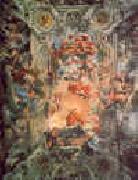 |
Pietro da Cortona
|
|
1596-1669 Italian Pietro da Cortona Galleries Italian painter, draughtsman and architect. He was, together with Gianlorenzo Bernini and Franceso Borromini, one of the three leading artists of the Roman Baroque. As a painter he developed the early Baroque style, initiated by Annibale Carracci, to a magnificent and imposing High Baroque. His fresco decorations set a standard for European Baroque painting until they were eclipsed by Giambattista Tiepolo's works and those of other Venetian masters of the 18th century. As an architect Cortona was far less influential. His imaginative designs for fa?ades and stucco decorations were, however, conclusive and independent solutions to problems central to Roman Baroque architecture.
|
|
|
|
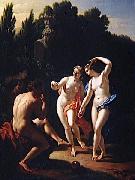 |
Pieter van der Werff
|
|
(1665 - September 26, 1722) was a Dutch Golden Age painter. He assisted his older brother, Adriaen van der Werff.
He learned to paint from his brother Adriaen and according to the RKD, he spent most of his life working in Rotterdam, where he painted the rich and famous
|
|
 |
Pieter de Ring
|
|
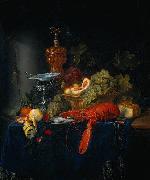
(1615/1620 - 22 September 1660, Leiden) was a Dutch Golden Age painter of still lifes. became famous for his opulent, flashy still lifes or banquet pieces with fruit, a lobster, a goblet, shrimps, oysters, a rug and Chinese porcelain. His signature is often a painted ring or with the Latinised form of his name, P.Ab.Annulo.
De Ring was born either in Leiden, or in Ypres in Flanders, but there is no trace of his birth in the Leiden archives, and the Ypres Archives were destroyed in August 1914. Pieter de Ring started as a mason and painted still lifes in the evening. When the hall was filled with paintings he became a pupil of Jan Davidsz. de Heem, until 1635 living in Leiden. His father Daniel died in 1648; in 1657 his mother lived in Amsterdam. De Ring himself lived in a house at Hogewoerd.
There are no records in the Leiden Archive on his marriage or children. He appears not to have bought a house there nor wrote a will. What is known is that he became one of the founders a member and of the Guild of St. Luke in 1648, De Ring was buried in the Pieterskerk, Leiden on 22 September 1660 and taken to church from a house in the Nonnensteeg. If he had his studio there he probably had a view on the Leiden Academy building. If he lived on the east side of the alley he had a beautiful view on the Hortus Botanicus of Leiden, the work of Clusius.
|
|
 |
Pieter de Molijn
|
|
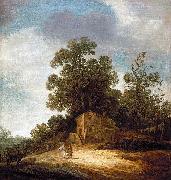
(6 April 1595 - 23 March 1661) was a Dutch Golden Age painter and engraver born in England.
He was baptized in the Dutch Reformed Austin Friars church in London. Little is known of his early training, but he probably traveled to Italy and in 1616 he became a member of the Haarlem Guild of St. Luke. He was a contemporary of Jacob Pinas. He married Geertuyt Huygen de Bie. During the years 1616-1627 he lived in Delft where he remarried after his first wife died. In the marriage notice, his wife Geertruyt de Roovere is from Amsterdam and he is from Delft.
De Molijn was possibly a student of Esaias van de Velde. He taught several students, including Gerard ter Borch, Jan Coelenbier, Allart van Everdingen, Christian de Hulst, Anthony Molijn, Jan Nose and Jan Wils.De Molijn was known for his landscapes, but he also made genre pieces, marine scenes, portraits, and architectural pieces. This type of oeuvre is typical for the Italian-bound artists of his day, who paid their way as a jack-of-all-trades. De Molijn died in Haarlem on 23 March 1661.
|
|
 |
Pieter de Kempener
|
|
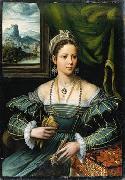
Pedro Campana (1503-1586) was a Flemish painter of the Renaissance period, mainly active in Italy and Spain. His actual name was Pieter de Kempeneer, translated into French as Champaigne, and was also known as Peter Van de Velde.
Born in Brussels, he trained there with Bernard Van Orley. His early life appears to have been spent in Italy, where he carefully studied the paintings of Raphael, and declared himself as his pupil. In 1530 he was at work at some scene-painting, representing a triumphal arch to be erected on the occasion of the coronation of Charles V, Holy Roman Emperor in Bologna, and he then left for Spain, on the advice, it is said, of Cardinal Domenico Grimani, and spent the rest of his life in that country, only returning to Brussels about 1563 or 1565.
Between 1537 and 1562 he was associated with Luis de Vargas and the Italian sculptor Torregiano in establishing a school of painting in Seville, which eventually became the academy of the place; amongst the pupils educated in it was Morales. He painted for the monastery of St. Mary of Grace, Church of Santa Cruz, in the city, an altar-piece representing the Descent from the Cross (1548), which is now in the cathedral, having been removed there when the church fell into ruins. There are other works by the same painter in Seville Cathedral, especially two representing the Purification of the Virgin and the Resurrection; and the various churches of the city, S. Isidoro, S. Pedro, S. Catalina, and S. Juan, all possess paintings by this artist. One of his last works was the restoration and repainting of a chapel belonging to Hernando de Jaen, an important resident of Seville. Murillo requested that he be buried near Campana's picture, and his burial took place in the Church of Santa Cruz, close underneath the Descent from the Cross, but the whole building was burned to the ground during the Napoleonic Wars, and the tomb perished.
|
|
 |
Pieter de Hooch
|
|
1629-1684
Dutch
Pieter de Hooch Galleries
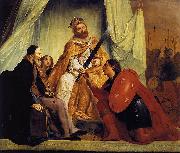
De Hooch was born in Rotterdam to Hendrick Hendricksz de Hooch, a bricklayer, and Annetge Pieters, a midwife. He was the eldest of five children and outlived all of his siblings. He studied art in Haarlem under the landscape painter, Nicolaes Berchem. Beginning in 1650, he worked as a painter and servant for a linen-merchant and art collector named Justus de la Grange. His service for the merchant required him to accompany him on his travels to The Hague, Leiden, and Delft, to which he eventually moved. It is likely that de Hooch handed over most of his works to la Grange during this period in exchange for board and other benefits, as this was a common commercial arrangement for painters at the time, and a later inventory recorded that la Grange possessed eleven of his paintings.
De Hooch was married in Delft in 1654 to Jannetje van der Burch, by whom he fathered seven children. While in Delft, de Hooch is also believed to have learned from the painters Carel Fabritius and Nicolaes Maes, who were both early members of the Delft School. He became a member of the painters' guild of Saint Luke in 1655, and had moved to Amsterdam by 1661.
The early work of de Hooch, like most young painters of his time, was mostly composed of scenes of soldiers in stables and taverns, though he used these to develop great skill in light, color, and perspective rather than to explore an interest in the subject matter. After beginning his family in the mid-1650s, he switched his focus to domestic scenes and family portraits. His work showed astute observation of the mundane details of everyday life while also functioning as well-ordered morality tales. These paintings often exhibited a sophisticated and delicate treatment of light similar to those of Vermeer, who lived in Delft at the same time as de Hooch. 19th century art historians had assumed that Vermeer had been influenced by de Hooch's work, but the opposite is now believed.
|
|
 |
Pieter de Grebber
|
|
(c. 1600, Haarlem - 1652/3, Haarlem) was a Dutch Golden Age painter.
De Grebber was the oldest son of Frans Pietersz de Grebber (1573 - 1643), a painter and embroiderer in Haarlem, and the brother of the painters Maria and Albert. He learned to paint from his father and from Hendrick Goltzius. He was descended from a Catholic and artistic family and his sister Maria later became the mother-in-law of Gabriel Metsu. He was a friend of the priest and musicologist Jan Albertszoon Ban, and had a poem set to music by the Haarlem composer Cornelis Padbrue. In 1632 he became a member of the Haarlem Guild of St. Luke, but he had already been active as a painter for 10 years. His pupils were Gerbrand Ban, Nicolaes Pietersz Berchem, Egbert van Heemskerck, and Dirck Helmbreeker.
In 1618, father and son went to Antwerp and negotiated with Peter Paul Rubens over the sale of his painting "Daniel in the lions pit". It was then handed - via the English ambassador in the Republic, Sir Dudley Carleton - to king Charles I. Pieter got important commissions not only in Haarlem, but also from the stadholder Frederik Hendrik. As such, he worked on the decoration of the Huis Honselaarsdijk in Naaldwijk and at the Paleis Noordeinde in Huis ten Bosch in the Hague. He painted altar pieces for churches in Flanders and hidden Catholic churches in the Republic. He may also have worked for Danish clients.
Pieter remained single and lived from 1634 until his death at the Haarlem Beguinage.
|
|
 |
Pieter de Grebber
|
|
1600-1653
Dutch
Pieter de Grebber Gallery
Grebber was the son of Frans Pietersz de Grebber (1573?C1643), a painter and embroiderer in Haarlem, and would have been taught painting by his father and by Hendrick Goltzius. He was descended from a Catholic and artistic family (2 of his brothers, and his sister Maria, the mother-in-law of Gabriel Metsu, were known as painters). He was friendly with the priest and musicologist Jan Albertszoon Ban, and had a poem set to music by the Haarlem composer Cornelis Padbru??.
In 1618, father and son went to Antwerp and negotiated with Peter Paul Rubens over the sale of his painting "Daniel in the lions pit". It was then handed - via the English ambassador in the Republic, Sir Dudley Carleton - to king Charles I. Pieter got important commissions not only in Haarlem, but also from the stadholder Frederik Hendrik. As such, he worked with on the decoration of the Huis Honselaarsdijk in Naaldwijk and at the Paleis Noordeinde in Huis ten Bosch in the Hague. He painted altar pieces for churches in Flanders and hidden Catholic churches in the Republic. He may also have worked for Danish clients.
|
|
|
|
 |
Pierre-Denis Martin
|
|
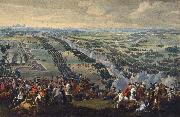
(b. ca. Paris 1663-d. Paris 1742) was a French painter, best known for his paintings of royal residences.
He was also known as "Martin le Jeune" ("Martin the Young") or as "Martin des Gobelins" (because he was employed at the Gobelins Manufactory).
|
|
 |
Pierre Puvis de Chavannes
|
|
1824-1898
French
Pierre Puvis de Chavannes Art Galleries
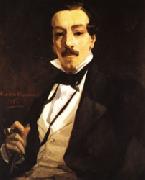
Born in Lyons on Dec. 14, 1824, Pierre Puvis de Chavannes belonged to the generation of Gustave Courbet and ??douard Manet, and he was fully aware of their revolutionary achievements. Nevertheless, he was drawn to a more traditional and conservative style. From his first involvement with art, which began after a trip to Italy and which interrupted his intention to follow the engineering profession that his father practiced, Puvis pursued his career within the scope of academic classicism and the Salon. Even in this chosen arena, however, he was rejected, particularly during the 1850s. But he gradually won acceptance. By the 1880s he was an established figure in the Salons, and by the 1890s he was their acknowledged master.
In both personal and artistic ways Puvis career was closely linked with the avant-grade. In the years of his growing public recognition, when he began to serve on Salon juries, he was consistently sympathetic to the work of younger, more radical artists. Later, as president of the Societe Nationale des Beaux-Arts - the new Salon, as it was called - he was able to exert even more of a liberalizing influence on the important annual exhibitions.
Puvis sympathy to new and radical artistic directions was reflected in his own painting. Superficially he was a classicist, but his personal interpretation of that style was unconventional. His subject matter - religious themes, allegories, mythologies, and historical events - was clearly in keeping with the academic tradition. But his style eclipsed his outdated subjects: he characteristically worked with broad, simple compositions, and he resisted the dry photographic realism which had begun to typify academic painting about the end of the century. In addition, the space and figures in his paintings inclined toward flatness, calling attention to the surface on which the images were depicted. These qualities gave his work a modern, abstract look and distinguished it from the sterile tradition to which it might otherwise have been linked.
Along with their modern, formal properties, Puvis paintings exhibited a serene and poetic range of feeling. His figures frequently seem to be wrapped in an aura of ritualistic mystery, as though they belong in a private world of dreams or visions. Yet these feelings invariably seem fresh and sincere. This combination of form and feeling deeply appealed to certain avant-garde artists of the 1880s and 1890s. Although Puvis claimed he was neither radical nor revolutionary, he was admired by the symbolist poets, writers, and painters - including Paul Gauguin and Maurice Denis - and he influenced the neoimpressionist painter Georges Seurat.
During his mature career Puvis executed many mural paintings. In Paris he did the Life of St. Genevieve (1874-1878) in the Panth??on and Science, Art, and Letters (1880s) in the Sorbonne. In Lyons he executed the Sacred Grove, the Antique Vision, and Christian Inspiration (1880s) in the Mus??e des Beaux-Arts. He painted Pastoral Poetry (1895-1898) in the Boston Public Library. These commissions reflect the high esteem with which Puvis was regarded during his own lifetime. Among his most celebrated oil paintings are Hope (1872) and the Poor Fisherman (1881). He died in Paris on Oct. 10, 1898.
|
|
 |
Piero di Cosimo
|
|
1462-1521
Italian Piero di Cosimo Galleries
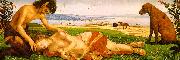
Italian painter and draughtsman.
Tax declarations made by Piero di Cosimo's father suggest that the artist was born in either 1461 or 1462. According to the first, he was eight years old in 1469, while a catasto (land registry declaration) of 1480 gives his age as 18. A document of 1457 establishes that his father, Lorenzo di Piero d'Antonio, was a maker of small tools (succhiellinaio) rather than a goldsmith, as Vasari claimed. By 1480 Piero appears no longer to have been living at the family house in the Via della Scala, Florence, but was an unsalaried apprentice or workshop assistant to Cosimo Rosselli, from whom he received room and board and eventually took the name of Piero di Cosimo.
|
|
 |
Piero della Francesca
|
|
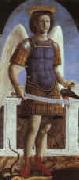
Italian Early Renaissance Painter, ca.1422-1492 Italian painter and theorist. His work is the embodiment of rational, calm, monumental painting in the Italian Early Renaissance, an age in which art and science were indissolubly linked through the writings of Leon Battista Alberti. Born two generations before Leonardo da Vinci, Piero was similarly interested in the scientific application of the recently discovered rules of perspective to narrative or devotional painting, especially in fresco, of which he was an imaginative master; and although he was less universally creative than Leonardo and worked in an earlier idiom, he was equally keen to experiment with painting technique. Piero was as adept at resolving problems in Euclid, whose modern rediscovery is largely due to him, as he was at creating serene, memorable figures, whose gestures are as telling and spare as those in the frescoes of Giotto or Masaccio. His tactile, gravely convincing figures are also indebted to the sculpture of Donatello, an equally attentive observer of Classical antiquity. In his best works, such as the frescoes in the Bacci Chapel in S Francesco, Arezzo, there is an ideal balance between his serene, classical compositions and the figures that inhabit them, the whole depicted in a distinctive and economical language. In his autograph works Piero was a perfectionist, creating precise, logical and light-filled images (although analysis of their perspective schemes shows that these were always subordinated to narrative effect). However, he often delegated important passages of works (e.g. the Arezzo frescoes) to an ordinary, even incompetent, assistant.
|
|
|
|
 |
Philippe de Champaigne
|
|
1602-1674
Philippe de Champaigne Locations
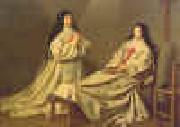
His artistic style was varied: far from being limited to the realism traditionally associated with Flemish painters, it developed from late Mannerism to the powerful lyricism of the Baroque. It was influenced as much by Rubens as by Vouet, culminating in an aesthetic vision of the world and of humanity that was based on an analytic view of appearances and on psychological truth. He was perhaps the greatest portrait painter of 17th-century France. At the same time he was one of the principal instigators of the Classical tendency and a founder-member of the Acadmie Royale de Peinture et de Sculpture. His growing commitment to the Jansenist religious movement (see JANSENISM) and the severe plainness of the works that it inspired has led to his being sometimes considered to typify Jansenist thinking, with its iconoclastic impulse, in spite of the opposing evidence of his other paintings. He should be seen as an example of the successful integration of foreign elements into French culture and as the representative of the most intellectual current of French painting.
|
|
 |
Philip James de Loutherbourg
|
|
1740-1812
French (Resident in UK)
Philip James de Loutherbourg Gallery
Philip James de Loutherbourg, also seen as Philippe-Jacques and Philipp Jakob and with the appellation the Younger (31 October 1740 ?C 11 March 1812) was an English artist of French origin.
He was born in Strasbourg, where his father, the representative of a Polish family, practised miniature painting; but he spent the greater part of his life in London, where he was naturalized, and exerted a considerable influence on the scenery of the English stage, as well as on the artists of the following generation. De Loutherbourg was intended for the Lutheran ministry, and was educated at the University of Strasbourg.
As the calling, however, was foreign to his nature, he insisted on being a painter, and placed himself under Charles-Andr?? van Loo in Paris. The result was an immediate and precocious development of his powers, and he became a figure in the fashionable society of that day. In 1767 he was elected into the French Academy below the age required by the law of the institution, and painted landscapes, sea storms, battles, all of which had a celebrity above those of the specialists then working in Paris. His debut was made by the exhibition of twelve pictures, including Storm at Sunset, Night, Morning after Rain.
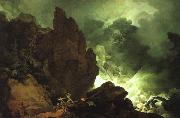
He is next found travelling in Switzerland, Germany and Italy, distinguishing himself as much by mechanical inventions as by painting. One of these, showing quite new effects produced in a model theatre, was the wonder of the day. The exhibition of lights behind canvas representing the moon and stars, the illusory appearance of running water produced by clear blue sheets of metal and gauze, with loose threads of silver, and so on, were his devices. In 1771 he came to London, and was employed by David Garrick, who offered him £500 a year to apply his inventions to Drury Lane, and to superintend the scene-painting, which he did with complete success, making a new era in the adjuncts of the stage. Garrick's own piece, the Christmas Tale, and the pantomime, 1781-1782, introduced the novelties to the public, and the delight not only of the masses, but of Reynolds and the artists, was unbounded. The green trees gradually became russet, the moon rose and lit the edges of passing clouds, and all the world was captivated by effects we now take little notice of. A still greater triumph awaited him on his opening an entertainment called the Eidophusikon, which showed the rise, progress and result of a storm at sea that which destroyed the great Indiaman, the Halsewell,and the Fallen Angels raising the Palace of Pandemonium. De Loutherbourg has been called the inventor of the panorama, but this honor does not belong to him, although it first appeared about the same time as the eidophusicon. The first panorama was painted and exhibited by Scottish painter Robert Barker.
|
|
 |
Philip de Laszlo
|
|
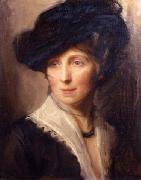
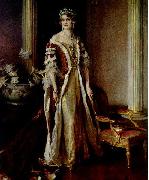
MVO (born 30 April 1869, Budapest - died 22 November 1937, London) was a Hungarian painter known particularly for his portraits of royal and aristocratic personages.
Leszle was born in Budapest as Laub Felöp Elek (Hungarian style with the surname first), the eldest son of a Jewish tailor. The family changed its name to Leszle in 1891. He apprenticed at an early age to a photographer while studying art, eventually earning a place at the National Academy of Art, where he studied under Bertalan Szekely and Keroly Lotz. He followed this with studies in Munich and Paris. Leszle's portrait of Pope Leo XIII earned him a Grand Gold Medal at the Paris International Exhibition in 1900. In 1903 Leszle moved from Budapest to Vienna. In 1907 he moved to England and remained based in London for the remainder of his life, although traveling the world to fulfill commissions.
|
|
 |
Philip Alexius de Laszlo
|
|
Philip Alexius de Laszlo, MVO (30 April 1869 Budapest - 22 November 1937 London) was a Hungarian painter known particularly for his portraits of royal and aristocratic personages.
Laszlo was born in Budapest as Laub Fulop Elek (Hungarian style with the surname first), the eldest son of a Jewish tailor. The family changed its name to Laszlo in 1891.
As a young man, Laszlo apprenticed to a photographer while studying art, eventually earning a place at the National Academy of Art, where he studied under Bertalan Szekely and Karoly Lotz. He followed this with studies in Munich and Paris. Laszlo's portrait of Pope Leo XIII earned him a Grand Gold Medal at the Paris International Exhibition in 1900.
In 1903 Laszlo moved from Budapest to Vienna. In 1907 he moved to England. He remained based in London for the rest of his life while traveling the world to fulfill commissions.
Laszlo's patrons awarded him numerous honors and medals. In 1909 he was named an honorary Member of the Royal Victorian Order by King Edward VII of the United Kingdom. In 1912 he was ennobled by King Franz Joseph of Hungary; his surname became "Laszlo de Lombos". The family later shortened the name to "de Laszlo".
Laszlo became a British citizen in 1914 but was interned for over twelve months in 1917 and 1918 during the First World War.
|
|
|
|
 |
Perino Del Vaga
|
|
Italian Mannerist Painter, ca.1501-1547
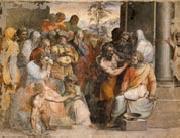
Italian painter and draughtsman. He trained in Florence, first with Andrea de' Ceri and from the age of 11 with Ridolfo Ghirlandaio. According to Vasari, he practised drawing by copying Michelangelo's cartoon for the Battle of Cascina (destr.). For Pope Leo X's entry into Florence in November 1515 he painted an allegorical figure on one of the twelve triumphal arches. Soon after, an obscure Florentine painter called Vaga took Perino to Rome, where he became known as del Vaga. There he continued his drawing studies, copying from works of antiquity and Michelangelo's ceiling in the Sistine Chapel. On the recommendation of Giulio Romano and Giovanni Francesco Penni, he joined Raphael's workshop, where he learnt stuccowork and how to design grotesques, through assisting Giovanni da Udine in the Vatican Logge. Soon he was painting scenes from Raphael's designs, and five or six ceiling frescoes in the Logge, including the Story of Joshua and the Story of David, are generally accepted as his.
|
|
 |
Peeter Danckers de Rij
|
|
Pieter, Peeter, or Peter Danckerts de Rij, Dankers de Ry, or Peteris Dankersas (1605, Amsterdam - 9 August 1661, Rudnik) was a Dutch Golden Age painter.
He was the son of Cornelis Danckerts de Ry, member of a large family of printers, painters and engravers.
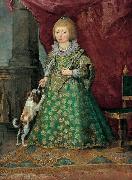
Adam Kazanowski - by Peeter Danckers de Rij.
Example of Dankerts-Sandrart collaboration in print of PC Hooft. This 1642 engraving was painted by Sandrart, etched by Reinier van Persijn, and printed by Danckerts. The poem in Latin at the bottom was written by Caspar Barlaeus.Cornelis is mentioned in Houbraken's Schouburg as being one of the many teachers of Joachim von Sandrart in 1640-41, though considering Sandrart's age and experience (he had just returned to the North from his Grand Tour to Italy), this was more of a collaboration. Since Filippo Baldinucci later wrote a biograhical sketch on Pietro Danckerse de Ry in his list of artists called the Notizie, it is possible that Danckerts visited Italy at some time. In any case Sandrart engraved some of Peter's paintings after this period. Peter was active until 1640 in Amsterdam, and then he moved to Warsaw, Danzig, and Vilnius in the Polish-Lithuanian Commonwealth. He was active in Poland as the court painter and architect of the Polish King Władysław IV Vasa. According to Houbraken a poem was written in his honor that applauds his work in Poland. He died as the result of a highway robbery in the Redininkai Forest near Vilnius, Lithuania.
|
|
|
|
|
|
|
|
|
|
|
|
|
|
 |
Paul Delaroche
|
|
1797-1856
French
Paul Delaroche Locations
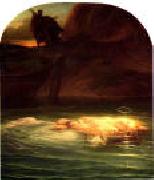
Painter and sculptor, son of Gregoire-Hippolyte Delaroche. Though he was offered a post in the Bibliotheque Nationale by his uncle, Adrien-Jacques Joly, he was determined to become an artist. As his brother Jules-Hippolyte was then studying history painting with David, his father decided that Paul should take up landscape painting, and in 1816 he entered the Ecole des Beaux-Arts to study under Louis-Etienne Watelet (1780-1866). Having competed unsuccessfully for the Prix de Rome for landscape painting, he left Watelet studio in 1817 and worked for a time with Constant-Joseph Desbordes (1761-1827). In 1818 he entered the studio of Antoine-Jean Gros, where his fellow pupils included Richard Parkes Bonington, Eugene Lami and Camille Roqueplan.
|
|
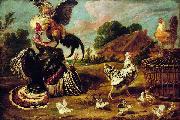 |
Paul de Vos
|
|
(1591e1592, or 1595, Hulst-30 June 1678, Antwerp) was a Flemish Baroque painter.
De Vos was born in Hulst near Antwerp, now in the Dutch province of Zeeland. Like his older brother Cornelis and younger brother Jan, he studied under the little-known painter David Remeeus (1559-1626). He specialized in monumental animal scenes, especially hunts for aristocratic patrons, that are heavily influenced by Frans Snyders (to whom his sister Margaretha was married). De Vos became a master and joined the guild of St. Luke in 1620.
As was frequent amongst artists in Antwerp, De Vos frequently collaborated with other painters. He painted animals in hunting scenes and armor in mythologies by Peter Paul Rubens and his studio. He also worked with Thomas Willeboirts Bosschaert, Erasmus Quellinus II, Anthony van Dyck, and Jan Wildens.
|
|
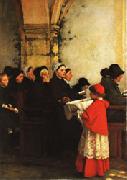 |
Pascal Dagnan-Bouveret
|
|
(January 7, 1852 - July 3, 1929), was one of the leading French artists of the academic school. He was born in Paris, the son of a tailor, and was raised by his grandfather after his father emigrated to Brazil. Later he added his grandfatheres name, Bouveret, to his own.
From 1869, he studied at the Ecole des Beaux-Arts under Alexandre Cabanel and Jean-Leon Gerôme. In 1873, he opened his own studio with a fellow student Gustave-Claude-Etienne Courtois. From 1875, he exhibited at the Salon, where in 1880 he won the first-class medal for the painting An Accident, and a medal of honour in 1885 for Horses at the Watering Trough.
From the 1880s, Dagnan-Bouveret along with Gustave Courtois, maintained a studio in Neuilly-sur-Seine, a fashionable suburb of Paris. By that time he was recognized as a leading modern artist known for his peasant scenes, but also for his mystical-religious compositions. His large-scale painting The Last Supper was exhibited at the Salon de Champ-de-Mars in 1896.[1] He also painted portraits for wealthy clients including the British collector George McCulloch. He was one of the first to use the then new medium of photography to bring greater realism to his paintings.
In 1891, he was made an Officer of the Legion of Honour; in 1900 he became a member of the Institut de France.
|
|
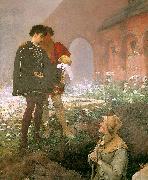 |
Pascal Adolphe Jean Dagnan-Bouveret
|
|
1852-1929
The popular French naturalist painter Pascal-Adolphe-Jean Dagnan-Bouveret is best known for his painstakingly detailed paintings of peasant scenes. Dagnan-Bouveret also created portraits and religious paintings.
Pascal-Adolphe-Jean Dagnan was born in Paris on Jan. 7, 1852. His father moved to Brazil when he was 16, but he decided to stay in France with his mothers father. Later Dagnan-Bouveret added his grandfathers family name Bouveret to his own. Dagnan-Bouveret entered art school in Paris at age 17 and studied under the well-known academic painter Gerome. During this period Dagnan-Bouveret entered his paintings in several official competitions and placed highly in several. In 1878 Dagnan-Bouveret moved to the region known as the Franche-Comte, where he produced many landscapes and still life paintings. Dagnan-Bouveret won recognition in 1880 with his oil painting An Accident, which depicts a peasant boy with an injured hand visiting the doctor. Considered one of his finest paintings, it exemplifies Dagnan-Bouverets attempt to examine the psychology of his subjects through the use of well-rendered detail.
Dagnan-Bouveret took advantage of new photographic technology to bring greater detail and heightened realism to his paintings. Dagnan-Bouveret used this technique especially in his paintings of peasants, such as Horses at the Watering Trough (1885). Dagnan-Bouveret was known to select people from his village, dress them in historical costumes, and then take photographs, which he then used with sketches as the basis of his paintings. By the 1890s his popularity as a portrait painter among wealthy patrons allowed him to explore more personal themes. Many of Dagnan-Bouverets later paintings, such as Supper at Emmaus (1896 C97), were religious in nature. Dagnan-Bouveret died in Quincey, Haute-Saone, France, on July 3, 1929.
|
|
|
|
|
|
|
|
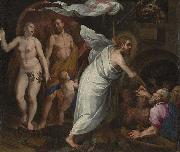 |
Pablo de Cespedes
|
|
(1538 - July 26, 1608) was a Spanish painter, poet, and architect.
His father, Alonso Cespedes, was descended of a noble Castilian family, once settled at Ocaña, and the name of his mother, who was a native of Alcolea de Torote, was Olaya de Arroya. Pablo was born and brought up in the house of his father's maternal uncle, Francisco Lopez de Aponte, Canon of Cordoba, where he received a learned education. At the age of eighteen, in 1556, he was sent to the Universidad Complutense in Alcale de Henares, and there, devoted himself to the acquirement of Oriental languages and theology. He later moved to Rome where he studied painting under Federico Zuccari.
He was in Rome in February 1559, engaged in conducting certain negotiations for the Archbishop Carranza de Miranda, of Toledo, who then stood charged with heresy before the Inquisition of Valladolid. On the 17th of that month he addressed a letter to the prelate, informing him how his business stood at the Vatican, in which he incautiously reflected on the conduct of the Inquisitor-General Valdez, and the Holy Officeean offence which no Inquisitor-General would forgive. This document and others were seized with the primate's papers; he was therefore denounced by the tribunal, and but for his fortunate absence, would have been imprisoned. It is probable that he did not venture back into Spain for many years, until he had covered his sins with the protecting robes of the Church.
He remained in Italy for over 20 years and built a reputation as an artist. His only surviving works from that period are the frescoes he painted in the Bonfili chapel at the Santa Trinite dei Monti church in Rome.
He returned to Spain in 1577, and was appointed as the canon of the Cerdoba cathedral. He continued to write books on antiquarian topics such as the architecture of the temple of Solomon. He befriended Arias Montano. In 1604 he composed his Discourse of Ancient and Modern Painting and Sculpture in which he recounts anecdotes of Renaissance masters of Italy.
|
|
|
|
|
|
|
|
|
|
 |
Nils von Dardel
|
|
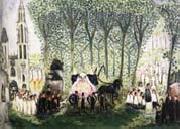
Swedish, 1888-1943,Swedish painter. After a short time at the School of Art in Stockholm, which he found too conservative, he travelled for the first time to Paris in 1910. There he immediately made contact with the Scandinavian artists who were pupils of Matisse and with them made his debut in Stockholm in 1912 as a member of the Man of the Year 1909 group. Under the influence of Cubism, Dardel painted a townscape of Senlis, in a style that eventually developed into the sophisticated naivety of Funeral in Senlis (1913; Stockholm, Mod. Mus.).
|
|
 |
Nikolay Nikanorovich Dubovskoy
|
|
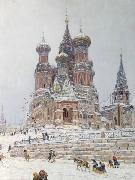
Russian, December 17, 1859 - February 28, 1918) was a Russian landscape painter.
He studied from 1877 to 1881 at the Imperial Academy of Arts in Saint Petersburg under Mikhail Konstantinovich Klodt. In 1886, he became a member of the Peredvizhniki (the Wanderers), a group of Russian painters. In 1900, he became a member of the Academy of Arts.
|
|
 |
Niklaus Deutsch
|
|
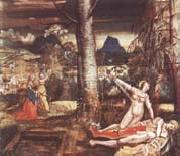
1484-1530 Northern Renaissance German,Painter, draughtsman, designer, writer and politician. Some early designs in pen and wash
|
|
|
|
|
|
|
|
|
| Wholesale China Oil Painting Wholesale Oil Painting China Xiamen Portrait Reproduction on canvas Chinese Oil Painting Wholesale USA Oil Painting |
|
|
|
|
|