| |
|
Xiamen Oil Paintings, Wholesale Direct!
|
|
100% hand painted, 100% cotton canvas, 100% money back if not satisfaction. |
|
|
|
|
ART WORKS INDEX
A
B
C
D
E
F
G
H
I
J
K
L
M
N
O
P
Q
R
S
T
U
V
W
X
Y
Z
|
|
ARTISTS INDEX
A
B
C
D
E
F
G
H
I
J
K
L
M
N
O
P
Q
R
S
T
U
V
W
X
Y
Z
|
|
|
|
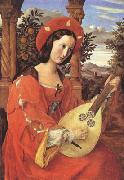 |
Julius Schnorr von Carolsfeld
|
|
1794-1872
Painter and draughtsman, brother of Ludwig Ferdinand Schnorr von Carolsfeld. He was taught engraving by his father and then trained under Heinrich Feger at the Akademie in Vienna (1811-15). Though not particularly excited by the curriculum, he was inspired by his friendship with Ferdinand Olivier and Joseph Anton Koch and the circle around A. W. Schlegel to an interest in both landscape sketching and in old German and Netherlandish art, as reflected in the style of the detailed pen drawing of the Prodigal Son (1816; Dresden, Kupferstichkab.). From 1815 to 1818 he lived in the house of Ferdinand Olivier, whose step-daughter, Marie Heller, he later married. A painting of 1817, St Roch Distributing Alms
|
|
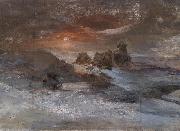 |
Julius Payer
|
|
Julius Johannes Ludovicus Ritter von Payer (2 September 1841 - 19 August 1915) was an Austro-Hungarian arctic explorer and an Arctic landscape artist.
Born Julius Payer, his father Franz Anton Rudolf Payer was a retired officer who died when Julius was only fourteen. Payer attended k.k. cadet school in Lobzowa near Krakew (now Poland). Between 1857 and 1859 he studied at the Theresian Military Academy in Wiener Neustadt (near Vienna). In 1859 he served as a sub-lieutenant with the 36th. infantry regiment in Verona, Northern Italy. He participated in the 1859 Battle of Solferino. Between 1860 and 1863 he served at the garrison in Verona, Italy. In 1863 Payer was assigned as a history teacher to the cadet school in Eisenstadt, Austria. After promotion to the rank of lieutenant first class he was posted to the garrison of Venetia.
In 1862 he started exploratory tours of the Italian Alps and Hohe Tauern in his free time. From 1864-1868 he explored the Adamello-Presanella Group and the Ortler Alps. He was the first to climb Adamello (3554m). His tours resulted in creating a detailed topographical map at a scale 1:56,000. Due to his achievements, Payer was transferred to the Austrian Military Cartographical Institute in Vienna.
|
|
 |
Julius Paulsen
|
|
Danish, 1860-1940
Danish painter. He studied at the Kongelige Akademi for de Skenne Kunster, Copenhagen (1879-82), but found the training there uninspired and soon attached himself to more radical artists such as Peder Severin Kreyer and Laurits Regner Tuxen. A turning-point in his career came in 1885 when, with Viggo Johansen, he went to Paris. On the way they visited Amsterdam, where the art of Rembrandt made a great impact on Paulsen; in Paris he showed interest in Courbet and Monet. From 1886 his time was shared between landscape, figure and portrait painting. His first landscape, From the Village of Ry (1886; Copenhagen, Hirschsprungske Saml.), is an early example of his personal blend of Romanticism and Symbolism; it shows a golden sunset colouring the houses and gardens of the small village. His View from the Harbour after Sunset (1891; Copenhagen, Hirschsprungske Saml.) has much in common with Monet, the Copenhagen skyline barely discernible through a deep blue and iridescent atmosphere. A later visit to Paris inspired such sunlit townscapes as Under Pont des Arts in Paris, Midday Sun (1919; Copenhagen, Stat. Mus. Kst), the shimmering, sketchy surface of which is dominated by fresh blues and greens; the painting incorporates a favourite Impressionist motif, the curved filigree of the iron bridge, which both frames the scene and lends it tension.
|
|
|
|
 |
Julius LeBlanc Stewart
|
|
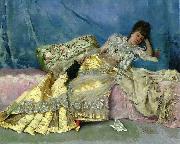
(September 6, 1855, Philadelphia, Pennsylvania - January 5, 1919, Paris, France), was an American artist who spent his career in Paris. A contemporary of fellow expatriate painter John Singer Sargent, Stewart was nicknamed "the Parisian from Philadelphia."
His father, the sugar millionaire William Hood Stewart, moved the family to Paris in 1865, and became a distinguished art collector and an early patron of Fortuny and the Barbizon artists. Julius studied under Eduardo Zamacois as a teenager, under Jean-Leo Grôme at the École des Beaux Arts, and later was a pupil of Raymondo de Madrazo.
Stewart's family wealth enabled him to live a lush expatriate life and paint what he pleased, often large-scaled group portraits. The first of these, After the Wedding (1880), showed the artist's brother Charles and his bride Mae, daughter of financier Anthony J. Drexel, leaving for their honeymoon.
|
|
|
|
 |
Julius L.Stewart
|
|
American Painter, 1855-1919
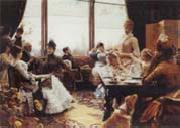
American artist, was born in Philadelphia. His father, William Hood Stewart, was a distinguished collector of the fine arts, an early patron of Fortuny and the Barbizon artists, and lived in Paris during the latter part of his life. The son was a pupil of JL Gerome, at the Ecole des Beaux Arts, and of Raymondo de Madrazo. Among his principal paintings are The Hunt Ball, Essex Club, Newark, New Jersey.
|
|
 |
Julius Kronberg
|
|
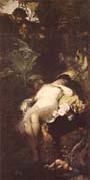
1850-1921,Swedish painter and illustrator. He was educated at the Konstakademi in Stockholm, where his teachers were J. C. Boklund (1817-80), August Malmstr?m and Johan Fredrik H?ckert. In 1873 he travelled on a scholarship to D?sseldorf, and in the following year he went to Munich. There he was strongly influenced by the Old Masters (especially Rubens), as well as Hans Makart robustly theatrical style. Together they shaped Kronberg early works, for example Hunting Nymph and Fauns (1875; Stockholm, Nmus.), which caused a sensation when it was exhibited in Stockholm in 1876 and established his reputation. Kronberg left Munich in 1877 and settled in Rome, where, between trips to Egypt and Tunisia, he stayed until 1889, when he returned to Stockholm. During his years in Rome his style became increasingly austere. His exuberant Munich manner was replaced by a colder illusionism, which emphasized the historical details of subjects taken from the Bible and Shakespeare. Typical is David and Saul (1885; Stockholm, Nmus.), which reflected his study of Lawrence Alma-Tadema.
|
|
|
|
 |
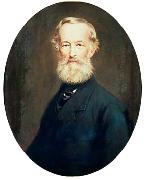
Julius Hubner
|
|
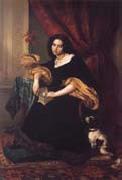
1806 Oels-1882 Loschwitz ,was a German historical painter of the Dusseldorf school. He was also known as a poet and the father of Emil Hubner, a distinguished classical scholar. Hubner was born at Oels in Silesia, studied at the Academy School in Berlin and under Schadow there and in Dusseldorf. He first attracted attention by his picture of "Ruth and Boaz" (1825). He traveled in Italy and resided for the most part at Dusseldorf until 1839. In that year he settled at Dresden, becoming a professor in the Academy of Arts in 1841 and director of the Gallery of Paintings in 1871. He obtained the great gold medal at Brussels in 1851. He died in Loschwitz.
|
|
 |
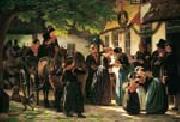
Julius Grun
|
|
Julius Gren (1823-1896)Aliases: Gustav Julius GrenProfessions: Porträtmaler; Genre Painter; Historical-scenes painter.
|
|
 |
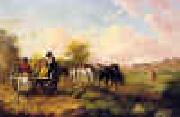
Julius Exner
|
|
(November 30, 1825-November 15, 1910), Danish genre painter, was born in Copenhagen to Johann Gottlieb Exner, a Czech musician from Bohemia, who came to Denmark during the Napoleonic period, and his wife Karen Jørgensdatter. Exner originally intended on becoming a history painter, but quickly found his niche, however, in genre painting, the most popular and lucrative painting style of his era.
|
|
 |
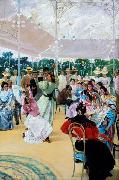
Julius Caesar Ibbetson
|
|
1759-1817
British
In 1785, Ibbetson began exhibiting at the Royal Academy with View of North Fleet. Mitchell calls George Biggin (1783), which is one of Ibbetson's earliest known works, "an accomplished full-length portrait in the Gainsborough tradition, [which] should be considered as a milestone in the development of an artist who was entirely self-taught". Through the efforts of Captain William Baillie in 1787, Ibbetson was made draughtsman to Colonel Charles Cathcart on the first British embassy to Peking (Beijing); he made many watercolor drawings of the animals and plants on the journey. While he was away, his Ascent of George Biggin, esq. from St. George's Fields, June 29th 1785 was exhibited at the Royal Academy to great critical and popular acclaim.
In 1789, Ibbetson went to visit the Viscount Mountstuart at Cardiff Castle in Wales. He spent decades drawing the scenery there and, according to Mitchell, "[h]is detailed watercolours of iron furnaces, coal staithes, and copper mines foreshadow the work of Joseph Wright of Derby and J. M. W. Turner and constitute an important record of the early industrial developments in that region, but are less well known than his more numerous scenes of folk life and picturesque scenery." After a visit to the Isle of Wight in 1790, he began painting shipwrecks and smugglers. David Murray, 2nd Earl of Mansfield, and his wife commissioned Ibbetson to decorate Kenwood House, in 1794. This distracted him from the death of his wife and caring for their three children. Her death had "provoked a minor nervous breakdown, exacerbated by near destitution", but the Kenwood project relieved that stress. Four years later, he moved to Liverpool to work for Thomas Vernon. In 1801 he married his second wife, Bella Thompson, and moved to Ambleside.
Ibbetson acquired several generous patrons in Liverpool and in Edinburgh: William Roscoe, Sir Henry Nelthorpe, and the Countess of Balcarress. The last prompted him to write and publish his instruction manual An Accidence, or Gamut, of Painting in Oil (1803). In 1803, he met the Yorkshire philanthropist William Danby and in 1805 moved to Masham to be near him. The next 14 years of his life were the most settled of his life.
Ibbetson died on 13 October 1817 and was buried in the churchyard of St Mary's, Masham.
Benjamin West described Ibbetson as the "Berchem of England" in recognition of his debt to the Dutch 17th century landscape painters. According to Mitchell, "[h]is watercolours are prized for their delicacy and sureness of line". Many were engraved for projects such as John Church's A Cabinet of Quadrupeds and John Boydell's Shakespeare Gallery.
|
|
|
|
 |
Julio Romero de Torres
|
|
was a Spanish painter.
He was born and died in Cerdoba, Spain, where he lived most of his life. His father was the famous painter Rafael Romero Barros and his mother was Rosario de Torres Delgado. Julio learned about art from his father who was the director, curator and founder of Cerdoba's Museo Provincial de Bellas Artes and an impressionist painter. He took an interest in art at a young age and started studying at the School of Fine Arts when he was 10. He went to Madrid to work and study in 1906. He also traveled all over Europe to study and he picked up a symbolist style, for which he is best known. A museum dedicated to the work of de Torres is situated at Plaza del Potro 1 Cordoba 14002.
He spent most of his life living in Cerdoba and Madrid and both places had influences on his paintings. He combined many different styles when he painted because he had many different influences including realism, which was a popular style at that time and impressionism, which he picked up from living in Cerdoba and from his father. While in Cerdoba he became part of the late 19th century intellectual movement that was based on the Royal Academy of Science, Arts and Literature. Julio Romero also won many awards in his lifetime. In 1895 he won an honorable mention at the National Exhibition and later won third place in 1899 and 1904.
El Retablo del Amor by Julio Romero de Torres, painted in 1910.In 1914 he relocates to Madrid, where he makes contact with the intellectual and artistic environment of the time together with his brother Enrique. He became a regular at the cafe Nuevo Levante and his paintings began to reflect the philosophical currents of the times, represented by such writers of the times as Ramen del Valle-Inclen and Ruben Dareo. When the war broke out in 1914 Julio Romero fought for the allies as a pilot
|
|
 |
Julien Hudson
|
|
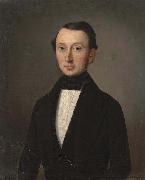
(1811-1844) was a 19th Century free man of color who lived in New Orleans. He was a successful painter and art teacher. He is known as the first African American or French Creole of Color operating in America by whom a self-portrait was found.
|
|
|
|
 |
Julie Wilhelmine Hagen-Schwarz
|
|
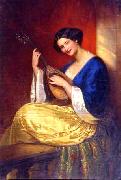
(born October 27, 1824 near Tartu - died Tartu October 7, 1902) was an Estonian painter of Baltic German origin. She studied in Dresden with Friedrich Gonne and later in Munich with Johann Moritz Rugendas.
|
|
 |
Julian Scott
|
|
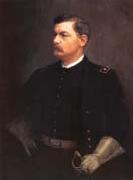
American, 1846-1901 ,was born in Johnson, Vermont and was a Union Army drummer during the American Civil War who received America highest military decoration the Medal of Honor for his actions at the Battle of Lee Mills, he was also an American painter and a Civil War artist. Scott received his youthful education at the Lamoille Academy, known today as Johnson State College where the main gallery is named in his memory. Scott continued his studies graduating from the National Academy of Design in New York and subsequently studied under Emmanuel Leutze until 1868. During the Civil War, Scott enlisted in the 3rd Vermont Infantry on June 1, 1861, at the age of 15 as a fifer and in February 1865, was awarded the Medal of Honor for rescuing wounded under enemy fire during the Battle at Lee Mills, Virginia. When the war was over he traveled to Paris and Stuttgart to continue his education. Scott 1872 masterwork, the Battle of Cedar Creek, is located at the Vermont State House. The painting illustrates the contributions of his home state of Vermont in the American Civil War In 1890, and is significant for its absence of glorification of war and instead shows the suffering and human sacrifice associated with war making. Scott traveled west as part of a census party, painting Native Americans in New Mexico, Arizona and Oklahoma. Many of his works from this expedition now hang in the University of Pennsylvania Museum of Art. Scott was interred in Hillside Cemetery located in Scotch Plains, New Jersey
|
|
 |
Julian Onderdonk
|
|
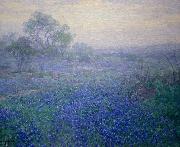
(July 30, 1882 - October 27, 1922) was a Texan Impressionist painter, often called "the father of Texas painting."
Julian Onderdonk was born in San Antonio, Texas, to Robert Jenkins Onderdonk, a painter, and Emily Gould Onderdonk. He was raised in South Texas and was an enthusiastic sketcher and painter. As a teenager Onderdonk was influenced and received some training from the prominent Texas artist Verner Moore White who also lived in San Antonio at the time. He attended the West Texas Military Academy, graduating in 1900.
At 19, with the help of a generous neighbor, Julian left Texas in order to study with the renowned American Impressionist William Merritt Chase. Julian's father, Robert, has also once studied with Chase. Julian spent the summer of 1901 on Long Island at Chase's Shinnecock School of Art. He studied with Chase for a couple of years and then moved to New York City to attempt to make a living as an en plein air artist. While in New York he met and married Gertrude Shipman and they soon had a son.
Onderdonk returned to San Antonio in 1909, where he produced his best work. His most popular subjects were bluebonnet landscapes. Onderdonk died on October 27, 1922 in San Antonio.
President George W. Bush decorated the Oval Office with three of Onderdonk's paintings. The Dallas Museum of Art has several rooms dedicated exclusively to Onderdonk's work.
|
|
 |
Julian Falat
|
|
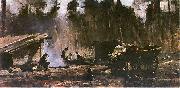
(30 July 1853 in Tuligłowy near Lwew - 9 July 1929 in Bystra Śląska) was one of the most prolific Polish painters of watercolor and one of the country's foremost landscape painters as well as one of the leading Polish impressionists. Fałat first studied under Władysław Łuszczkiewicz at the Krakew School of Fine Arts, and then at the Art Academy of Munich. After several trips throughout Europe and Asia in 1885, Fałat compiled a collection of studies from his voyages which would become useful later in the development of his artwork. Themes typical of Fałat's painting are Polish landscapes, hunting scenes, portraits, and studies from his voyages. In 1886, Fałat accepted an invitation from future German Emperor Wilhelm II to serve as court painter in Berlin.
Fałat died in Bystra Śląska on July 9, 1929. A museum in Poland, called Fałatewka, is devoted to him.
Out of his three children, Kazimierz (Togo) (1904-1981) continued to paint in watercolour.
Some works, having been looted under German occupation, very occasionally reappear in sales-rooms. Later works, produced after he settled in England, are largely in the hands of his later family.
|
|
 |
Julian Falat
|
|
Julian Falat, (30 July 1853 in Tuliglowy near Lwow - 9 July 1929 in Bystra Sląska) was one of the most prolific Polish painters of watercolor and one of the country's foremost landscape painters as well as one of the leading Polish impressionists. Falat first studied under Wladysław Luszczkiewicz at the Krakow School of Fine Arts, and then at the Art Academy of Munich. After several trips throughout Europe and Asia in 1885, Fałat compiled a collection of studies from his voyages which would become useful later in the development of his artwork. Themes typical of Fałat's painting are Polish landscapes, hunting scenes, portraits, and studies from his voyages. In 1886, Falat accepted an invitation from future German Emperor Wilhelm II to serve as court painter in Berlin.
Falat died in Bystra Sląska on July 9, 1929. A museum in Poland, called Falatowka, is devoted to him.
Out of his three children, Kazimierz (Togo) (1904-1981) continued to paint in watercolour.
|
|
|
|
Julian Falat
|
|
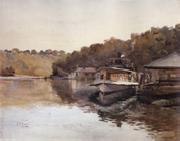
(30 July 1853 in Tuligłowy near Lwew - 9 July 1929 in Bystra Śląska) was one of the most prolific Polish painters of watercolor and one of the country's foremost landscape painters as well as one of the leading Polish impressionists. Fałat first studied under Władysław Łuszczkiewicz at the Krakew School of Fine Arts, and then at the Art Academy of Munich. After several trips throughout Europe and Asia in 1885, Fałat compiled a collection of studies from his voyages which would become useful later in the development of his artwork. Themes typical of Fałat's painting are Polish landscapes, hunting scenes, portraits, and studies from his voyages. In 1886, Fałat accepted an invitation from future German Emperor Wilhelm II to serve as court painter in Berlin.
Fałat died in Bystra Śląska on July 9, 1929. A museum in Poland, called Fałatewka, is devoted to him.
Out of his three children, Kazimierz (Togo) (1904-1981) continued to paint in watercolour.
Some works, having been looted under German occupation, very occasionally reappear in sales-rooms. In December 2010, two such paintings, "The Hunt" and "Off to the Hunt" were seized by U.S. authorities from auction houses in New York City. The works are to be repatriated to Poland's National Museum of Art in Warsaw. Later works, produced after he settled in England, are largely in the hands of his later family.
|
|
 |
Julian Ashton
|
|
Australian Painter, 1851-1942
was an Australian artist and teacher, known for his support of the Heidelberg School and for his influential art school in Sydney. Ashton was born in Addlestone, Surrey, England and arrived in Australia in 1878 with a background in the contemporary French realism of the Barbizon School, which emphasised painting en plein air (i.e. direct from nature, as opposed to studio-based painting), and which laid the basis for the Impressionist movement. As a trustee of the Art Gallery of New South Wales he championed emerging Australian artists of the Australian Impressionist or Heidelberg School, and the Gallery's decision to collect these works owes much to his influence. According to James Gleeson, Ashton's oil paintings, much-admired in his own lifetime,
|
|
 |
julian alden weir
|
|
American Impressionist Painter, 1852-1919
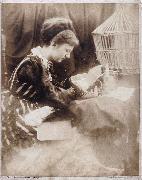
.American painter. He studied with his father Robert Walter Weir, a landscape painter of the Hudson River school, at the National Academy; and with Görôme in Paris. He was one of the earliest American impressionist painters. Subtle gradations of light and tone characterize his work. He was a founder of the Society of American Artists (1877), a member of the National Academy (1886), and its president (1915 C17). When the Ten American Artists formed a separate group (1898), he joined them. His works include Idle Hours, The Green Bodice, and The Red Bridge; a portrait and Autumn ; and Midday Rest in New England.
|
|
 |
Julia Margaret Cameron
|
|
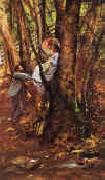
British Photographer, 1815-1879,English pioneer photographer, b. Calcutta (now Kolkata). Born and married into the high ranks of the British civil service, Cameron became an intimate of many of the most famous people of her day. In 1864 she became an ardent amateur photographer, demanding long, arduous sittings from her illustrious friends. She sought to illuminate the inner person of her subject, and her celebrated portraits, including those of Tennyson, Carlyle, Ellen Terry, Browning, Darwin, and Longfellow, are remarkably spontaneous. She also pioneered the use of closeups,
|
|
|
|
|
|
|
|
 |
Jules Tavernier
|
|
1844-1889 Jules Tavernier was born in Paris in 1844. He studied with the French painter, F??lix Joseph Barrias (1822-1907), but left France in the 1870s, never to return. Tavernier was employed as an illustrator by Harper's Magazine, which sent him on assignment to California in the 1870s. Eventually he continued westward to Hawaii, where he made a name for himself as a landscape and portrait painter. He was captivated by Hawaii??s erupting volcanoes??a subject that was to pre-occupy him for the rest of his life, which was spent in Hawaii, Canada and the western United States. He is considered the most important artist of Hawaii??s Volcano School. Tavernier died in Honolulu, Hawaii in 1889. His students included David Howard Hitchcock (1861-1943), Am??d??e Joullin (1862-1917), Charles Rollo Peters (1862-1917) and Manuel Valencia (1856-1935). The Honolulu Academy of Arts and the Stark Museum of Art (Orange, Texas) are among the public collections having paintings by Jules Tavernier.
|
|
|
|
|
|
 |
Jules Pascin
|
|
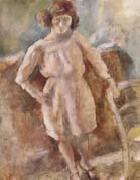
Bulgarian-born French Expressionist Painter, 1885-1930,American painter, draughtsman and printmaker of Bulgarian birth, active in France. He attended secondary school in Vienna, returning in 1901 to Bucharest, where his family had settled, and working briefly in the office of his father's grain-merchandizing business. He was, however, already becoming passionately interested in drawing, for which he showed precocious talent. At the age of 16 he became the lover of a woman who ran a brothel and was allowed by her to draw the residents. In 1903 he moved to Munich, where he attended the art school run by Moritz Heymann.
|
|
 |
Jules Lefebvre
|
|
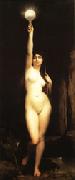
Tournan-en-Brie, 1834-Paris 1912.
French Academic Painter.
|
|
 |
Jules Joseph Lefebvre
|
|
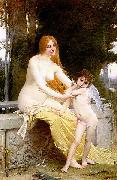
(Tournan-en-Brie, Seine-et-Marne, 14 March 1836 - Paris, 24 February 1911) was a French figure painter.
Lefebvre entered the École nationale superieure des Beaux-Arts in 1852 and was a pupil of Leon Cogniet. He won the prestigious Prix de Rome in 1861. Between 1855 and 1898, he exhibited 72 portraits in the Paris Salon. In 1891, he became a member of the French Academie des Beaux-Arts.
He was an instructor at the Academie Julian in Paris. He is chiefly important as an excellent and sympathetic teacher who numbered many Americans among his 1500 or more pupils. Some of his famous students were the Scottish-born landscape painter William Hart, as long as Georges Rochegrosse, Felix Vallotton, and many more. He was long a professor at the École des Beaux-Arts.
Many of his paintings are single figures of beautiful women.
Among his best portraits were those of M. L. Reynaud and the Prince Imperial (1874). Among his many decorations were a first-class medal at the Paris Exhibition of 1878 and the medal of honor in 1886. He was a Commander of the Legion of Honor and a member of the Institut de France.
|
|
 |
Jules Guerin
|
|
Mural painter and Illustrator.
American
1866-1946
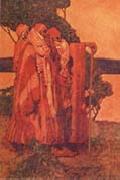
American muralist, painter and illustrator. Guerin was born in St Louis, Missouri on November 18, 1866 and moved to Chicago to study art in 1880. Later he was to follow a parade of other American artists and architects of his day to Paris, where he studied with Benjamin-Constant and Jean Paul Laurens. Returning to America after his European sojourn, he began his career as an artist illustrating books, often travel books about exotic places. It is likely that these designs are based on his own travels through North Africa and Palestine. The designs that he did then as well as his ability to romantically depict exotic peoples and places stood him well later when he began painting murals. His mural work typically featured large areas of gold with vermilion, salmon and rose hues and blue and green accents. As with many of the artists of his time Guerin took an active part in the international expositions of his day, showing at the Paris Expo 1900, where he received an honorable mention, the Pan American Expo in Buffalo, New York, 1901, the Louisiana Purchase Expo held in St Louis in 1904 at which he won a silver medal, and the Lewis & Clark Expo in Portland, Oregon in 1905. In 1915, Guerin was asked to serve as color co-ordinator of the Panama Pacific International Exposition of 1915 in San Francisco. It is likely that connections that he made there led to his one man show at the University of California, Berkeley two years later, followed by several large murals in the Federal reserve Bank in San Francisco. Daniel Burnham, one of Chicago's most influential architects, and his colleague Edward H. Bennett were commissioned to create the Chicago Plan in 1907, a major milestone in the international City Beautiful movement. In pursuit of this effort, Burnham invited Guerin paint a series of renderings of Burnham and Bennett's proposed cityscape to complement the numerous maps and plans that gave more technical information. The majority of these original renderings--by Guerin and other artists--are in the collection of the Department of Architecture at The Art Institute of Chicago, while others are currently owned by the Chicago Historical Society. In 1903, he travelled to Pittsburgh Pennsylvania and painted "Pittsburgh as Hell with the Lid Off" for Lincoln Steffens, a renouned Muckraker. Lincoln Steffens mentions this in his autobiography. In 1912, when architect Henry Bacon began working on the Lincoln Memorial in Washington D.C., he hired Guerin to create renderings of his proposed designs. After he received the commission, Bacon retained Guerin to paint the two large murals, Reunion and Emancipation, that decorate the interior of the memorial, allegorical figures that today serve primarily as the backdrop to Daniel Chester Frenches Seated Lincoln statue.
|
|
|
|
 |
Jules Elie Delaunay
|
|
Nantes 1828 - Paris 1891.
French Neoclassical Painter.
Studied under Hippolyte Flandrin.
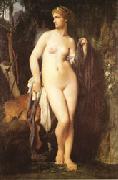
French Neoclassical Painter. Studied under Hippolyte Flandrin. French painter. He entered the Ecole des Beaux-Arts in Paris on 7 April 1848, where he was a pupil of Joachim Sotta (1810-77), Hippolyte Flandrin and Louis Lamothe (1822-69). He became a disciple of Flandrin, and, though making his debut in the Salon in 1853 with the Saltworkers of Guerande (Nantes, Mus. B.-A.), he soon concentrated on history painting. In 1856 he won the Prix de Rome with the Return of the Young Tobias (Paris, Ecole N. Sup. B.-A.) and left Paris to study at the Academie de France in Rome. His work is imbued with a deep religious sentiment cast in the restrained, controlled style and formal repertoire of Neo-classicism. From early in his career he produced many easel and wall paintings on religious subjects, such as Jesus Healing the Lepers (1850; Le Croisic,). In 1854 he received a commission to produce four fresco decorations for the church of the monastery of the Visitation-Ste-Marie in Nantes, which he completed the following year. In 1865 he returned to the monastery to decorate the chapel of St-Francois de Sales with scenes from that saint's life.
|
|
 |
Jules Coignet
|
|
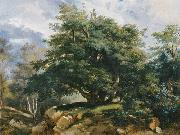
was born in Paris in 1798 and died there in 1860. He was a noted landscape painter who had studied under Jean-Victor Bertin. He travelled a good deal in his own country as well as elsewhere in Europe and the East, and produced a considerable number of views. A regular exhibitor at the Paris Salon exhibitions, he was awarded a gold medal there in 1824 and was given state recognition by being made a Chevalier of the Legion of Honour in 1836.
As a painter, Coignet holds a middle place between the Idealists and the Realists, and his work is remarkable for the combination of vigour and delicacy in the effects of light and shade, for poetical feeling, for a firm brush, and occasionally for grandeur of conception. This is particularly evident in "The Ruins of the Temple of Paestum", now in Munich's Neue Pinakothek.There are times too when his paintings have an atmospheric, almost Impressionist effect. One example is the coastal sunset in the Louvre; another is the pastel "Grey weather over the sea" (1848) in the Dijon museum.
Following the 1824 exhibition in Paris of John Constable's paintings, Coignet began painting outside in the forest of Fontainbleau and encouraged his students to do the same. One of his specialities was painting tree 'portraits', of which there are many examples, both as finished paintings and as sketches in oil paint.
|
|
 |
Jules Cheret
|
|
French Printmaker , 1836 - 1932 Paris
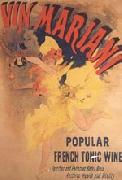
was a French painter and lithographer who became a master of poster art. Often called the father of the modern poster. Born in Paris to a poor but creative family of artisans, a lack of finances meant Jules Cheret had a very limited education. At age thirteen, he began a three-year apprenticeship with a lithographer and then his interest in painting led him to take an art course at the Ecole Nationale de Dessin. Like most other fledgling artists, Cheret studied the techniques of various artists, past and present, by visiting Paris museums. He was trained in lithography in London, England, from 1859 and 1866, and there he was strongly influenced by the British approach to poster design and printing. On returning to France, influenced by the scenes of frivolity depicted in the works of Jean-Honore Fragonard and other Rococo artists such as Antoine Watteau, Cheret created vivid poster ads for the cabarets, music halls, and theaters such as the Eldorado, the Olympia, the Folies Berg??res, Theatre de l'Opera, the Alcazar d'Ete and the Moulin Rouge. So much in demand was he, that he expanded his business to providing advertisements for the plays of touring troupes, municipal festivals, and then for beverages and liquors, perfumes, soaps, cosmetics and pharmaceutical products. Eventually he became a major advertising force, adding the railroad companies and a number of manufacturing businesses to his client list. As his work became more popular and his large posters displaying modestly free-spirited females found a larger audience, pundits began calling him the "father of the women's liberation." Females had previously been depicted in art as prostitutes or puritans. The women of Cheret's posters, joyous, elegant and lively - 'Cherettes', as they were popularly called ?? were neither. It was freeing for the women of Paris, and lead to a noticeably more open atmosphere in Paris where women were able to engage in formerly taboo activities, such as wearing low-cut bodices and smoking in public.
|
|
 |
Jules Breton
|
|
1827-1906
French Jules Breton Locations
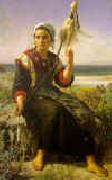
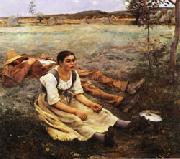
French painter and writer. After the death of his mother he was brought up in the village of Courrires by his father, grandmother and uncle. The last instilled in him respect for tradition and a commitment to the philosophical ideas of the 18th century. Breton father, as supervisor of the lands of the Duc de Duras, encouraged him to develop a deep knowledge of and affection for his native region and its heritage, which remained central to his art.
|
|
 |
Jules Bastien-Lepage
|
|
French Realist Painter, 1848-1884
French painter. Bastien-Lepage grew up on a farm. Although his earliest efforts in drawing were encouraged, his parents violently objected when he decided to become a professional artist. To mollify them he worked for a time as a postal clerk in Paris while studying at the Ecole des Beaux-Arts. In 1868 he left the civil service and was accepted into Alexandre Cabanel's atelier. During this apprenticeship, Bastien-Lepage won two prizes in drawing, and in 1870 he made his d?but at the Salon with a Portrait of a Young Man (untraced). In the Franco-Prussian War (1870-71) he joined a regiment of sharpshooters and was severely wounded in the chest. When he recovered he attempted unsuccessfully to find work as an illustrator.
|
|
|
|
|
|
 |
Judith leyster
|
|
1609-60
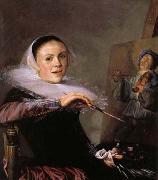
Dutch painter. She painted genre scenes, portraits and still-lifes, and she may also have made small etchings; no drawings by her are known. She specialized in small intimate genre scenes, usually with women seated by candlelight, and single half-length figures set against a neutral background.
|
|
|
|
 |
Juana Romani
|
|
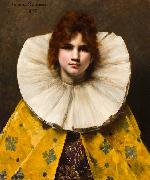
was an Italian painter, student and model of Ferdinand Roybet and Jean-Jacques Henner.
Romani was born in Velletri, near Rome in Italy, but moved with her family to France as a child.
|
|
|
|
 |
Juan Sanchez-Cotan
|
|
Spanish
1561-1627
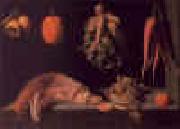
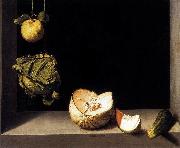
S??nchez Cot??n was born in the town of Orgaz, near Toledo. He was a friend and perhaps pupil of Blas de Prado, an artist famous for his still lifes whose mannerist style with touches of realism, the disciple developed further. Cot??n began by painting altar pieces and religious works. For approximately twenty years, he pursued a successful career in Toledo as an artist, patronized by the city??s aristocracy, painting religious scenes, portraits and still lifes. These paintings found a receptive audience among the educated intellectuals of Toledo society. S??nchez Cot??n executed his notable still lifes around the turn of the seventeenth century, before the end of his secular life. An example (seen above) is Quince, Cabbage, Melon and Cucumber (1602, in the San Diego Museum of Art).
On August 10, 1603, Juan Sanchez Cotan, then in his forties, closed up his workshop at Toledo to renounce the world and enter the Carthusian monastery Santa Maria de El Paular. He continued his career painting religious works with singular mysticism. In 1612 he was sent to the Granada Charterhouse, he decided to become a monk, and in the following year he entered the Carthusian monastery at Granada as a laybrother. The reasons for this are not clear, though such action was not unusual in Cot??n??s day.
Cotan was a prolific religious painter whose work, carried out exclusively for his monastery, reached its peak about 1617 in the cycle of eight great narrative paintings which he painted for the cloister of the Granada Monastery. These depict the foundation of the order of St. Bruno, and the prosecution of the monks in England by the Protestants.
Although the painter??s religious works have an archaic air, they also reveal a keen interest in the treatment of light and volumes, and in some respect are comparable with certain works by the Italian Luca Cambiaso whom Cotan knew at the Escorial. While Cotan's religious works are unexceptional, as a still-life painter he ranks with the great names of European painting.
In spite of his retreat from the world, Cotan??s influence remained strong. His concern with the relationships among objects and with achieving the illusion of reality through the use of light and shadow was a major influence on the work of later Spanish painters such as Juan van der Hamen, Felipe Ramirez, the brothers Vincenzo and Bartolomeo Carducci and, notably, Francisco de Zurbaran. Sanchez Cotan ended his days universally loved and regarded as a saint. He died in 1627 in Granada.
|
|
 |
Juan Sanchez Cotan
|
|
(June 25, 1560 - September 8, 1627) was a Spanish Baroque painter, a pioneer of realism in Spain. His still lifes, also called bodegones were painted in a strikingly austere style, especially when compared to similar works in Netherlands and Italy.
Senchez Coten was born in the town of Orgaz, near Toledo, Spain. He was a friend and perhaps pupil of Blas de Prado, an artist famous for his still lifes whose mannerist style with touches of realism, the disciple developed further. Cotan began by painting altar pieces and religious works. For approximately twenty years, he pursued a successful career in Toledo as an artist, patronized by the city's aristocracy, painting religious scenes, portraits and still lifes. These paintings found a receptive audience among the educated intellectuals of Toledo society. Senchez Cotan executed his notable still lifes around the turn of the seventeenth century, before the end of his secular life. An example (seen above) is Quince, Cabbage, Melon and Cucumber (1602, in the San Diego Museum of Art).
On August 10, 1603, Juan Sanchez Cotan, then in his forties, closed up his workshop at Toledo to renounce the world and enter the Carthusian monastery Santa Maria de El Paular. He continued his career painting religious works with singular mysticism. In 1612 he was sent to the Granada Charterhouse, he decided to become a monk, and in the following year he entered the Carthusian monastery at Granada as a laybrother. The reasons for this are not clear, though such action was not unusual in Cotan's day.
|
|
|
|
|
|
|
|
|
| Wholesale China Oil Painting Wholesale Oil Painting China Xiamen Portrait Reproduction on canvas Chinese Oil Painting Wholesale USA Oil Painting |
|
|
|
|
|